
Newsletter
Newsletter 08-2026
Jun 2023

🏦 Building Resilience: The Four Pillars of Professional Asset-Liability Management (ALM)

The stability and success of any financial institution hinge on effective Asset-Liability Management (ALM). Following the banking turmoil in 2023, it has become clear that robust ALM practices are no longer a luxury but a necessity for managing key risks — liquidity, profitability, and regulatory compliance.
Professional ALM provides the foundation for accurate forecasting and informed decision-making.
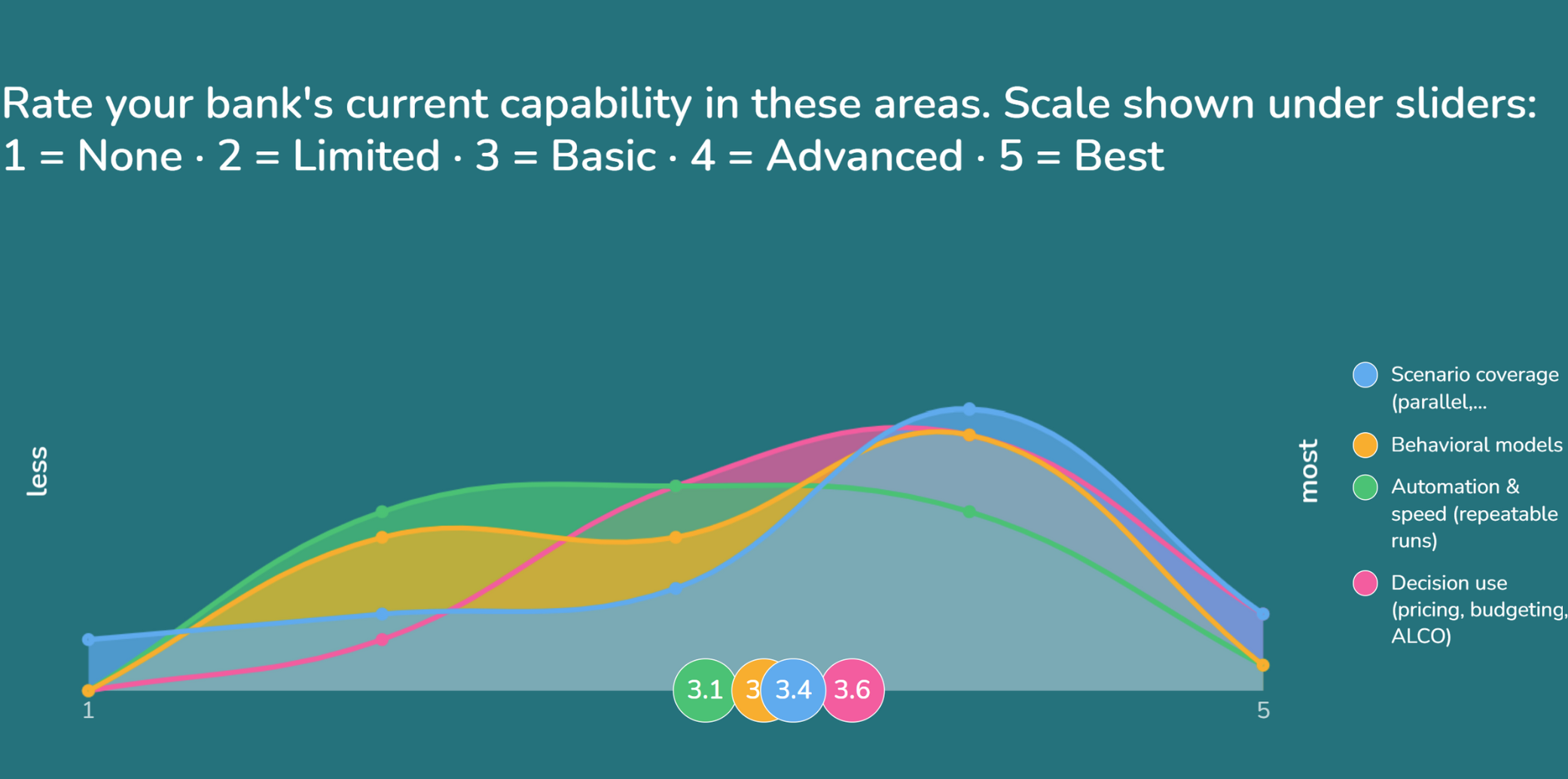
The stability of a bank is intrinsically linked to how it manages Non-Maturing Deposits (NMDs). These deposits are contractually floating-rate liabilities with zero maturity, allowing immediate withdrawal. However, NMDs typically exhibit “stickiness” and remain for extended periods, making them a crucial — yet unpredictable — funding source for banks.
Since the 2007 global financial crisis, the importance of correct NMD modeling has only grown. Inappropriate behavioral assumptions can underestimate risks or even lead to “window-dressing” strategies that mask maturity mismatches — a genuine concern for financial stability.
The backbone of a resilient ALM strategy is quantitative planning, which uses data-driven tools to project future cash flows, interest income, expenses, and liquidity needs.
A comprehensive ALM strategy must incorporate Interest Rate Risk (IRR) management, liquidity management, and credit-spread risk management.
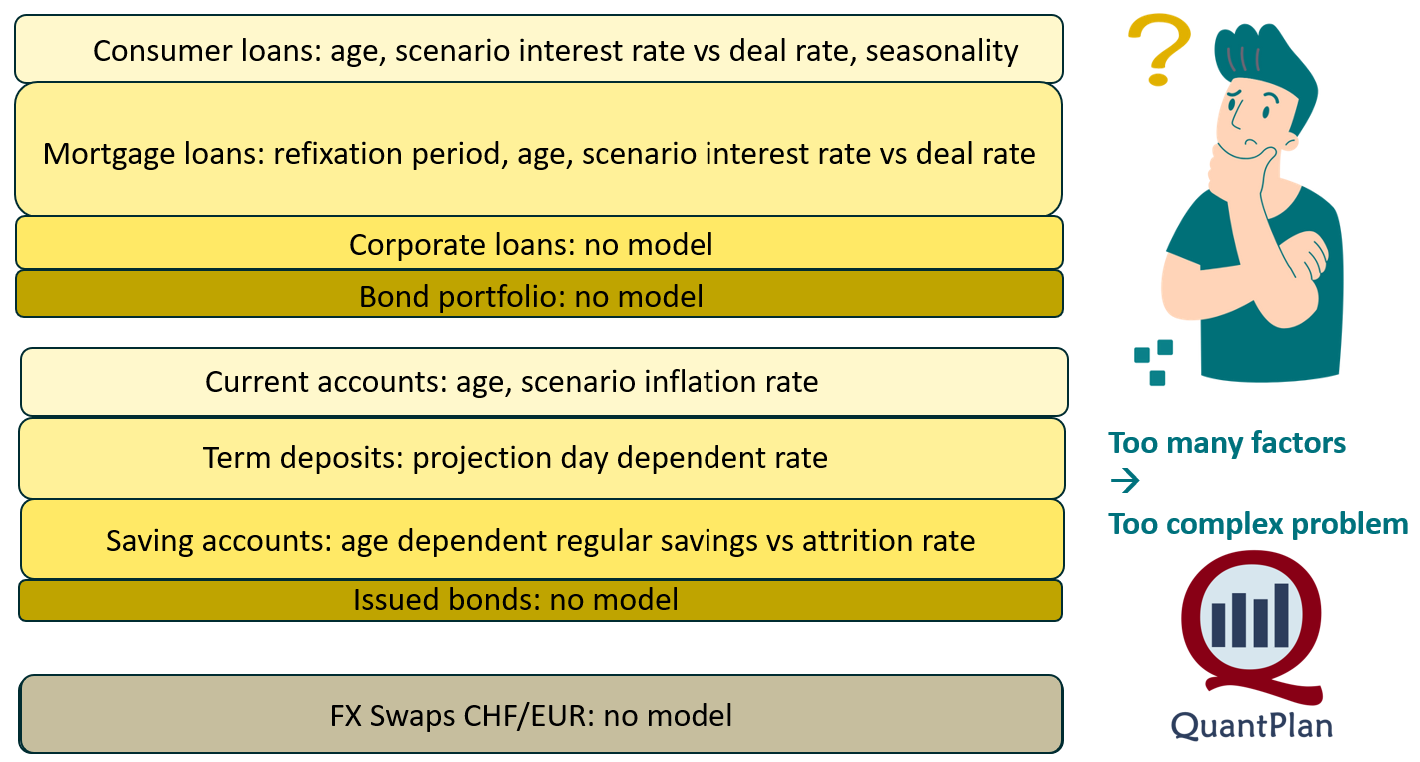
A crucial element in this process is identifying and mapping both liquidity (LQ) and interest rate commitment (IR) for products without a fixed maturity (NMD/NMA). Accurate mapping allows for effective IRR management, which is essential for optimizing Net Interest Income (NII).
Non-Maturing Deposits (NMDs), such as sight deposits and transactional current accounts, are contractually defined as floating-rate liabilities with zero maturity. Yet, in reality, they behave differently — they remain for extended periods.
To map these products correctly, banks must use internal models based on historical customer behavior to estimate deposit stability and determine their behavioral maturity.
Supervisory data show large differences between contractual and behavioral maturities assumed by banks. Under behavioral assumptions, only about 20% of NMDs are treated as liabilities with zero maturity, while around 10% are assigned maturities exceeding seven years — and roughly 1.5% even above 15 years. Some banks therefore consider a significant portion of their deposits as highly stable.
A robust NMD model should consider:
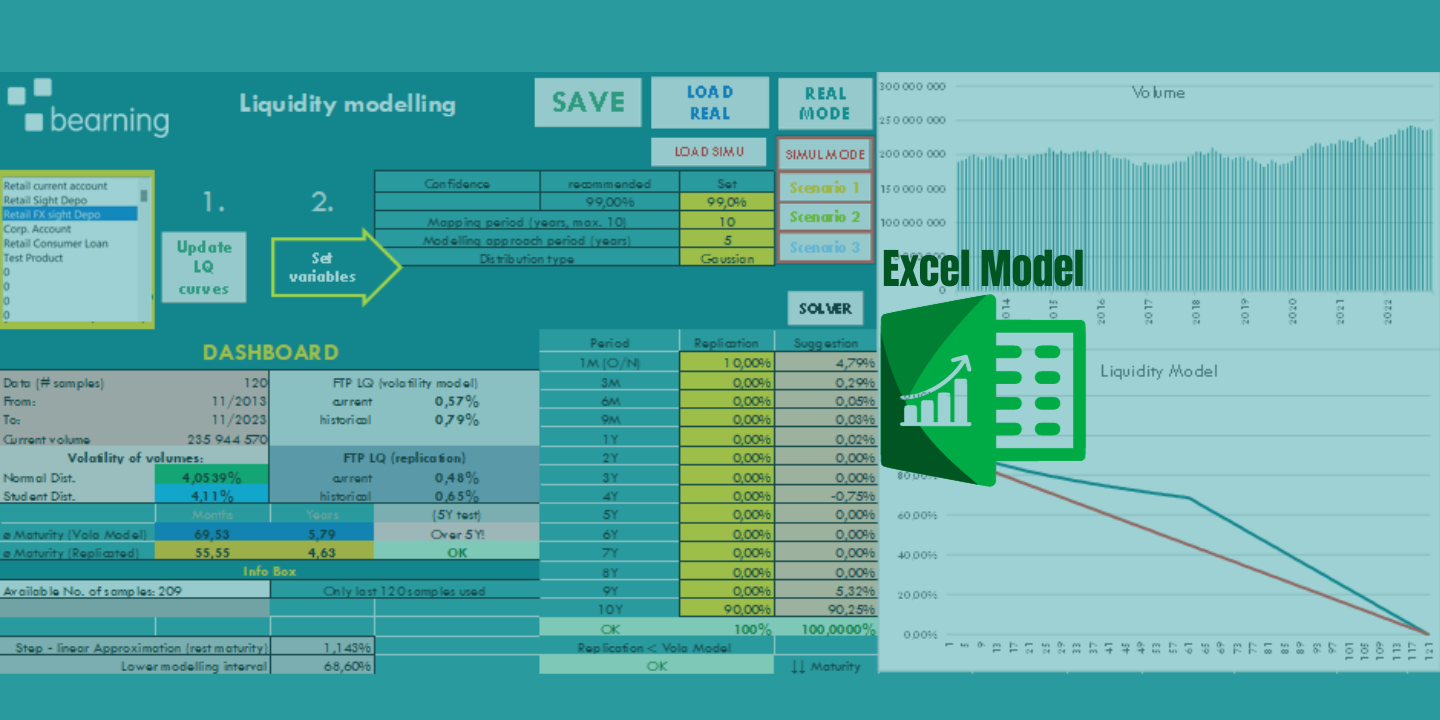
The goal of this modeling (for example, using the ALM_IRLQ model) is to define maturity profiles and assign the corresponding internal interest rate (FTP IR) and liquidity premium or cost (FTP LQ). The final decision on volume distribution in the replication portfolio rests with the responsible ALM manager.
Once the liquidity and interest rate positions are mapped, and NMDs have been assigned virtual maturities and Funds Transfer Prices (FTPs), bank decision-makers and the ALCO committee can take strategic action.
The FTP system calculates how individual assets and liabilities contribute to the bank's overall profitability. It must assign a benchmark price (FTP) that corresponds to a feasible, risk-free market rate linked to the product’s maturity or next repricing.
The total FTP typically consists of:
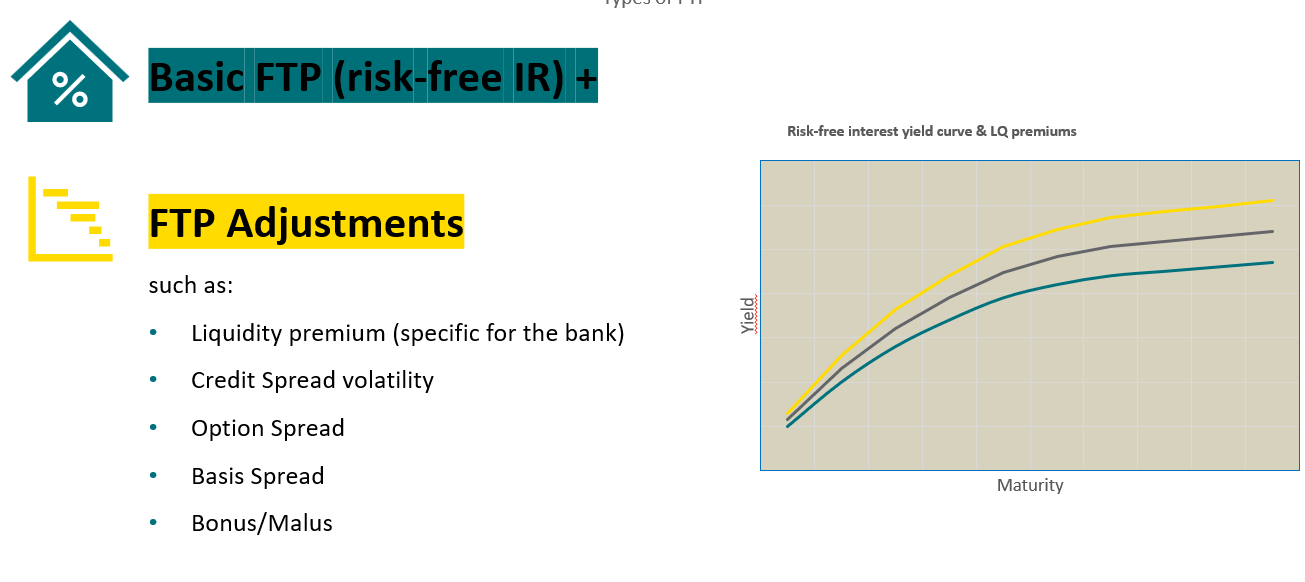
Based on these calculated metrics, management can make key strategic decisions, including:
Ultimately, the objective of interest replication portfolio modeling is to find an FTP setup that ensures stable product margins over time — a cornerstone of sustainable bank performance.
Achieving professional and resilient ALM requires a combination of capabilities and support:

ALM & Treasury, Riadenie rizík, Finančné riadenie banky, Banková regulácia, Fintech

Súbory cookie
Používame nevyhnutné cookie na chod webu a voliteľné analytické/marketingové na zlepšenie služieb. Viac v zásadách používania cookie.