Newsletter
Newsletter 08-2026
Jun 2023
Simpler banking regulation, stablecoins and the future of payments, European competitiveness, depositor behavior, and public debt.

Welcome to the July 2026 edition of the Bearning Newsletter!
Summer is traditionally a quieter period across the banking industry. Many colleagues are taking a well-deserved break, recharging after another demanding first half of the year. We hope you are also finding time to relax and enjoy the season with your family and friends.
At Bearning, we also took a few days away from our everyday routine. Between enjoying the beautiful Croatian coastline, we spent time discussing ideas, challenging each other's perspectives, and planning how we can continue helping banking professionals navigate an industry that is changing faster than ever. Those conversations reminded us that while people may slow down during the summer, banking certainly does not.
Over the past few weeks, central banks, supervisors, and industry organizations have published several important papers covering supervisory simplification, depositor behavior, the future of money, European competitiveness, and the long-term implications of growing public debt. Each offers valuable insights for bank management, Treasury, ALM, and risk professionals.
In this edition, we have selected the publications that caught our attention the most and share our perspective on why they matter in practice.
One of the most encouraging developments this summer is that both European and US banking authorities are recognizing the need to simplify regulation without compromising financial stability.
In Europe, the ECB announced several initiatives to streamline supervisory expectations, discontinue outdated documents, and improve the clarity of guidance for banks. At the same time, industry experts in the United States have also highlighted the importance of reducing unnecessary regulatory complexity while maintaining effective oversight.
For banks, this does not mean that governance, risk management, or ALCO responsibilities become less important. Rather, it allows institutions to spend less time interpreting overlapping requirements and more time focusing on sound decision-making, forward-looking scenario analysis, and effective risk management.
Our perspective: Better regulation is not necessarily more regulation. Clearer expectations can help banks dedicate more resources to managing risks instead of managing paperwork.
Further reading
The BIS recently revisited one of the most debated questions in financial markets: What role should stablecoins play in the future monetary system?
The speech argues that while innovation in digital payments should continue, central bank money remains the foundation of trust, stability, and settlement within the financial system. Stablecoins may become an important component of future payment ecosystems, but primarily as complementary instruments operating alongside central bank money rather than replacing it.
For Treasury and ALM professionals, the discussion extends beyond payment technology. The future structure of money may gradually influence liquidity management, settlement processes, collateral usage, and banks' funding models.
Our perspective: Digital innovation is accelerating, but trust remains the most valuable asset of any monetary system.
Further reading
The European Banking Federation and Oliver Wyman published an extensive report examining one of Europe's biggest strategic challenges: how to strengthen competitiveness while maintaining a robust regulatory framework.
The report highlights that Europe has developed one of the world's safest banking systems, but this has also created increasing complexity and compliance costs. The challenge now is to preserve resilience while making regulation more efficient, proportionate, and innovation-friendly.
This discussion closely aligns with the ECB's recent supervisory simplification initiatives and suggests that European banking regulation may be entering a new phase focused on quality rather than quantity.
Our perspective: Competitiveness and prudent regulation should reinforce each other rather than compete with one another.
Further reading
An ECB Working Paper provides valuable new evidence on how depositors react to changing interest rate environments.
The research demonstrates that customer behavior differs significantly across monetary policy cycles and European regions. Deposit betas are not constant, and the relationship between policy rates and customer pricing evolves over time. The findings also reveal meaningful differences between Northern and Southern European banking markets.
For banks, these insights reinforce the importance of regularly reviewing non-maturity deposit assumptions instead of relying on historical averages. Behavioral modeling has become an essential component of IRRBB, liquidity risk management, FTP, and strategic balance sheet planning.
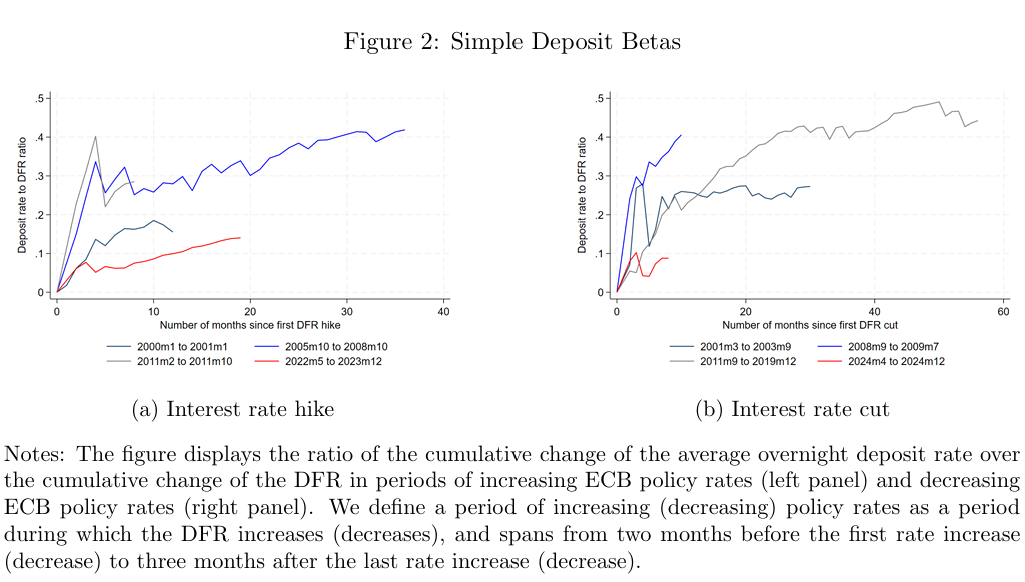
Our perspective: Understanding customer behavior is becoming just as important as understanding interest rates themselves. This reinforces the need for a quantitative, multi-factor approach to deposit modeling within every bank's ALM and Treasury function.
Further reading
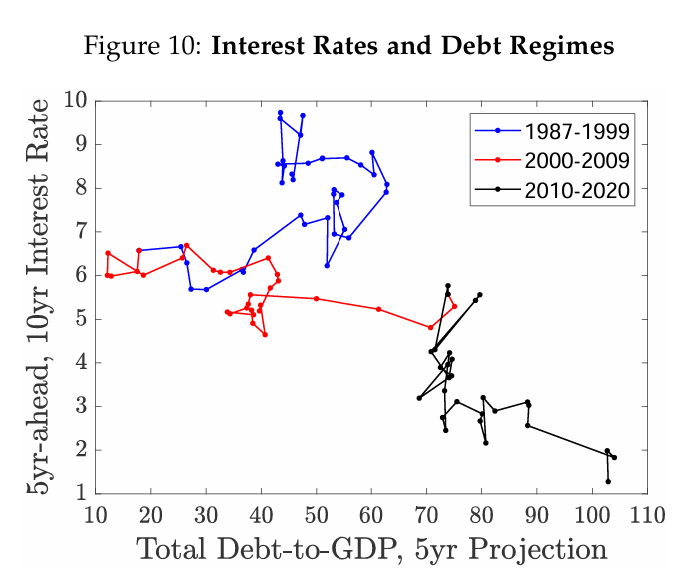
A recent Federal Reserve research paper revisits the relationship between government debt and long-term interest rates. Rather than providing a single answer, the study concludes that the impact depends on the level of debt, the reasons why debt increased, and how financial markets adjust over time.
For banks, this serves as another reminder that sovereign markets cannot be analyzed using simple historical relationships. Scenario analysis, stress testing, and forward-looking balance sheet simulations remain essential tools for evaluating potential impacts on interest rate risk, liquidity, funding costs, and investment portfolios.
Our perspective: There is no universal relationship between public debt and interest rates. Good ALM relies on scenarios rather than simplistic assumptions.
Further reading
In our previous newsletter, we shared several initiatives that were in preparation for the second half of the year. We are pleased to say that they are now becoming reality.
One of the highlights of September will be our free international webinar:
Is Your ALCO Ready for the Next Shocks?
Modern ALCO meetings are evolving beyond reviewing historical reports. Today's committees are expected to support strategic decision-making by combining forward-looking balance sheet analysis, scenario planning, regulatory expectations, and practical management actions.
Together with our distinguished international speakers, we will discuss how banks can strengthen ALCO effectiveness, improve decision-making, and better prepare for an increasingly uncertain environment. The webinar will also include a live case study demonstrating how quantitative planning can support strategic ALCO discussions.

Participation is free, but registration is required.
Another important milestone for Bearning this summer is the launch of the Bearning Professional School of ALM (PSALM).
Over the past several months, we have been bringing together our expertise in ALM, Treasury, Liquidity Risk, IRRBB, FTP, quantitative planning, and banking regulation into one structured learning pathway. Our goal is to provide banking professionals with a comprehensive program that combines theory, practical examples, Excel models, case studies, and real-world banking experience.
The program is now available for enrollment, and we will continue refining and expanding selected modules to ensure that participants always have access to the latest developments, best practices, practical case studies, and new learning materials.
Learn more about PSALM here: https://study.bearning.com/bundles/professional-school-of-alm-psalm

As a thank you to our newsletter readers, we have prepared a special introductory 40% discount for the Bearning Professional School of ALM (PSALM). Simply enter the coupon code 40PSALM during enrollment to receive your discount.
If you have already purchased one or more Bearning courses included in PSALM, please contact us before enrolling. We will prepare an individual discount code that recognizes your previous investment, ensuring that you only pay for the learning you have not yet completed.
We look forward to welcoming both new participants and our long-standing clients to the PSALM programme!
Na jeseň sme pre vás pripravili sériu odborných online školení zameraných na témy, ktoré dnes významne ovplyvňujú bankovníctvo a finančný sektor. Digitalizácia, umelá inteligencia, kybernetická bezpečnosť, AML a KYC, kryptoaktíva a regulácia MiCA či finančné trhy patria medzi oblasti, v ktorých sa očakáva neustály odborný rozvoj bankových profesionálov.
Registrácia na jesenné verejné školenia je už otvorená, neváhajte sa prihlásiť na bearning.sk:
Ponuku školení priebežne rozširujeme a aktualizujeme. Kompletný kalendár, podrobné programy a registráciu nájdete na: https://bearning.sk/sk/public-workshops-calendar
Tešíme sa na stretnutia, zaujímavé diskusie a prípadové štúdie počas jesenných odborných podujatí Bearning.
Test Your Knowledge with Bearning's Monthly Banking Quiz ✅❌❔
The correct answer and explanation will be published in our next newsletter.
❓ Which statement best describes intraday liquidity risk?
A) The risk that a bank will not have sufficient liquidity to meet its payment and settlement obligations during the business day, even if it remains solvent.
Intraday liquidity risk refers to a bank's ability to meet payment and settlement obligations throughout the business day. A bank may be well-capitalized and have sufficient liquidity overall, yet still encounter temporary shortages during the day due to the timing of incoming and outgoing cash flows.
Effective management of intraday liquidity is essential for participating in payment systems, securities settlement, and central bank operations. Failure to meet obligations on time can disrupt payment flows, damage the bank's reputation, and in severe cases create systemic risks for the financial system.
The Basel Committee's Monitoring Tools for Intraday Liquidity Management provides banks with a framework for measuring and monitoring these risks and highlights the importance of robust operational processes, real-time monitoring, and adequate liquidity buffers.
Why the other answers are incorrect

ALM & Treasury, Riadenie rizík, Finančné riadenie banky, Banková regulácia, Fintech

Súbory cookie
Používame nevyhnutné cookie na chod webu a voliteľné analytické/marketingové na zlepšenie služieb. Viac v zásadách používania cookie.