Newsletter
Newsletter 07-2026
Jun 2023
Unusual FX intervention in USA, fresh ECB review of two years of monetary policy implementation, US Treasury yields testing high levels, Lauch of the Bearning Professional School of ALM (PSALM)

Welcome to the August 2026 edition of the Bearning Newsletter! Summer wound down against a backdrop of markets paying close attention to detail: an unusual FX intervention that touched on trust between central banks, a fresh ECB review of two years of monetary policy implementation, and US Treasury yields testing levels not seen since 2007 as public debt crossed $40 trillion. Each is a reminder that balance sheet management runs on the details as much as the headlines.
On the Bearning side, it has been an active summer. We launched the Bearning Professional School of ALM (PSALM), opened registration for our free ALCO webinar on 17 September, and gave our Slovak-language presence a new home at bearning.sk.
In this edition, we share our perspective on the market developments that caught our attention, the latest from Bearning, and this month's banking quiz.
A Very Unusual FX Intervention: The US Sold Euros to Support the Yen
The US recently intervened to support the Japanese yen, but what stood out was not the intervention itself. It was how it was carried out. The New York Fed, acting on behalf of the US Treasury, sold euros rather than dollars to buy yen, and the ECB was reportedly informed only after the transaction had taken place.
Avoiding dollar sales may make sense on its own terms, particularly at a time when US Treasury yields are already under pressure. But conducting an intervention of this kind without prior consultation with European counterparts is a different matter. Central banks and treasuries rely not only on formal rules but also on established practice, coordination, and mutual trust between institutions.
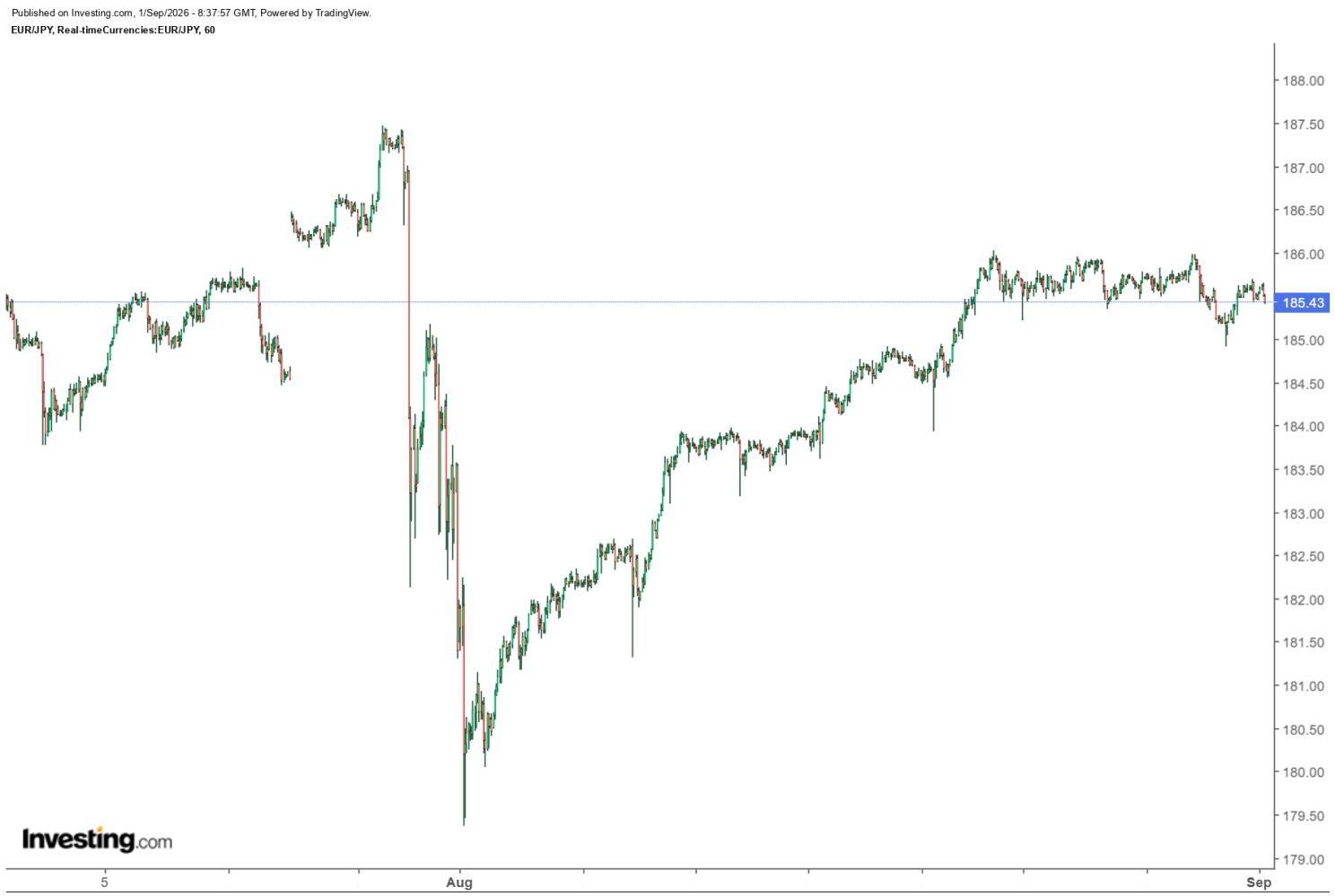
Our perspective: Episodes like this are worth watching closely. They raise a genuine question about whether unconventional intervention choices can gradually affect the level of trust and coordination between the US and Europe, something FX, Treasury, and risk teams should keep on their radar even when it does not directly touch their own balance sheet.
Further reading 📄 US sale of euros for yen intervention blindsided Europe: report - The Business Times (The Business Times)
The ECB published a new Occasional Paper (No. 398) reviewing how it implemented monetary policy in 2024 and 2025, and the pace of change over that period is considerable. Eight 25bp rate cuts between June 2024 and June 2025 brought the deposit facility rate from 4% down to 2%, with pass-through to unsecured and secured money market rates close to one-for-one. The Governing Council also narrowed the MRO-DFR spread from 50bp to 15bp and confirmed that main refinancing operations would play a central role in meeting banks' liquidity needs as excess liquidity declines, while demand for central bank refinancing stayed low, averaging under EUR 19 billion.
The collateral framework moved on as well: temporary crisis-era measures were phased out, a climate factor was added, and a new harmonized Eurosystem Collateral Management System (ECMS) went live. Meanwhile, required reserves became a larger share of a shrinking pool of excess liquidity as the balance sheet normalized.
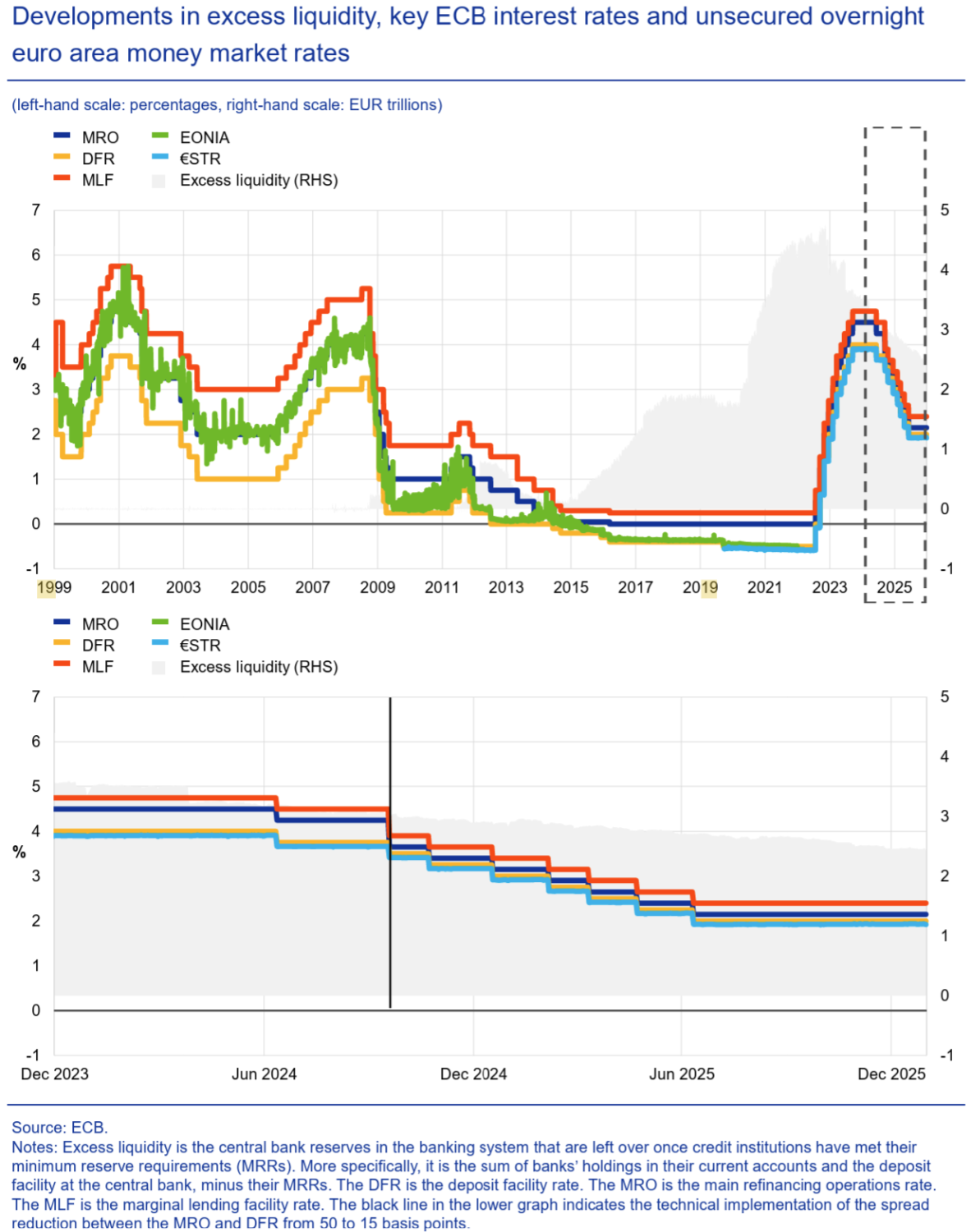
Our perspective: This is a practical benchmark for Treasury and Money Market teams to compare against their own bank's liquidity and short-term funding practices. From an ALM angle, it is also a useful prompt to ask how operationally ready a bank is to mobilize liquidity and access central bank facilities under different market conditions, not just to understand the rate path.
Further reading 📄 ECB Occasional Paper No. 398 📄 Fed New York's Annual Report on Open Market Operations, for an international comparison
US public debt has now passed $40 trillion, but the more relevant question for markets is what price investors will demand to keep financing it. The 30-year US Treasury yield recently moved above 5.3%, a level not seen since 2007, and the sensitivity at that maturity is significant.
At current yields, a 30-year Treasury carries a modified duration of roughly 15 years, so a 30bp rise in yield translates into about a 4.4% price decline, or roughly a USD 440,000 mark-to-market loss on a USD 10 million position. On the issuance side, the US Treasury issues roughly USD 22 to 25 billion of 30-year bonds per month, or around USD 275 billion a year. As a simple illustration, if the Treasury had to fund one year's worth of this new 30-year issuance at yields 30bp higher, that would translate into roughly USD 825 million of additional annual interest expense - repeated each year over the life of those bonds. Against this backdrop, the Treasury announced an increase in its long-end buyback operations to support market liquidity in the 10- to 30-year segment - a debt-management measure rather than monetary easing by the Fed.
A new BIS Bulletin, "High public debt in the Americas: non-linear implications for risk premia and inflation expectations," is timely against this backdrop. Its core message: once debt and interest burdens reach high levels, markets can react much more sharply to further fiscal deterioration.
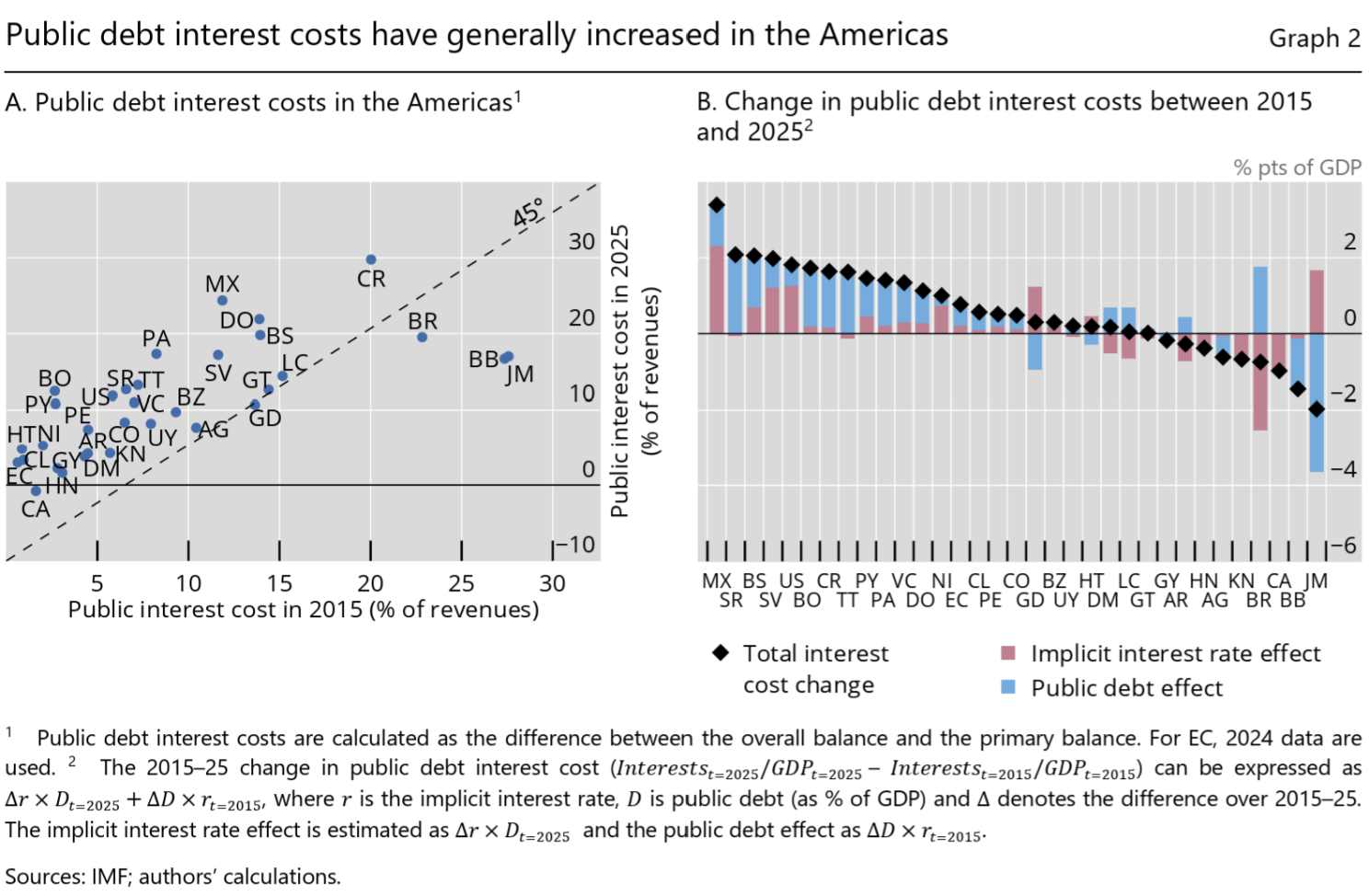
Our perspective: For banks, this is not only a sovereign debt story. It touches duration risk, bond portfolio valuations, CSRBB, liquidity, funding costs, and stress scenarios directly. The practical question for ALM and Treasury teams is at what yield the market becomes reluctant to absorb additional long-term sovereign duration without demanding a materially higher risk premium.
Further reading 📄 BIS Bulletin: High public debt in the Americas
The ECB has published its consolidated banking data for end-March 2026, covering almost 100% of the EU banking sector's balance sheet. The dataset benchmarks profitability, efficiency, asset quality, capital adequacy, liquidity, funding, and balance sheet structure across the sector. Headline figures for the period: EUR 34.33 trillion in total assets, a 1.98% non-performing loan ratio, RoE average 2.44%, and a 16.27% CET1 ratio.
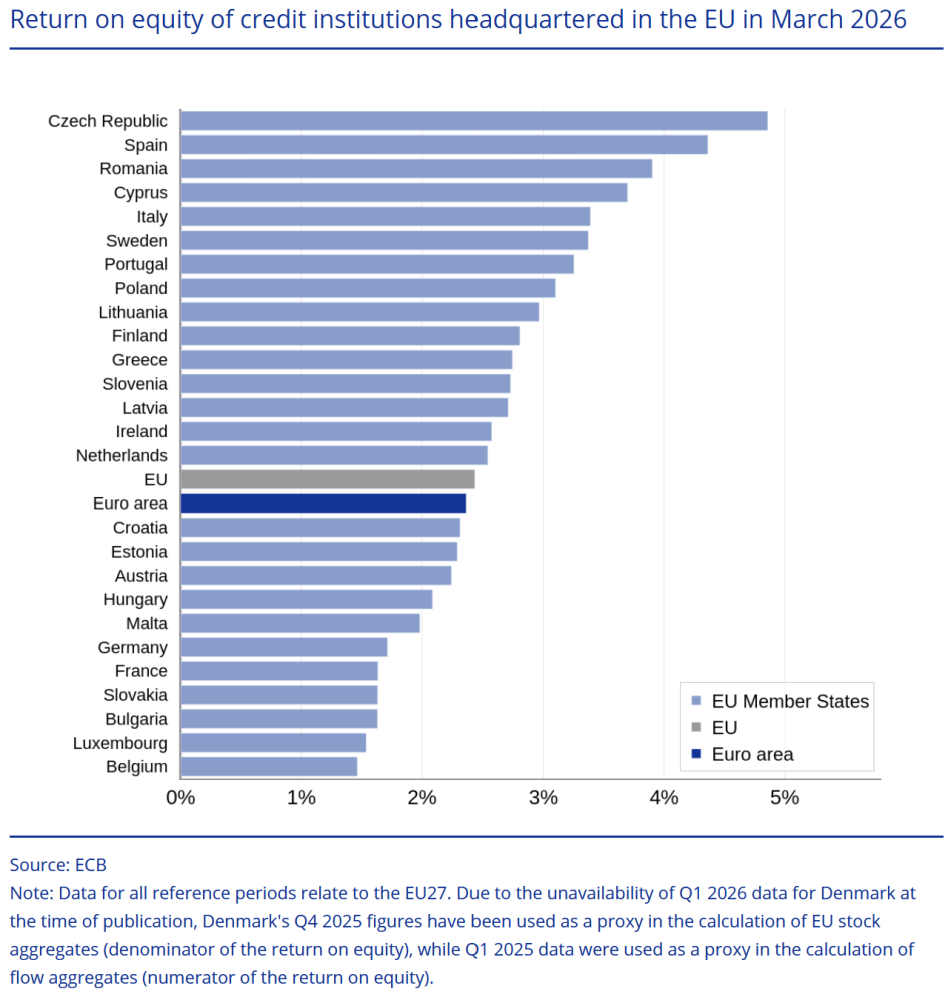
Our perspective: For bank managers, it is always useful to know how the market and peers are performing, and how your own institution compares. Used well, this kind of sector-wide benchmark supports more grounded conversations at ALCO and board level about where a bank's own metrics stand relative to the broader European market.
Further reading 📄 ECB Consolidated Banking Data for end-March 2026
New Professional School of ALM Programme and Free ALCO Webinar
We are glad to share that the Bearning Professional School of ALM (PSALM) has officially launched. Over the past months, we have brought together our expertise in ALM, Treasury, Liquidity Risk, IRRBB, FTP, quantitative planning, and banking regulation into one structured professional learning programme.
PSALM is designed for banking professionals who want to build or deepen their ALM expertise through a combination of structured theory, practical examples, Excel models, real-world case studies, knowledge tests, certificates, and flexible online learning. The programme will continue to develop over time, with modules regularly refined and expanded as new developments, case studies, and materials become available.
As a welcome offer, readers can use the coupon code GET30PSALM at checkout for 30% off enrolment. If you have already purchased Bearning courses included in PSALM, please contact us before enrolling so we can prepare an individual discount that reflects the courses you have already completed.
👉 Learn more and enroll here: Bearning Professional School of ALM (PSALM)

Registrations continue to come in every day for our upcoming free webinar on bank ALM regulatory expectations, quantitative decision-making, and strengthening ALCO decisions. The level of interest reflects how relevant this topic is for banks right now.
Today's ALM experts and ALCO members face a far more complex environment than just a few years ago. Trade tensions, inflation, changing interest rates, liquidity pressures, and credit deterioration rarely occur in isolation, and their combined impact can significantly affect a bank's profitability, liquidity position, and capital. The challenge is no longer simply measuring individual risks. It is understanding how multiple shocks interact across the entire balance sheet, and how ALCO can respond with confidence.
Martin Macko will be joined on the panel by Paul Garvin (ALM expert) and Michal Lopušan, CFA (Founder, QuantPlan) to discuss:
If you work in ALM, Treasury, Risk Management, Finance, or ALCO, we would be delighted to welcome you.
📅 17 September 2026, 3:00 PM–4:00 PM CEST
Participation is free, but registration is required.
👉 Register here: Is Your ALCO ready for the Next Shocks? - Bearning

S radosťou oznamujeme, že sme spustili našu novú slovenskú webstránku bearning.sk. Nájdete na nej naše vzdelávacie programy pre bankárov a profesionálov z finančného sektora, informácie o Bearning, našich lektoroch a možnostiach spolupráce.
Na novom webe postupne nájdete všetko, čo v Bearning robíme, od verejných a firemných školení cez e-learning až po konzultácie a mentoring pre banky a ich manažérov. Bearning prináša odborné vzdelávanie a poradenstvo pre finančných profesionálov už od roku 2007, a naším cieľom zostáva prepájať odborné znalosti s praktickými skúsenosťami z bankovníctva.
👉 Pozrite si nový web a dajte nám vedieť, ako sa vám páči: https://lnkd.in/d3hsVfeJ
A keď už na novom webe budete, pozrite si aj kalendár jesenných kurzov. Vybrať si môžete z tém ako ALM a finančné trhy, AML a KYC, využitie AI v bankovníctve, kybernetická bezpečnosť, regulácia MiCA a kryptoaktíva. Na jesenných kurzoch sa na vás tešíme spolu s ďalšími lektormi zo Slovenska a Česka, tentokrát s Michalom Lopušanom, Lenkou Froňkovou a Martinom Mužným.
👉 Kompletný kalendár, podrobné programy a registráciu nájdete na našom novom Bearning webe tu: Bearning SK
Test Your Knowledge with Bearning's Monthly Banking Quiz ✅❌❔
Ahead of our 17 September ALCO webinar, this month's question turns to regulatory expectations on IRRBB:
❓ As of 1 January 2026, the Basel Committee's recalibrated IRRBB interest rate shock scenarios apply. What was one of the key changes to their calibration?
👉 We will share the correct answer and a detailed explanation in our next newsletter.
📄 Source: Basel Committee on Banking Supervision, final recalibration of the IRRBB standard interest rate shock scenarios (July 2024), applicable from 1 January 2026.
Review and Learn from Last Month's Quiz
❓ Which of the following topics should be the highest priority at every Asset-Liability Committee (ALCO) meeting?
✅ Correct answer: C) Current and projected liquidity position, interest rate risk, funding strategy, and the forward-looking balance sheet outlook.
Explanation
ALCO exists to steer the bank's balance sheet as a whole, not to manage any single product line or reporting cycle. Its core mandate is to monitor and act on the interconnected risks that determine whether the bank can meet its obligations and sustain its margin under changing conditions: the current and projected liquidity position, interest rate risk in the banking book (IRRBB), the funding strategy that supports both, and a forward-looking view of how the balance sheet is likely to evolve under different scenarios.
This forward-looking dimension is what separates an effective ALCO from one that merely reviews historical reports. A committee that only looks backward at what already happened cannot get ahead of a liquidity squeeze, a funding gap, or an adverse rate move. Supervisory frameworks for IRRBB, liquidity risk, ICAAP and ILAAP consistently emphasize forward-looking risk assessment, scenario analysis, governance, escalation, and credible management actions. An effective ALCO brings these elements together at balance-sheet level so that emerging risks translate into decisions rather than commentary.
Why the other answers are incorrect
Key takeaway for practice
A well-run ALCO keeps its agenda anchored to liquidity, interest rate risk, funding strategy, and the forward-looking balance sheet outlook, and treats everything else, performance metrics, technology updates, commercial results, as supporting input rather than the main event. This is also the theme at the center of our 17 September webinar, where a live case study will show how multiple shocks to these same variables can be quantified together to support better ALCO decisions.

ALM & Treasury, Riadenie rizík, Finančné riadenie banky, Banková regulácia, Fintech

Súbory cookie
Používame nevyhnutné cookie na chod webu a voliteľné analytické/marketingové na zlepšenie služieb. Viac v zásadách používania cookie.