
Newsletter
Newsletter 08-2026
Jun 2023

The Future of Banks’ Liquidity – New Challenges Ahead?
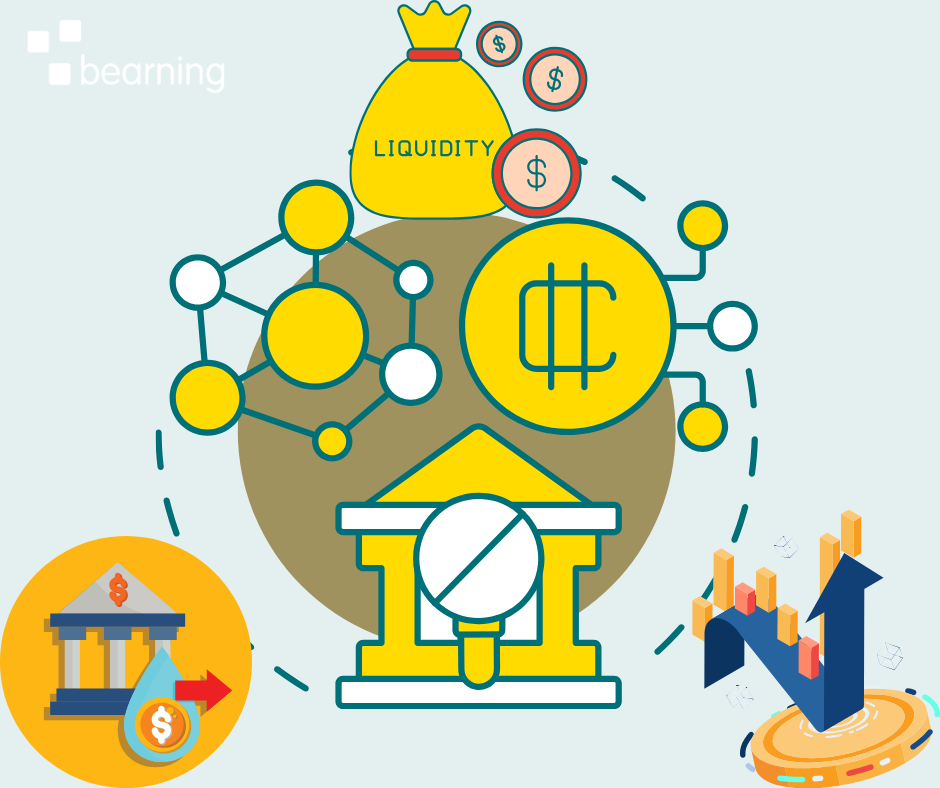
One of the cornerstones of commercial banking has always been deposits. Client money placed in banks has historically provided the main funding base for the sector. Banks use these resources to perform their fundamental role: maturity transformation – channeling deposits into loans that fuel business growth and drive the economy.
A significant part of bank liabilities also comes from transactional accounts. Although these accounts (especially retail deposits) are legally the shortest maturity possible—since clients can access their funds at any time—statistically, most of this money tends to remain in banks for the long term. This stability makes them a crucial source of funding. But if transactional accounts were gradually replaced by alternative forms of money, banks could lose a major portion of their liquidity.
Moreover, if new alternatives offered more attractive conditions (such as paying interest), clients might not only shift their transactional balances but also withdraw savings deposits and transfer them to these new forms of money. This potential shift raises fundamental questions about how commercial banks will secure stable funding in the future.
🏦 After the Global Financial Crisis (GFC), regulators made liquidity requirements one of the most closely monitored areas of supervision. Banks needed to prove that they could withstand stress and avoid liquidity shortages. Yet, with the development of new forms of money, these traditional funding models may come under increasing pressure.
🔹 CBDCs (Central Bank Digital Currencies): If widely adopted, they could drain deposits from commercial banks. Still, it is unlikely that central banks would allow their own innovation to destabilize the banking sector. Limits on usage or compensating liquidity tools for banks would probably be introduced.
🔹 Stablecoins (privately issued digital money): The story here is different. A larger-scale move of deposits into stablecoins could create a serious liquidity gap for banks. This risk is amplified if stablecoins were allowed to offer interest or yield—potentially making them more attractive than deposits.
The Bank Policy Institute recently highlighted this risk, pointing out that without clear restrictions, stablecoins could incentivize deposit outflows of up to $6.6 trillion, undermining banks’ ability to make loans and increasing borrowing costs across the economy. (See their analysis here 👉 BPI Blog)
It is often assumed that payments in stablecoins are the cheapest and most efficient alternative. However, this may not be the case. An interesting 👉 Analysis by Stephane Canon compares the transaction costs of using stablecoins with more traditional payment systems. Looking at real-world cases, the findings suggest that despite the technological promise of digital assets, traditional payment methods still remain cheaper and more efficient. For example, in cross-border transfers between the UK and the Eurozone, specialist money transfer providers such as Wise generally offer the best combination of transparency, simplicity, and cost-effectiveness. Traditional bank transfers tend to be the most expensive due to poor exchange rates and intermediary fees, while stablecoin transactions, although technically possible, involve additional conversion costs and blockchain fees that make them less attractive. The situation is similar in domestic transfers within the US, where traditional solutions such as ACH, Wire, Zelle, or the new FedNow system prove to be faster, simpler, and significantly cheaper than using stablecoins. So, the conclusion is clear: while stablecoins may serve certain niche purposes, when it comes to everyday payments and money transfers, traditional banking channels continue to provide the most practical and cost-effective option.
⚖️ The real risk may not lie in whether new forms of money are technically cheaper or more efficient, but in the possibility that certain solutions could gain popularity primarily for political reasons. If regulatory or political decisions were to favor alternatives without fully considering their systemic consequences, commercial banks could face significant outflows of deposits. Such a shift would weaken their liquidity position and limit their capacity to fund the economy through lending. In this sense, the greatest threat is not technological progress itself, but the adoption of financial innovations driven by politics rather than expertise.
So, where is the banking industry heading? Will banks adapt and central banks manage a smooth transition, or will competition from digital money disrupt traditional liquidity models?
At Bearning, we see the future of money as a coexistence of several alternatives rather than a single winner. All three solutions have already proven to be functional in practice. Cryptocurrencies, including stablecoins, have not only survived the Covid crisis but have also gained a place in the portfolios of large investment funds. CBDCs, on the other hand, are being tested by central banks and international institutions such as the BIS Innovation Hub, which shows that their use is being carefully considered at the highest policy levels. At the same time, existing digitalized services based on fiat currencies continue to demonstrate their resilience and ability to adapt.
That is why we believe that in the medium term, all three forms of money will continue to operate in parallel. Over the longer horizon, the market and regulatory environment will determine which model becomes dominant. What we see as essential, however, is that standard banks must remain at the core of the system. A collapse of commercial banking due to sudden systemic changes in global finance would present a real danger. Safeguarding banks’ liquidity, therefore, is not only a regulatory requirement but a fundamental condition for financial stability and sustainable growth.
👉 What is your opinion on the future development?
#BankingIndustry #Banking #Bank #finances #markets #money #riskmanagement

ALM & Treasury, Riadenie rizík, Finančné riadenie banky, Banková regulácia, Fintech

Súbory cookie
Používame nevyhnutné cookie na chod webu a voliteľné analytické/marketingové na zlepšenie služieb. Viac v zásadách používania cookie.