Newsletter
Newsletter 08-2026
Jun 2023

Effective FTP usage, how smaller European banks are performing, AI in securities markets, and why stablecoins matter for Treasury and ALM.

Welcome to the January 2026 edition of the Bearning Newsletter!
Regulatory expectations, competitive pressures, technology, and market structures continue to evolve – and for banks of all sizes, understanding these shifts is increasingly important for sound balance-sheet management and strategic decision-making.
In this first issue of 2026, we focus on topics particularly relevant for banking professionals – especially those working in ALM and Treasury, Risk Management, and senior management: effective use of Funds Transfer Pricing (FTP), competitive dynamics among small and mid-sized European banks, regulatory perspectives on artificial intelligence in financial markets, and the growing role of stablecoins in the digital money ecosystem.
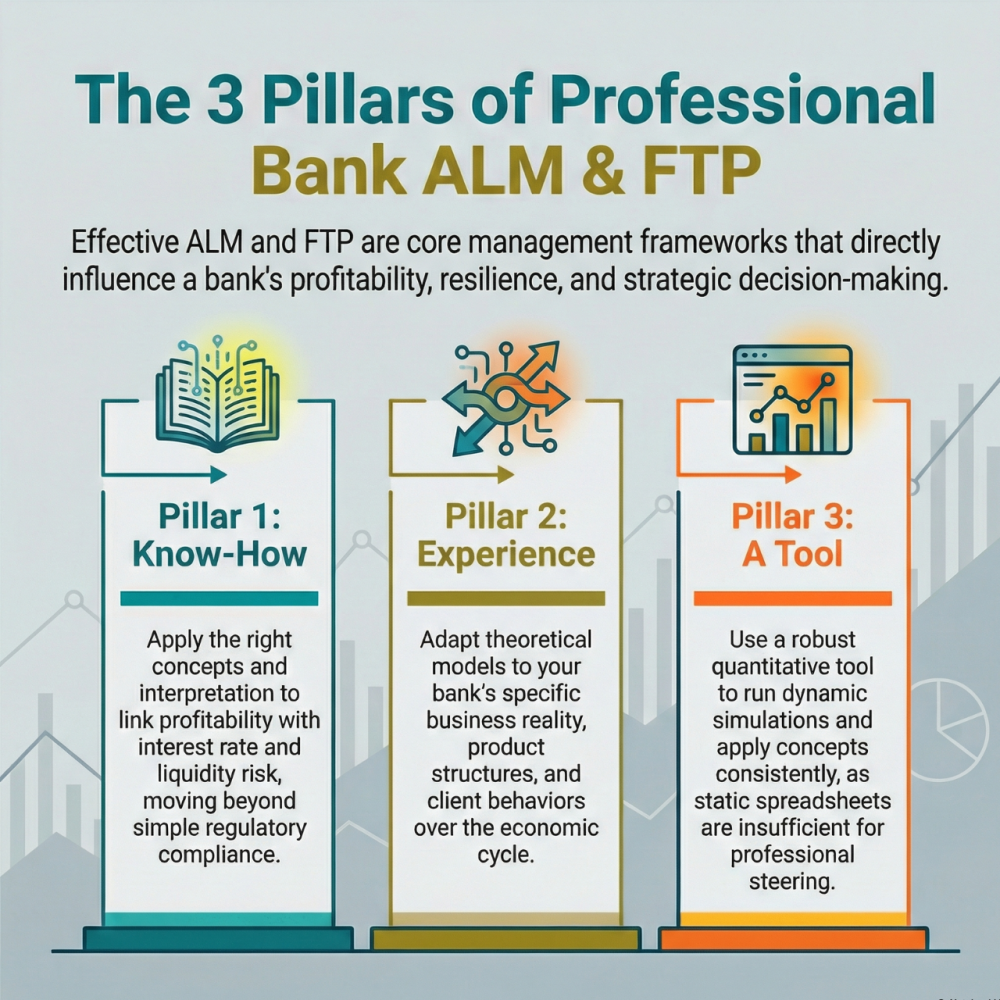
Funds Transfer Pricing (FTP) remains one of the most powerful – and still often underutilized – tools in bank management. When designed and applied properly, FTP connects business activities with balance-sheet structure, liquidity costs, and interest rate risk, allowing banks to steer profitability in a disciplined and transparent way.
In our recent blog, we looked at how effective FTP usage supports liquidity management and interest rate risk steering, especially in an environment where margins are under pressure and supervisory scrutiny of ALM practices remains high. The article highlights typical pitfalls in FTP frameworks, such as overly simplified curves or weak links to behavioral assumptions, and explains how FTP can be aligned with both NII and risk perspectives. For bankers, this is a practical reminder that FTP is not just a technical calculation, but a core management instrument.
👉 Read the full blog here: https://www.linkedin.com/pulse/alm-banking-effective-ftp-usage-liquidity-interest-rate-martin-macko-4zmif
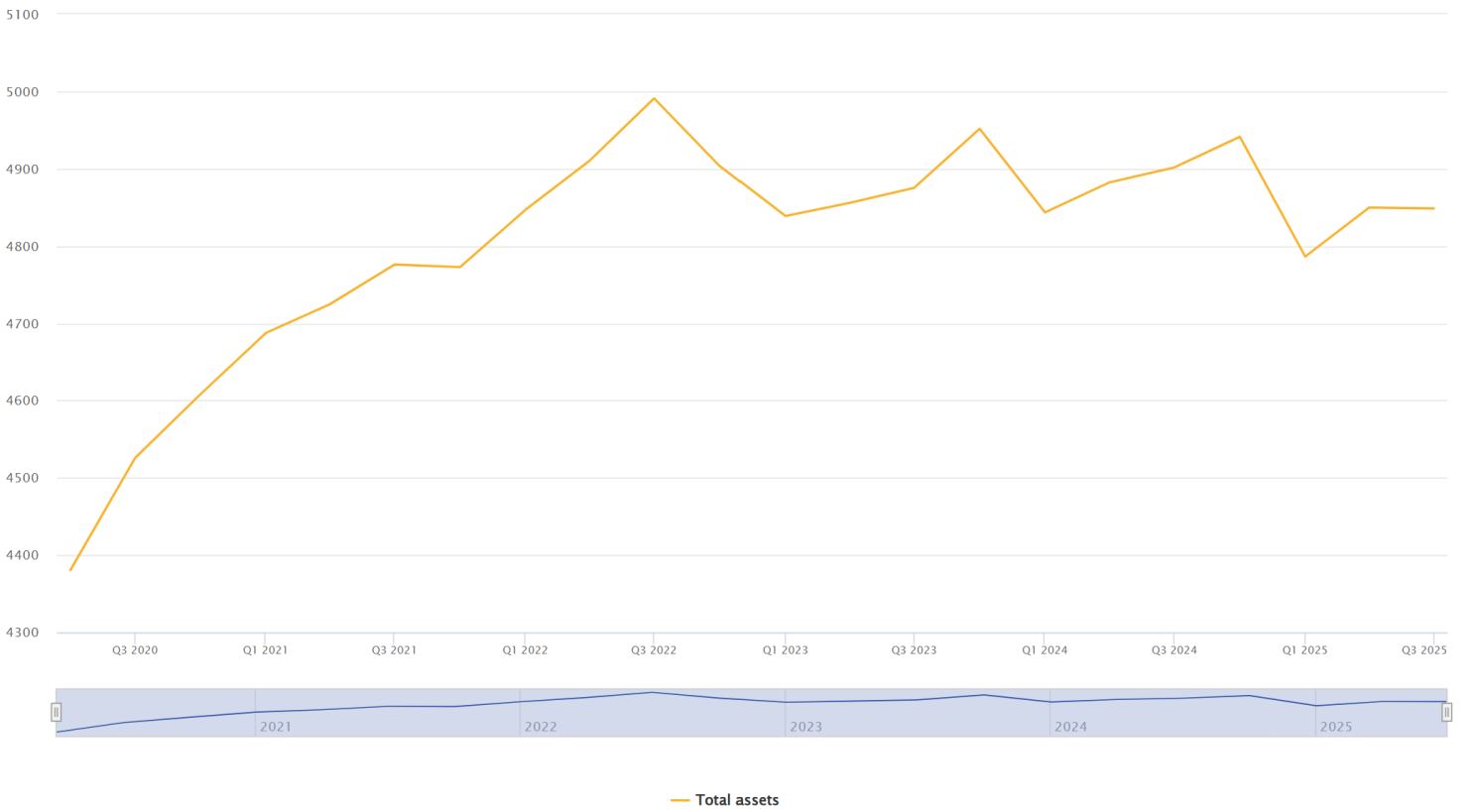
Discussions about banking performance often focus on large international groups, but recent data show that competitive dynamics among small and mid-sized banks in Europe are just as important – and in some cases more revealing. In a recent LinkedIn post, we summarized how competitors of small and mid-sized European banks have been performing, drawing on publicly available supervisory and financial data. The picture is mixed: while many institutions continue to report solid capital and liquidity positions, profitability dispersion remains high, and structural challenges persist in areas such as cost efficiency, interest rate sensitivity, and funding structure.
For management teams in smaller institutions, this comparison underlines the importance of strong ALM, realistic behavioral assumptions, and disciplined balance-sheet steering. In an environment where scale advantages are limited, professional risk and profitability management becomes a key differentiator. 👉 See the summary and discussion here: https://www.linkedin.com/posts/martin-macko-bearning_ecb-ecbbankingsupervision-ssm-activity-7421602222616014848-CM1J
Artificial intelligence is increasingly used across financial markets, from trading and portfolio management to compliance and risk monitoring. While AI offers efficiency gains and new analytical capabilities, it also raises important regulatory and governance questions.
The International Monetary Fund (IMF) recently published a technical note and manual focusing on regulatory considerations related to the use of AI in securities markets. The IMF highlights key risks, including model opacity, data quality issues, concentration risk, and potential procyclicality. At the same time, the paper stresses the need for proportionate regulation that allows innovation while ensuring market integrity and investor protection.
For banks active in capital markets or investment services, this perspective is highly relevant. It reinforces the message that AI adoption must be accompanied by strong governance, clear accountability, and integration with existing risk and compliance frameworks.
👉 Read our LinkedIn commentary and access the IMF material here: https://www.linkedin.com/posts/martin-macko-bearning_new-imf-technical-note-and-manual-activity-7414955932939403264-OcfH
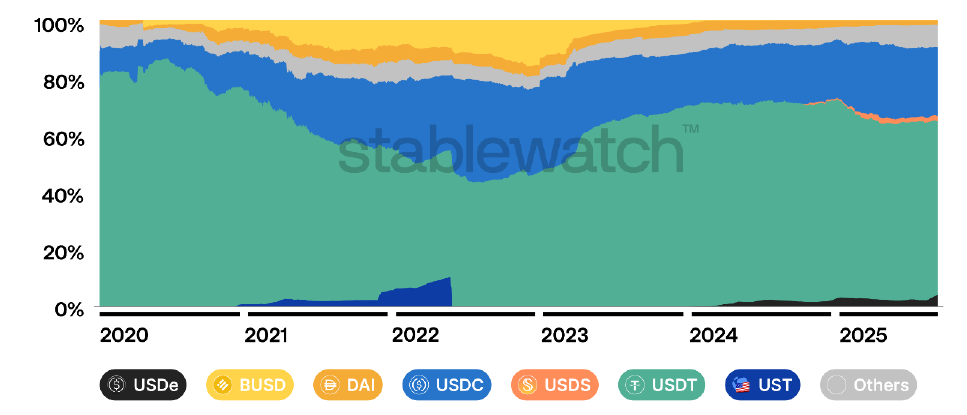
The discussion around digital money has moved well beyond theory. Stablecoins, in particular, are gaining importance as practical instruments used in payments, settlement, and liquidity management outside the traditional banking system.
A comprehensive overview of how stablecoins function – and why they matter – is provided in the Stablecoin Toolkit published by Wharton’s Blockchain and Digital Asset Project. The toolkit explains different stablecoin designs, reserve structures, and risk factors, and places stablecoins in the broader context of financial markets and regulation.
For banks, stablecoins are no longer just a fintech curiosity. They interact with money markets, safe assets, and client behavior, and therefore have implications for Treasury, ALM, and liquidity planning. Understanding how they work is becoming an essential part of staying informed about the future structure of money and payments.
👉 You can access the Stablecoin Toolkit here: https://bdap.wharton.upenn.edu/wp-content/uploads/2026/01/Stablecoin-Toolkit.pdf
All these topics are also regularly addressed in Bearning’s courses and workshops on banking regulation, risk management, fintech & digitalization, and AI in finance, where we focus on translating regulatory expectations into practical governance and decision-making.
In January, we shared an overview of Bearning’s Fit & Proper programme tailored specifically for bank boards and senior management. Regulatory expectations for board members continue to increase – not only in terms of formal qualifications, but also in demonstrable understanding of key banking topics such as ALM, risk management, regulation, digitalization, cybersecurity, and AML & KYC. The Bearning Fit & Proper programme is designed as a practical preparation and development tool for board members, supervisory board members, and top executives. Rather than focusing on theory alone, it connects regulatory expectations with real balance-sheet topics, risk reports, and strategic decisions that boards are expected to understand, challenge, and oversee.
This type of targeted preparation is increasingly relevant in the context of supervisory assessments, governance reviews, and ongoing dialogue with regulators. 👉 Read more in our LinkedIn post here: https://www.linkedin.com/posts/martin-macko-bearning_fit-proper-programme-for-bank-boards-tailor-activity-7419314085676302336-qOxH

Another key focus area in January was digital money – including cryptocurrencies, stablecoins, and central bank digital currencies (CBDCs). Banks are increasingly required to understand not only the technology, but also the regulatory, risk, and balance-sheet implications. Digital money topics are therefore a stable part of Bearning’s training portfolio, often combined with regulatory perspectives such as MiCA and broader discussions on the future of money.
👉 See our post on digital money course here: https://www.linkedin.com/posts/martin-macko-bearning_kryptomeny-stablecoiny-digitaerlne-activity-7422714696853557249-qP0m
We would like to highlight an upcoming live webinar focused on two core pillars of modern bank management: Funds Transfer Pricing (FTP) and quantitative balance-sheet planning. We will examine how funding structure, liquidity costs, and interest rate assumptions are translated into FTP curves, product pricing, and profitability steering. The session is designed for professionals working in ALM, Treasury, Controlling, and senior management roles who want to strengthen the link between balance-sheet strategy and financial results. The focus is on practical decision-making rather than theory, reflecting how FTP and quantitative planning are used in real bank ALCO and management processes.
A key part of the webinar will be real-life case studies based on the QuantALM system, showing how banks can apply quantitative ALM and planning tools in practice – from scenario analysis and FTP calibration to profitability and risk impact assessment.
💶 Early bird discount: 10% off for early registrations, valid until the end of February, using coupon code 10FTP
👉 More information and registration are available here: https://study.bearning.com/products/live_events/funding-to-profit-live-event
For those who prefer structured, self-paced learning, Bearning will again offer a 40% discount on its e-learning bundles starting February 1, 2026.
Our e-learning bundles cover the core skill set required for banking professionals, including Asset and Liability Management (ALM), Funds Transfer Pricing (FTP), Treasury and financial markets, bank regulation, risk management, and digitalization. The bundles include extensive study materials, quizzes with detailed explanations, and certificates upon completion. 👉 To apply the discount, use coupon code 40BEAR2026 at checkout. The offer is valid from February 1, 2026, and applies to selected Bearning e-learning bundles. You will get:
👉 Explore the Bundles at Discounted Price: https://study.bearning.com/collections/bundles
More details about all Bearning courses, consulting, and e-learning options are available at bearning.com.
V januári sme realizovali odborný kurz venovaný digitálnym peniazom, ktorý opäť potvrdil, že ide o tému, ktorá bankárov mimoriadne zaujíma.
Kurz sa zameral na aktuálny vývoj v oblasti digitálnych mien, najmä na výrazný nárast významu stablecoinov od leta minulého roka, ako aj na spomalenie dynamiky projektov digitálnych mien centrálnych bánk (CBDC). Diskutovali sme aj pochybnosti niektorých krajín o tom, či má zavádzanie CBDC v ich súčasnej podobe ekonomický a systémový prínos.
Dôležitou súčasťou školenia bolo systematické porovnanie všetkých hlavných foriem digitálnych peňazí – kryptomien, stablecoinov, CBDC a digitálnych foriem fiat mien – s fungovaním dnešného peňažného systému. Prediskutovali sme výhody, nevýhody a riziká (technologické aj regulačné), ako aj ich praktické dopady na banky, platobné systémy a finančnú stabilitu.
👉 Viac informácií o Bearning kurze "Digitálne peniaze" nájdete na našom web bearning.sk tu: https://bearning.sk/sk/training/Digital-Money
Nadchádzajúce verejné kurzy Bearning(SK)
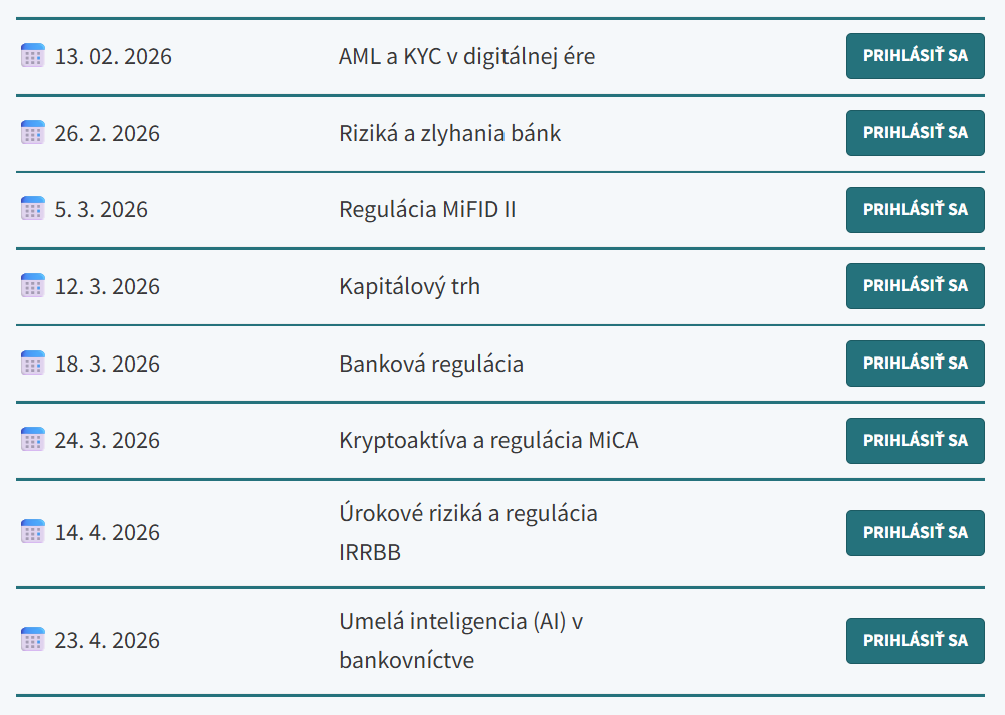
Náš najbližší kurz sa zameriava na prepojenie AML a KYC s digitálnymi technológiami, ktoré menia spôsob identifikácie klientov, monitorovania transakcií a riadenia rizík. Budeme sa venovať využitiu umelej inteligencie ako nástroja, ale aj ako nového zdroja rizík – vrátane podvodov s využitím AI, regulačných povinností, AI v risk-based prístupe a transakčnom monitoringu, digitálnej identifikácie klientov, ako aj RegTech riešení a automatizácie v AML a KYC.
Okrem toho sa však môžete už teraz prihlásiť aj na naše ďalšie kurzy:
Test Your Knowledge with Bearning’s Monthly Banking Quiz ✅❌❔
Digital currencies and stablecoins have become a mainstream topic for banks, supervisors, and financial markets. Their growing scale makes them increasingly relevant for payments, liquidity, market infrastructure, and financial stability discussions.
❓ Question: As of the end of January 2026, what is the approximate total market capitalization of all stablecoins combined?
💡 Hint: Stablecoins have grown rapidly over the past two years, driven mainly by USD-denominated coins.
👉 The correct answer and a short explanation will be published in the next Bearning newsletter.
In our November 2025 newsletter, we asked a question inspired by our capital markets and MiFID II workshops, focusing on the structural differences between Exchange-Traded Funds (ETFs) and Exchange-Traded Notes (ETNs).
❓ Question: What is the primary risk associated with an Exchange-Traded Note (ETN) that is not typically a factor for a UCITS Exchange-Traded Fund (ETF)?
✅ Correct answer: D) Issuer credit risk.
Explanation:
Exchange-Traded Notes (ETNs) are unsecured debt instruments issued by a bank or financial institution. Although they are traded on exchanges and often track the performance of an underlying index, commodity, or strategy, their structure differs fundamentally from that of UCITS Exchange-Traded Funds (ETFs).
The key additional risk for ETN investors is issuer credit risk. If the issuing bank were to become insolvent, ETN holders would be exposed to the issuer’s creditworthiness and could suffer losses, regardless of how the underlying index performs.
By contrast, UCITS ETFs are collective investment schemes that hold a portfolio of underlying assets (or collateral in the case of synthetic replication). These assets are typically segregated and protected under UCITS rules, meaning that investors are not directly exposed to the credit risk of the ETF provider.
Why the other options are not correct:
Understanding these differences is essential for banks involved in product governance, MiFID II suitability assessments, and client communication, especially when distributing structured or exchange-traded products.

ALM & Treasury, Riadenie rizík, Finančné riadenie banky, Banková regulácia, Fintech

Súbory cookie
Používame nevyhnutné cookie na chod webu a voliteľné analytické/marketingové na zlepšenie služieb. Viac v zásadách používania cookie.