Newsletter
Newsletter 08-2026
Jun 2023

FSB on structural liquidity and funding risk, what 'stable deposits' really mean, and ECB expectations for non-executive directors.

Welcome to the February edition of the Bearning Newsletter.
Recent publications from the FSB, BIS and ECB once again confirm that structural liquidity, funding resilience, and behavioral modelling of deposits remain central topics for banks in 2026. The lessons from recent market turbulence are still highly relevant — especially for Asset & Liability Management (ALM), Treasury, and risk functions.
At the same time, professional corporate governance and the quality of engagement by bank boards are becoming increasingly important. Supervisors expect non-executive directors not only to understand capital ratios, but also to actively challenge ALM assumptions, liquidity risk, and strategic balance sheet positioning. Alongside these themes, we continue to focus on practical regulatory topics, including AML in the digital era — a subject we recently covered in boards consulting as well as in one of our live courses.
The Financial Stability Board (FSB) recently published a highly relevant paper analyzing structural liquidity, funding risk and balance sheet resilience in banks. The key message is clear: liquidity resilience cannot be assessed only through regulatory ratios such as LCR or NSFR. Structural funding composition, repo market dynamics, collateral usability and funding concentration play a crucial role — especially under stress conditions. Among the important observations:
For ALM and Treasury professionals, this reinforces the importance of forward-looking liquidity planning and integrated balance sheet steering.
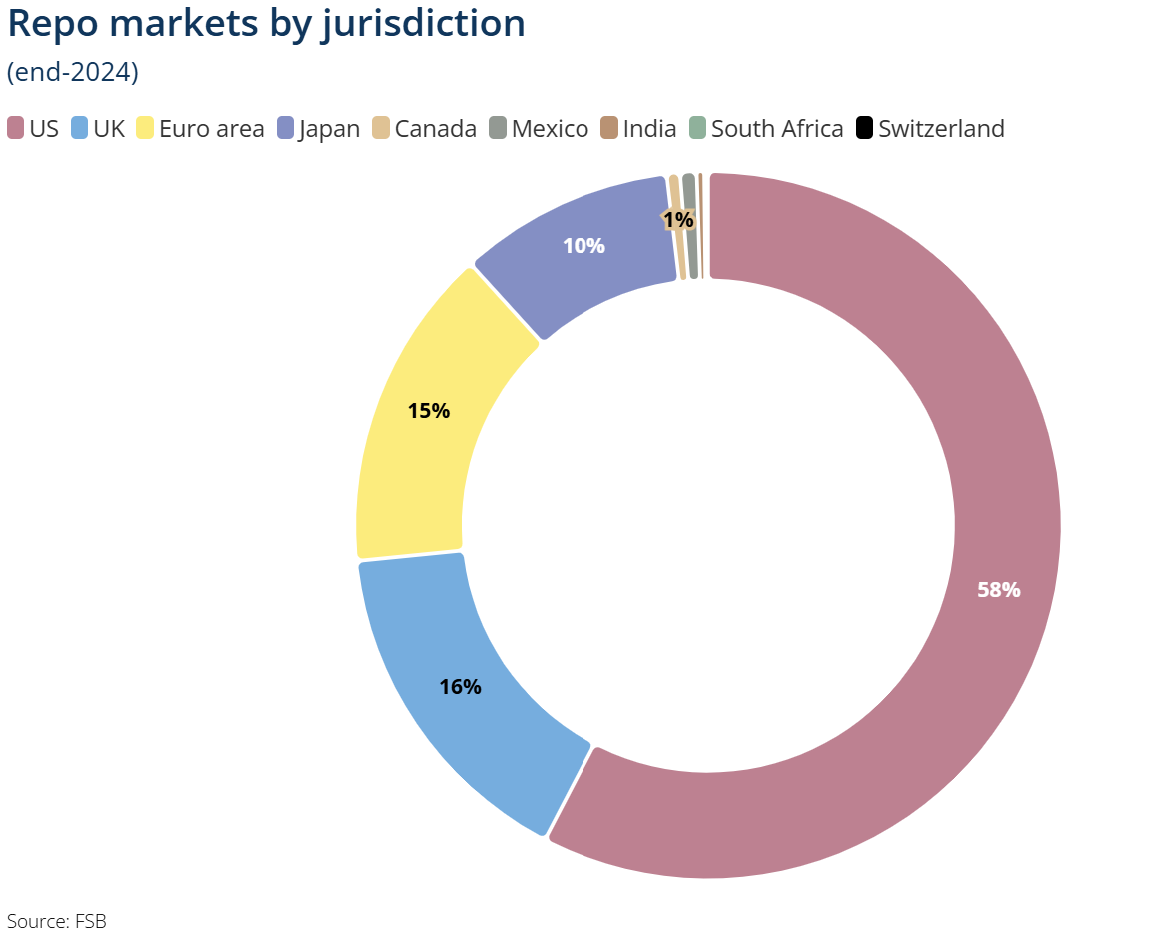
👉 Read my LinkedIn commentary to this topic here, and 👉 Access the original FSB publication here: Vulnerabilities in Government Bond-backed Repo Markets - Financial Stability Board
Another important contribution comes from the BIS, which reviewed how banks model non-maturing deposits (NMDs) and what “deposit stability” actually means in practice. In many institutions, current and savings accounts are treated as stable funding. However, the BIS analysis shows:
For ALM, liquidity management and IRRBB frameworks, this directly affects:
The core conclusion is not that deposits are unstable — but that behavioral modelling must be realistic, regularly validated, and consistent with market developments.
👉 Read my LinkedIn to this topic commentary here, and 👉 Read the full BIS paper here: https://www.bis.org/bcbs/publ/wp47.pdf
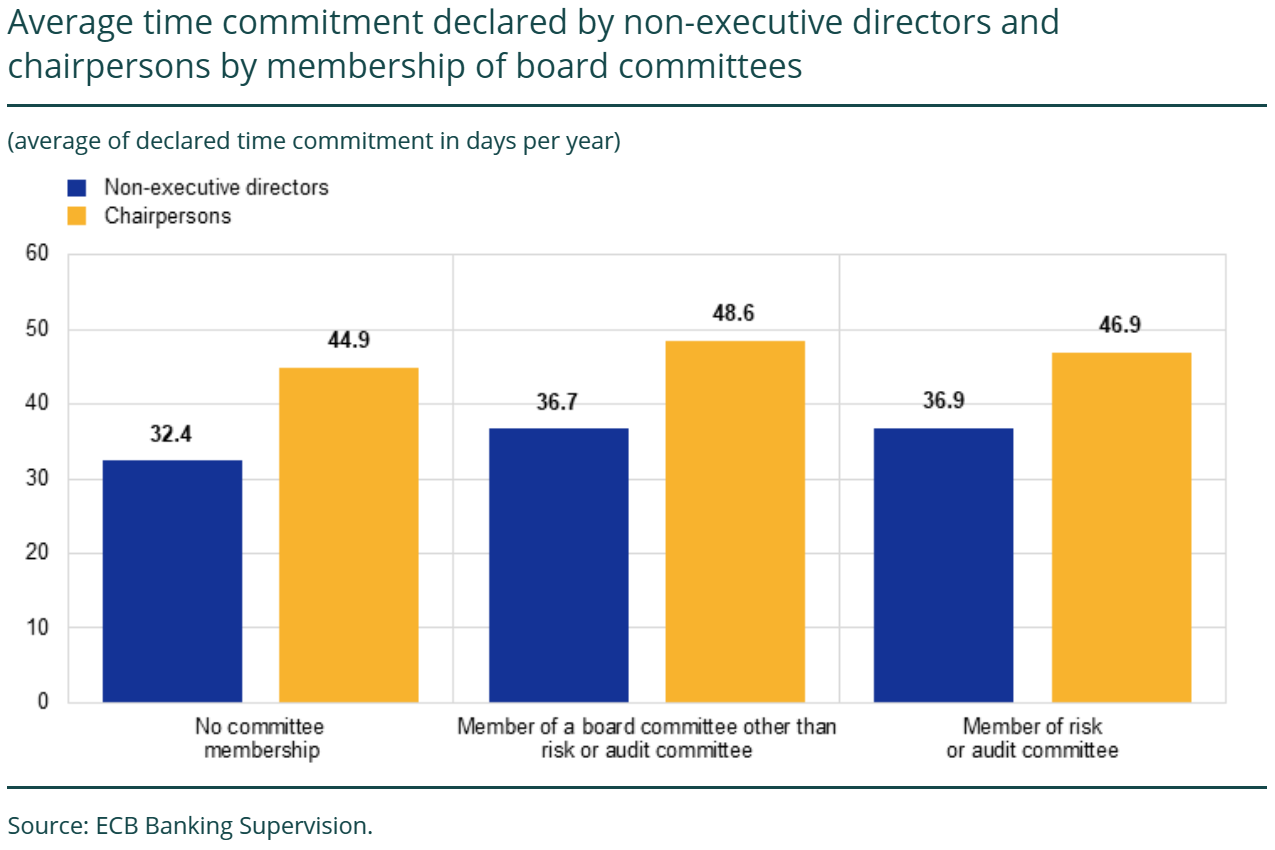
The ECB published an analysis on the engagement and effectiveness of non-executive directors in the banking sector. Supervisors increasingly expect board members to:
This is highly relevant for bank senior management and supervisory board members. ALM is not only a technical function — it is a strategic steering discipline that directly influences profitability, resilience and long-term stability.
👉 Read my LinkedIn post on this topic here.
From Regulatory Compliance to Strategic Steering
If recent publications from the FSB, BIS and ECB have one common denominator, it is this: balance sheet structure still matters. Asset & Liability Management is not a regulatory reporting exercise. It is a strategic discipline that determines how a bank performs under stress, how it protects its margin, and how it positions itself in changing interest rate environments.
In many institutions, ALM is still perceived primarily through the lens of IRRBB metrics, liquidity ratios or FTP allocations. However, recent market developments — from rapid rate cycles to digital deposit dynamics — demonstrate that modelling assumptions, behavioral maturity estimates and funding structure analysis must continuously evolve. A professional ALM framework integrates structural liquidity, deposit modelling, Funds Transfer Pricing and scenario analysis into one coherent steering concept.
This was also the central theme of my recent presentation in Prague, where I spoke about interest rate risk within a broader seminar on risk management and stress testing. The discussion focused on how interest rate shocks transmit through the balance sheet — affecting both economic value and net interest income — and how behavioral assumptions about deposits and repricing gaps significantly influence results.
Beyond ALM, we continue to work with banks on related areas such as AML in the digital era, governance expectations for boards, and regulatory interpretation. But ALM remains one of the most requested and strategically relevant topics — particularly in the current environment of margin pressure and funding competition. Reflecting this market demand, Bearning will host two focused ALM webinars designed as consecutive deep-dive sessions:
Both sessions are designed to complement each other. We therefore encourage participants to attend both days to gain a comprehensive view of modern ALM practice. For this reason, we offer a combined bundle of both at a more advantageous price: 👉 https://study.bearning.com/bundles/ftp-and-nmd-modelling-webinars-bundle
Each webinar bundle also includes:
Early Bird Savings – 10% Discount: Participants booking an individual webinar session until the end of February can benefit from a 10% early bird discount using the coupon code: ALM10ERL . For those registering for the combined two-day bundle, the early bird discount is extended until the end of March.

The objective is not only to explain regulatory requirements, but to strengthen practical understanding of how balance sheet steering works in reality — linking modelling assumptions, FTP design and strategic management decisions.
Vo februári sme v Bearning realizovali viacero odborných kurzov pre banky a finančné inštitúcie. Zamerali sme sa najmä na oblasti riadenia rizík a regulácie, digitalizácie, ale aj KYC a AML. Ako príklad uvádzame dva z nich:
🔹 Jedným z realizovaných školení bol in-house kurz venovaný téme Riziká a zlyhania bánk. Kurz sa sústredil na identifikáciu a meranie hlavných bankových rizík – úrokového, likviditného, kreditného a trhového rizika – a ich prepojenie na konkrétne prípady zlyhaných bánk z posledných rokov. Účastníci analyzovali bilančné štruktúry, manažérske rozhodnutia a slabé miesta v riadení bankových rizík. Diskusia sa prirodzene dotkla aj otázky, ako interpretovať stresové scenáre a ako by mali výstupy z risk reportingu využívať členovia manažmentu a dozorných rád.
🔹 Vo februári sme realizovali aj kurz zameraný na Anti-Money Laundering (AML) a Know-Your Customer (KYC) v kontexte digitálnej transformácie finančného sektora. Regulácia AML sa dynamicky vyvíja – nielen v dôsledku nových európskych pravidiel, ale aj vplyvom digitalizácie, online onboardingu klientov a rýchleho rozmachu umelej inteligencie.
Diskutovali sme najmä:
AML dnes nie je len compliance téma – je to strategická otázka reputácie a stability finančných inštitúcií. Vzhľadom na pretrvávajúci záujem o túto tému, zrealizujeme tento seminár ešte koncom mája alebo začiatkom júna.
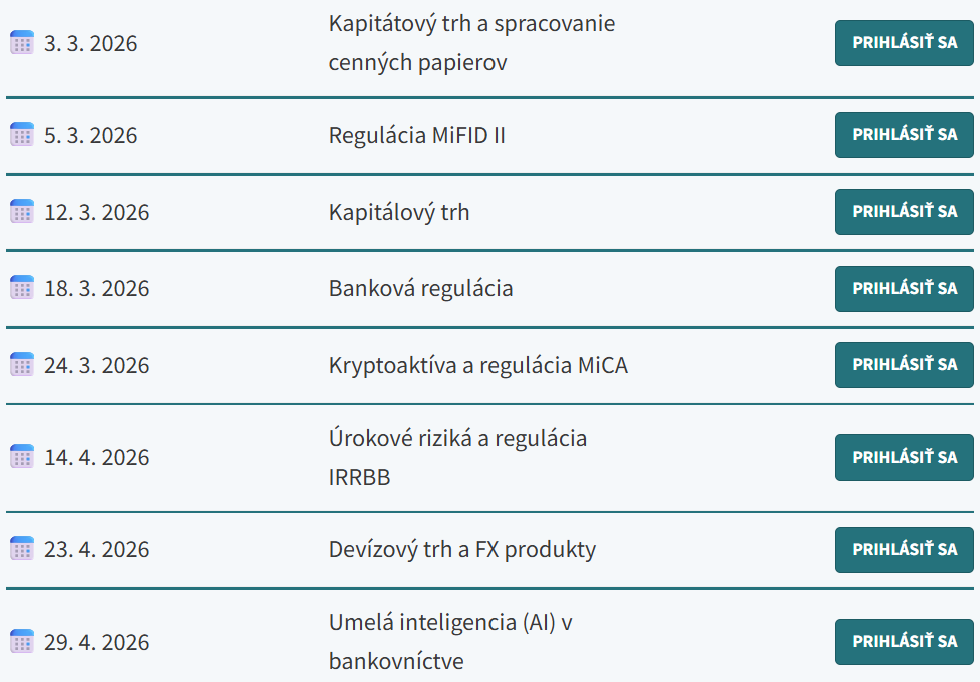
V najbližších týždňoch nás čaká séria odborných kurzov. Radi by sme upriamili pozornosť na budúci týždeň, kde sa budeme venovať kapitálovým trhom a finančným nástrojom v regulácii MiFID II. Nemenej zaujímavé sú však aj ďalšie pripravované kurzy, napr. veľký prehľad o bankových reguláciách a vzájomných súvislostiach medzi jednotlivými oblasťami bankovníctva, alebo kryptoakíva a regulácia MiCA.
Kompletný kalendár našich Bearning kurzov, podrobnosti a registráciu nájdete vždy na: 👉 https://bearning.sk
Test Your Knowledge with Bearning’s Monthly Banking Quiz ✅❌❔
This month’s quiz is inspired by our focus on ALM, risks and bank failures, and discussion on structural liquidity and deposit stability. As recent publications have shown, funding structure still plays a crucial role in a bank’s resilience under stress. Not all deposits behave the same way — and understanding their characteristics is central to modern bank ALM.
❓ Which of the following most directly increases a bank’s structural liquidity risk?
👉 The correct answer and explanation will be published in our March newsletter.
Review and Learn from Last Month’s Quiz
❓ Question: As of the end of January 2026, what is the approximate total market capitalization of all stablecoins combined?
✅ Correct answer: C) Around USD 300 billion
By the end of January 2026, the total market capitalization of all stablecoins combined was approximately in the range of USD 280–320 billion, depending on daily fluctuations. The market is dominated by USD-denominated stablecoins, primarily USDT (Tether) and USDC (Circle), which together account for the majority of outstanding supply. Stablecoins have expanded significantly since 2023, supported by:
While USD 300 billion is still small relative to the global banking system, the growth trajectory and concentration in short-dated government securities make stablecoins increasingly relevant for financial markets.
For banks, stablecoins are no longer a fringe crypto topic. Their reserve structures often include short-term U.S. Treasury bills and repos, which means stablecoin inflows and outflows can influence money market conditions.
From an ALM and Treasury perspective, this has implications for:
Stablecoins are becoming part of the broader liquidity ecosystem that banks operate in — and therefore deserve attention from risk managers, treasurers and board members alike.

ALM & Treasury, Riadenie rizík, Finančné riadenie banky, Banková regulácia, Fintech

Súbory cookie
Používame nevyhnutné cookie na chod webu a voliteľné analytické/marketingové na zlepšenie služieb. Viac v zásadách používania cookie.