Newsletter
Newsletter 08-2026
Jun 2023

Intraday liquidity, a BIS view on stablecoins, FDIC lessons for liquidity risk, and insights from the Bank Treasury Newsletter.

Welcome to the May edition of the Bearning newsletter. Liquidity, funding, and the future of money continue to be among the most discussed topics in banking. For many years, liquidity risk management was primarily associated with regulatory ratios such as LCR and NSFR. Today, the agenda is broader. Banks must increasingly manage intraday liquidity positions, monitor rapidly evolving payment flows, assess the implications of stablecoins and digital money, and prepare for funding shocks that can develop much faster than in the past.
In this issue, we explore several recent publications and industry discussions that attracted attention among banking professionals. We also review the results of our LinkedIn poll on intraday liquidity management, discuss a thought-provoking BIS paper on stablecoins, examine recent FDIC analysis highlighting implications for liquidity risk management, and share selected insights from the latest Bank Treasury Newsletter.
As always, our goal is to highlight developments that matter for ALM, Treasury, risk management, and banking strategy professionals.
Intraday liquidity risk has become one of the fastest-growing areas of focus for banks. The expansion of instant payments, increasing transaction volumes, and higher expectations for operational resilience mean that liquidity management can no longer focus only on end-of-day positions.
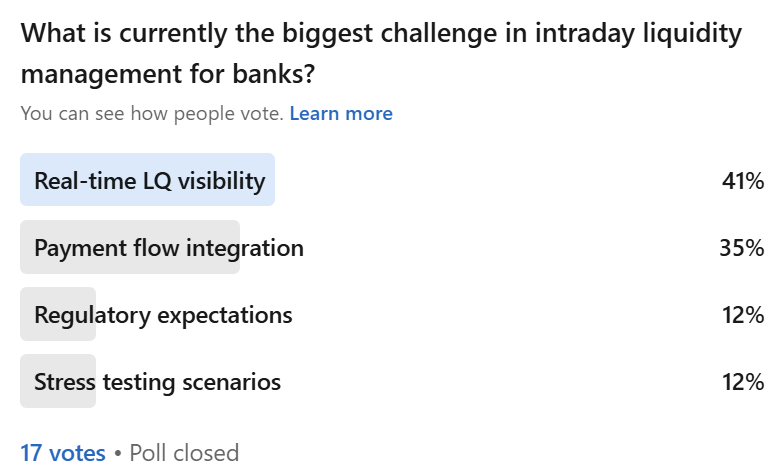
To better understand current industry priorities, we recently conducted a LinkedIn poll asking banking professionals about the biggest challenge in intraday liquidity management. The results revealed that practitioners continue to face a combination of operational, technological, and forecasting challenges.
One of the key conclusions is that intraday liquidity management is increasingly becoming a real-time discipline. Banks need timely information about payment flows, collateral positions, and expected liquidity needs throughout the day. This requires closer cooperation between treasury, operations, payments, risk management, and technology teams.
The growing importance of this topic is also reflected in recent supervisory publications. Institutions such as the ECB and BCBS have repeatedly emphasized the need for stronger intraday liquidity monitoring frameworks, particularly following the banking stress events observed in recent years.
You can view the full poll results in our LinkedIn post here.
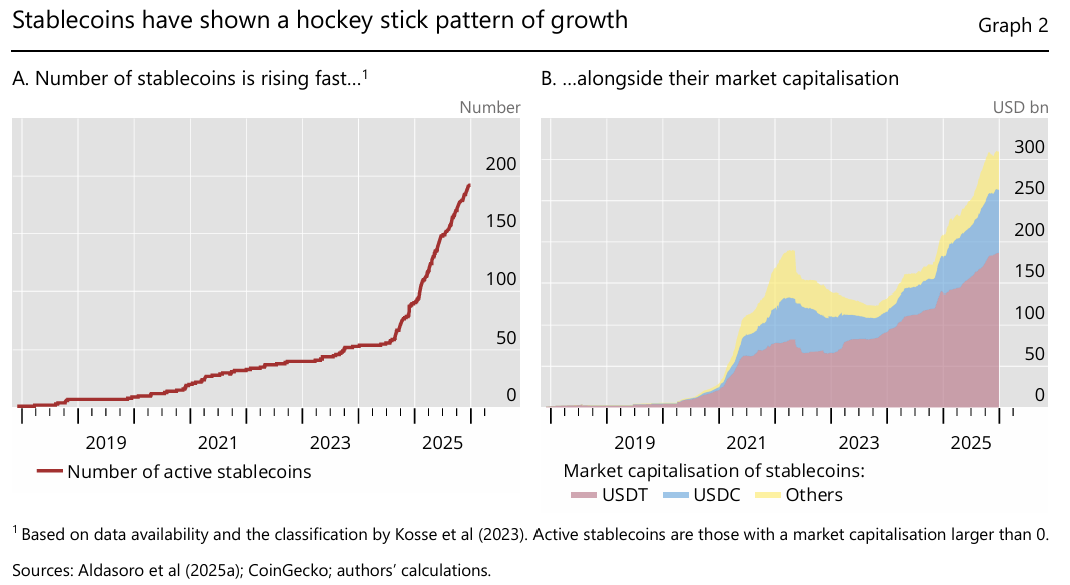
One of the most interesting publications we reviewed recently is the BIS paper "Stablecoins: Issues and Challenges".
Stablecoins are often presented as a new form of digital money, but the BIS takes a more cautious view. The paper argues that stablecoins still face significant limitations when assessed against the traditional functions of money. Questions remain around stability, governance, settlement finality, transparency of reserves, and the ability to maintain value under stress conditions.
For banking professionals, the discussion is particularly relevant because stablecoins increasingly interact with traditional financial markets. Large stablecoin issuers now hold substantial volumes of short-term government securities and money market instruments, creating growing links between digital asset markets and the broader financial system.
The debate around stablecoins has intensified further following a recent speech by ECB President Christine Lagarde in May 2026. In her remarks, she argued that the stablecoin discussion should distinguish between their technological function and their monetary function. While acknowledging the potential efficiency benefits of new payment technologies, she warned about the financial stability implications of large privately issued stablecoins and the growing dominance of US dollar-denominated stablecoins. Lagarde also raised concerns about monetary sovereignty and the risk of "digital dollarization," emphasizing that Europe should focus on building payment and settlement infrastructure anchored in central bank money rather than simply replicating the US stablecoin model.
In my LinkedIn commentary on the BIS paper, I highlighted that the debate is no longer whether stablecoins matter, but rather how their development may influence bank deposits, liquidity management, payment systems, and future monetary frameworks. Whether stablecoins ultimately become a significant complement to traditional banking or remain a niche segment, Treasury and ALM professionals should continue monitoring this space closely.
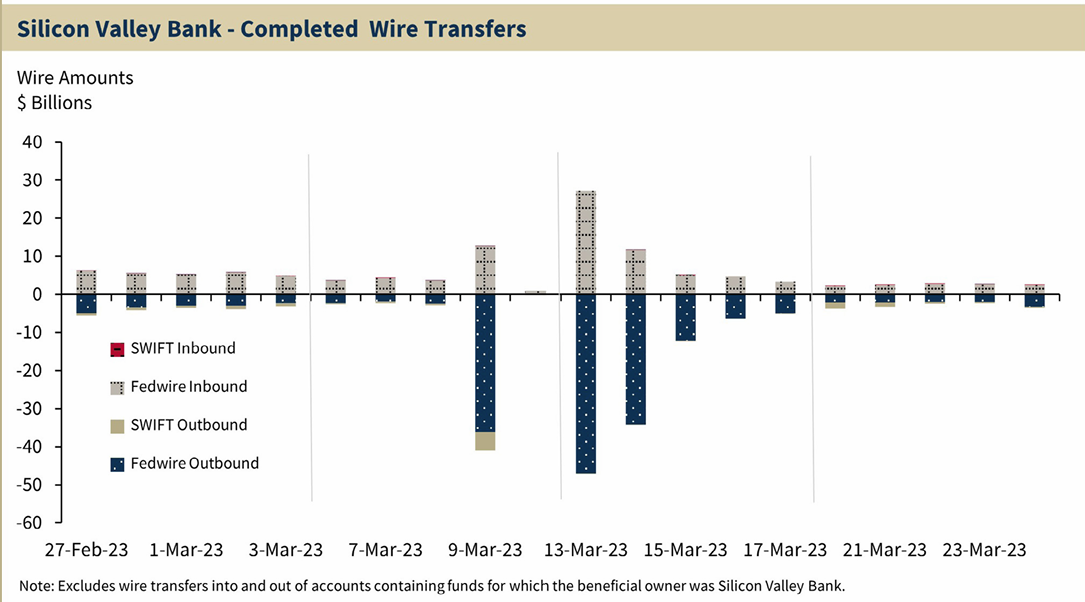
Recent FDIC research provides another useful reminder that liquidity risk management remains a critical discipline for all banks. The analysis revisits lessons from recent banking failures and highlights how rapidly funding conditions can change when depositor confidence weakens. Modern technology, digital banking channels, and social media have significantly accelerated the speed at which deposit outflows can occur.
One particularly important observation is that traditional liquidity assumptions may no longer fully capture the behavior of certain customer segments during stress events. Banks therefore need robust stress-testing frameworks, diversified funding sources, and realistic assumptions regarding deposit stability.
For ALM and Treasury teams, this reinforces the importance of integrating liquidity risk management with broader balance sheet strategy, rather than treating it as a purely regulatory exercise. The FDIC analysis contains several practical observations that are highly relevant for institutions reviewing their contingency funding plans and liquidity stress scenarios. Read my LinkedIn post about this topic here.
As usual, Ethan Heisler's Bank Treasury Newsletter provided several valuable insights for bank treasury professionals. Two observations stood out this month:
For treasury and ALM professionals, this raises important questions about future profitability drivers. As interest margins stabilize, banks may increasingly need to focus on balance sheet optimization, efficient funding structures, pricing discipline, and non-interest income generation to maintain profitability.
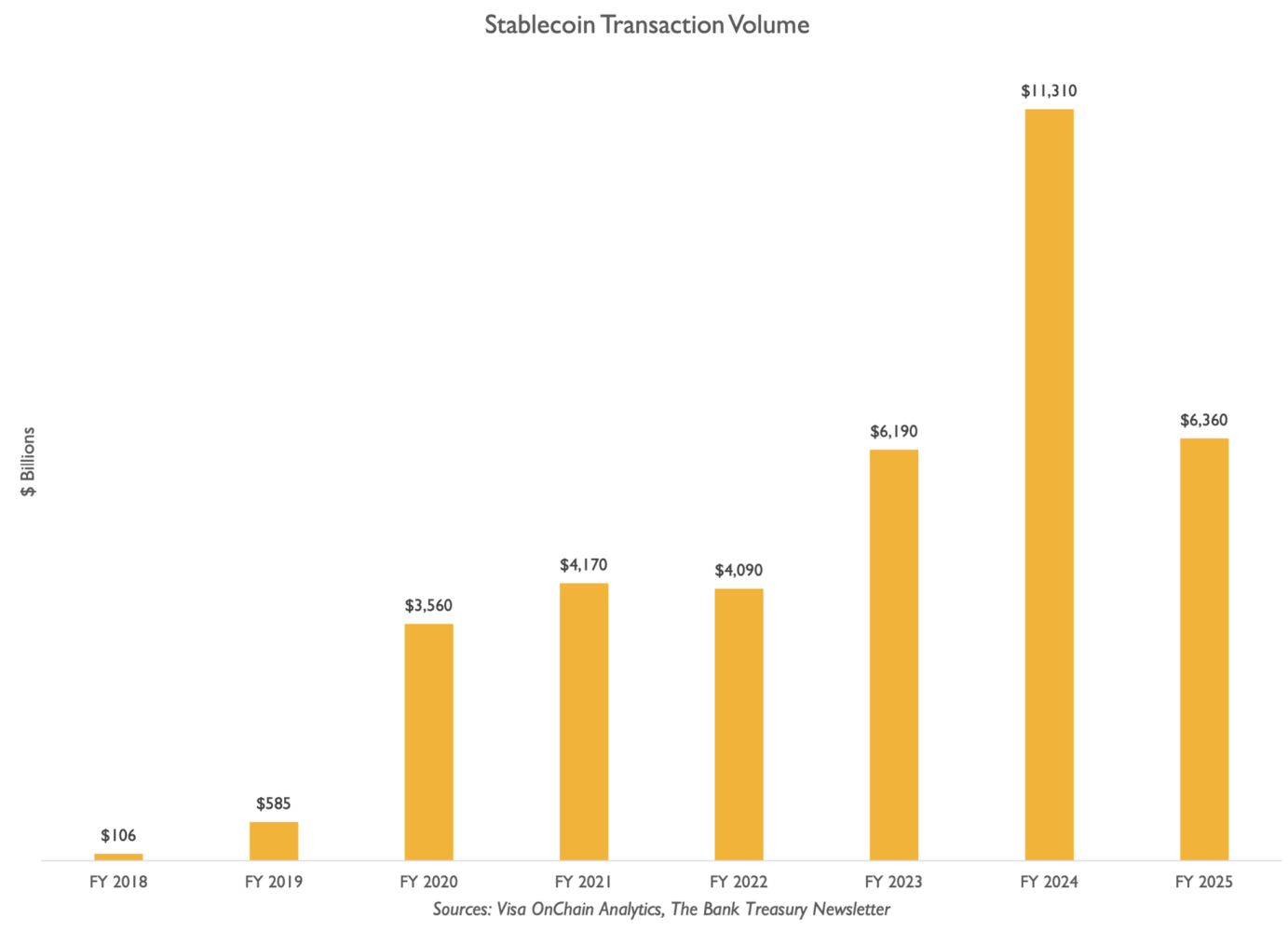
The newsletter remains a valuable source of practical insights for professionals interested in bank treasury, liquidity management, and balance sheet strategy.
May was another active month at Bearning, with several live webinars and training sessions covering topics that are increasingly important for banking professionals.
One of our recent webinars focused on capital markets and their role in modern banking. Participants explored key financial market instruments, bond and equity markets, derivatives, and practical applications for Treasury and Asset & Liability Management. Understanding financial markets remains essential for bankers involved in treasury, risk management, investment products, and balance sheet management.
Regulation continues to evolve rapidly, particularly in the areas of investor protection and digital assets. During our recent workshop on MiFID II and MiCA, we discussed the latest regulatory developments, practical implementation challenges, and the growing intersection between traditional financial markets and crypto-assets. As digital assets become increasingly relevant for financial institutions, understanding both MiFID II and MiCA is becoming an important competency for compliance, risk, legal, and business teams.
Artificial intelligence remains one of the most discussed topics across the financial sector. In our recent AI in Banking workshop, we explored practical use cases, opportunities, and risks associated with AI adoption in financial institutions. While AI offers significant opportunities, successful implementation requires careful consideration of data quality, regulatory expectations, model risk, and organizational readiness.
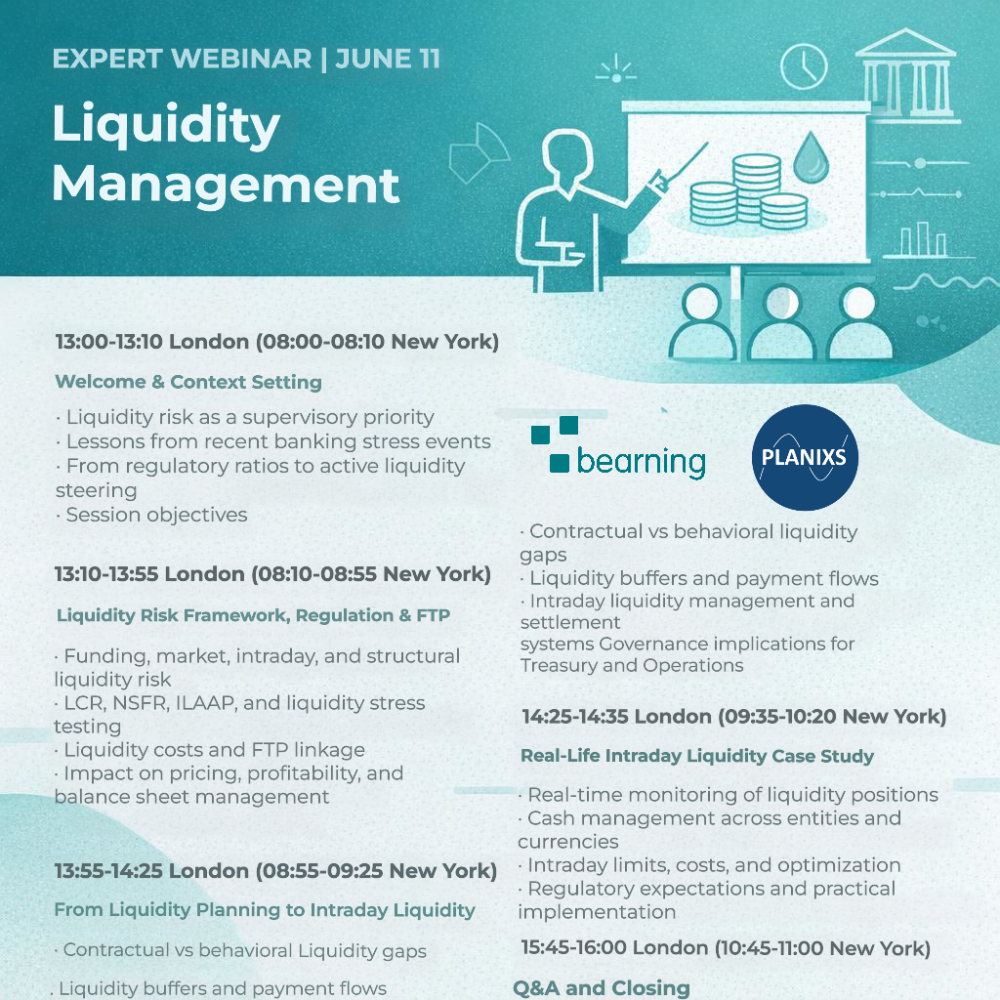
Following the strong interest in liquidity management topics, we are pleased to invite banking professionals to our upcoming webinar organized in cooperation with Planixs. The webinar will focus on professional liquidity management practices, with particular attention to intraday liquidity management - one of the most important emerging topics discussed in this month's newsletter.
We are delighted that Nick Applebee from Planixs will join us as a guest speaker. He will present a real-life case study demonstrating how leading financial institutions approach intraday liquidity monitoring, forecasting, and operational liquidity management. The session will combine practical insights, industry experience, and discussion of current challenges facing treasury and liquidity management teams.
If intraday liquidity is becoming a growing priority for you, we encourage you to join us. As a member of our LinkedIn community, you can use the discount code alumn40 during checkout to receive a 40% discount on this valuable webinar.
For those who would like to explore Asset & Liability Management topics in greater depth, recordings of our two recent ALM webinars remain available online.
Both webinar packages include:
As a member of our LinkedIn community, you can use the discount code extra30off during checkout to receive a 30% discount on these webinar recordings and materials.
Aj počas mája sme v Bearning realizovali viacero odborných kurzov zameraných na aktuálne témy bankovníctva, regulácie a technologických zmien vo finančnom sektore.
Jedným z nich bol kurz Kapitálový trh, v rámci ktorého sme sa venovali fungovaniu dlhopisových a akciových trhov, investičným produktom, oceňovaniu finančných nástrojov a využitiu derivátov v bankovej praxi. Skvelý bol aj náš kurz MiFID II a MiCA, kde sme diskutovali o aktuálnych regulačných požiadavkách pre investičné služby a kryptoaktíva. Pozornosť sme venovali pravidlám ochrany investorov, produktovému governance, ako aj novým požiadavkám vyplývajúcim z európskej regulácie MiCA.
A veľmi dôležitou témou bola Umelá inteligencia v bankovníctve, kde sme sa zamerali na praktické možnosti využitia AI v bankových procesoch. Súčasťou workshopu boli ukážky práce s modernými AI nástrojmi na bankových dokumentoch, a diskusia o súvisiacich rizikách a regulácii.
Vzhľadom na pozitívnu spätnú väzbu plánujeme všetky uvedené kurzy zaradiť opäť do programu verejných školení počas jesene 2026. Aktuálne termíny budú postupne zverejňované na stránke bearning.sk.
Do letnej prestávky nás čakajú ešte tri odborné verejné kurzy:
📅 10. 06. 2026 Kybernetická bezpečnosť v bankách: governance, riziká a praktická ochrana Kurz poskytne prehľad aktuálnych kybernetických hrozieb, požiadaviek regulácie a princípov efektívneho riadenia kybernetických rizík v bankách. Zameriame sa na governance, zodpovednosť manažmentu, praktické opatrenia a prípadové štúdie z finančného sektora.
📅 11. 06. 2026 Strategické riadenie likvidity banky: od LCR a FTP k Intraday Liquidity (v anglickom jazyku) Kurz pokrýva moderné riadenie likvidity banky od tradičných regulačných ukazovateľov až po pokročilé témy, ako sú Funds Transfer Pricing (FTP), stresové testovanie a vnútrodenná likvidita. Súčasťou bude aj diskusia o aktuálnych trendoch a skúsenostiach bánk z oblasti intraday liquidity managementu.
📅 18. 06. 2026 Umelá inteligencia (AI) v bankovníctve: Prípadové štúdie Copilot Praktický workshop zameraný na využitie Microsoft Copilot a ďalších AI nástrojov v bankovom prostredí. Účastníci si na konkrétnych prípadových štúdiách ukážu možnosti automatizácie, tvorby dokumentov, analýzy dát a zvýšenia produktivity pri každodennej práci.
➡️ Kompletný kalendár kurzov a možnosť registrácie nájdete na: www.bearning.sk
Artificial Intelligence is rapidly becoming part of the banking toolkit. From customer service and fraud detection to risk management and compliance, banks are increasingly exploring how AI can support decision-making and operational efficiency.
Here is this month's quiz question:
❓ Which of the following areas of bank liquidity management could benefit most from AI and machine learning techniques?
💡 Think carefully. Which of these activities relies most heavily on analyzing large volumes of data and identifying behavioral patterns? 👉 We will reveal the correct answer and provide a detailed explanation in next month's Bearning newsletter.
❓ Why do banks incorporate a liquidity-adjusted yield curve into their Funds Transfer Pricing (FTP) framework instead of relying solely on a risk-free curve?
✅ Correct Answer: B) To reflect differences in funding costs and liquidity risk across maturities
A core objective of Funds Transfer Pricing (FTP) is to ensure that business units are charged or rewarded based on the true economic cost of funding and liquidity. While a risk-free yield curve provides a useful market benchmark, banks do not fund themselves at risk-free rates. Actual funding costs include liquidity premiums that vary across maturities and market conditions.
A liquidity-adjusted FTP curve therefore incorporates both interest rate and liquidity considerations. This allows banks to properly recognize the cost of obtaining stable funding, the value of deposits, and the liquidity risk associated with different products and maturities.
For example, a five-year loan (funded through long-term funding) generally carries a higher liquidity cost than a short-term asset. Similarly, stable retail deposits may provide valuable funding benefits that should be recognized through the FTP framework. A liquidity-adjusted curve helps transfer these costs and benefits to the business units that generate them.
A) To comply with regulatory requirements on liquidity risk measurement
While liquidity regulation (such as LCR and NSFR) has increased the importance of liquidity costs, FTP frameworks are primarily management tools rather than direct regulatory requirements. Banks implement liquidity-adjusted FTP to improve internal pricing, profitability measurement, and decision-making.
C) To eliminate interest rate risk from internal pricing
FTP helps allocate and manage interest rate risk within the bank, but it does not eliminate it. Interest rate risk remains an important responsibility of Treasury and ALM functions.
D) To simplify the allocation of capital across business lines
FTP is primarily focused on transferring funding, liquidity, and interest rate costs. Capital allocation is usually addressed through separate frameworks such as RAROC, RORAC, or economic capital methodologies.
💡 Key takeaway: A well-designed FTP framework should reflect not only market interest rates but also the liquidity value and funding costs associated with different products and maturities. This enables better pricing decisions, more accurate profitability measurement, and stronger balance sheet management.

ALM & Treasury, Riadenie rizík, Finančné riadenie banky, Banková regulácia, Fintech

Súbory cookie
Používame nevyhnutné cookie na chod webu a voliteľné analytické/marketingové na zlepšenie služieb. Viac v zásadách používania cookie.