Newsletter
Newsletter 08-2026
Jun 2023
BIS Quarterly Review insights, structural profit and FTP, the EBA Risk Dashboard, and a comparison of EU vs. US deposit insurance.
Welcome to the September 2025 Bearning Newsletter! Autumn has always been a season when business activity returns in full swing after the summer break, and the same goes for Bearning. This month we have started a series of activities, continuing our mission to bring clarity and practical insights into the evolving world of banking.
We closely follow emerging trends in finance, such as the stablecoin discussions that dominated this summer, and look at their implications for bank finance, asset and liability management (ALM), treasury, market risks, and related regulation. In this newsletter issue, we highlight what matters for banking professionals today: insights from the latest BIS Quarterly Review, reflections on structural profit and Funds Transfer Pricing (FTP), key figures from the EBA Risk Dashboard, and a comparison of EU vs. US deposit insurance frameworks. As always, our goal is to provide knowledge you can apply directly in your daily work and strategic discussions.
As usual, the BIS Quarterly Review brings useful context for financial markets and bank strategic management. Two highlights stand out this time:
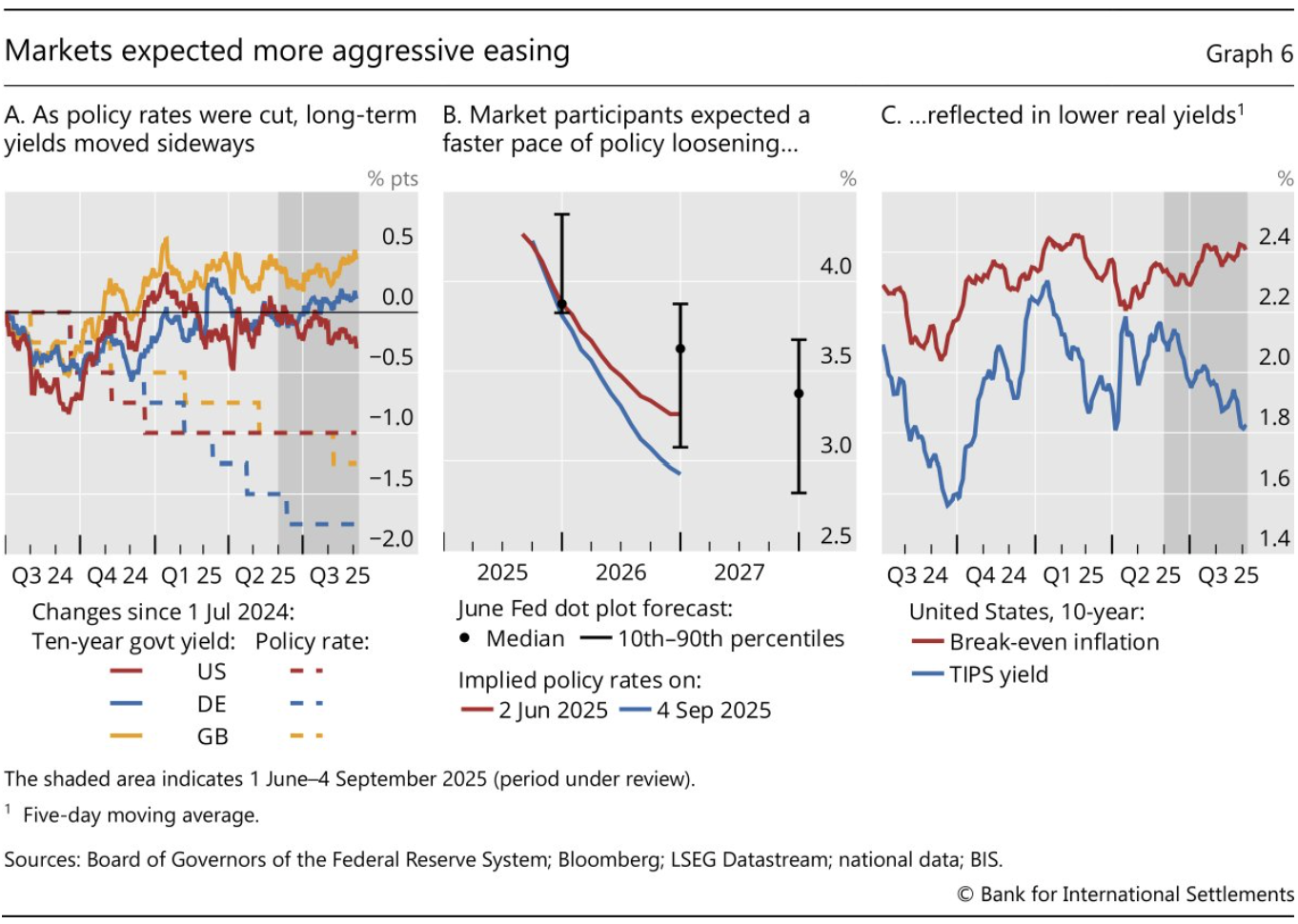
1️⃣ Markets shrug off trade conflicts → Bond markets are pricing in further policy easing, with short-term yields reflecting expected cuts, while 10Y yields moved broadly sideways. Breakevens rose while TIPS fell - an unusual divergence worth noting for ALM planning. The ultra-long end steepened, with US market-implied long-run inflation nudging higher.
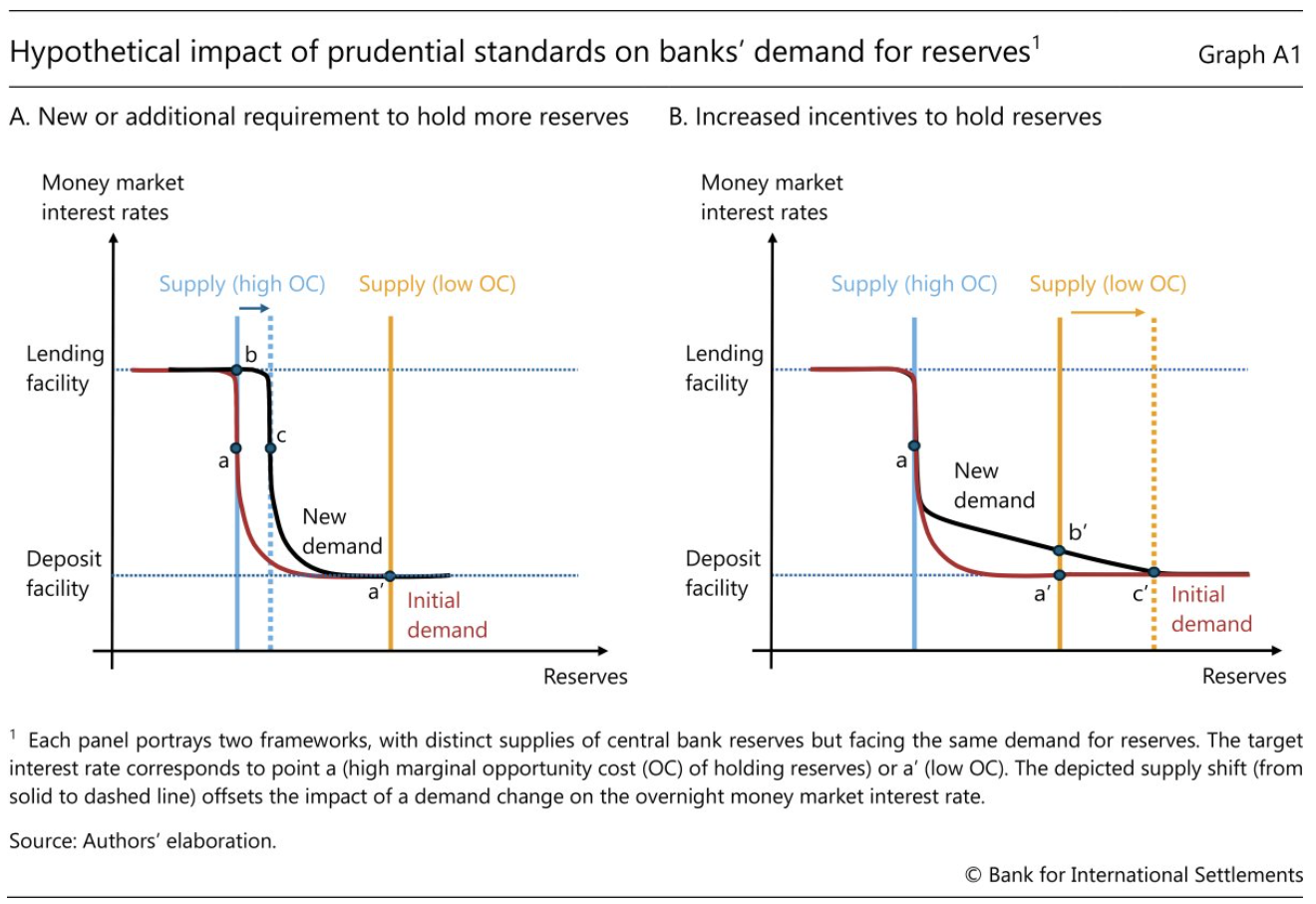
2️⃣ Monetary policy operational frameworks – a new taxonomy → The BIS proposes a clear classification of central bank operating regimes by marginal opportunity cost and reserve quantity. This lens helps explain why similar central bank frameworks can lead to different liquidity outcomes. It is very relevant for banks’ FTP, liquidity policy, and ALM strategies. 👉 Read my full LinkedIn post about it here: BIS Quarterly Review post
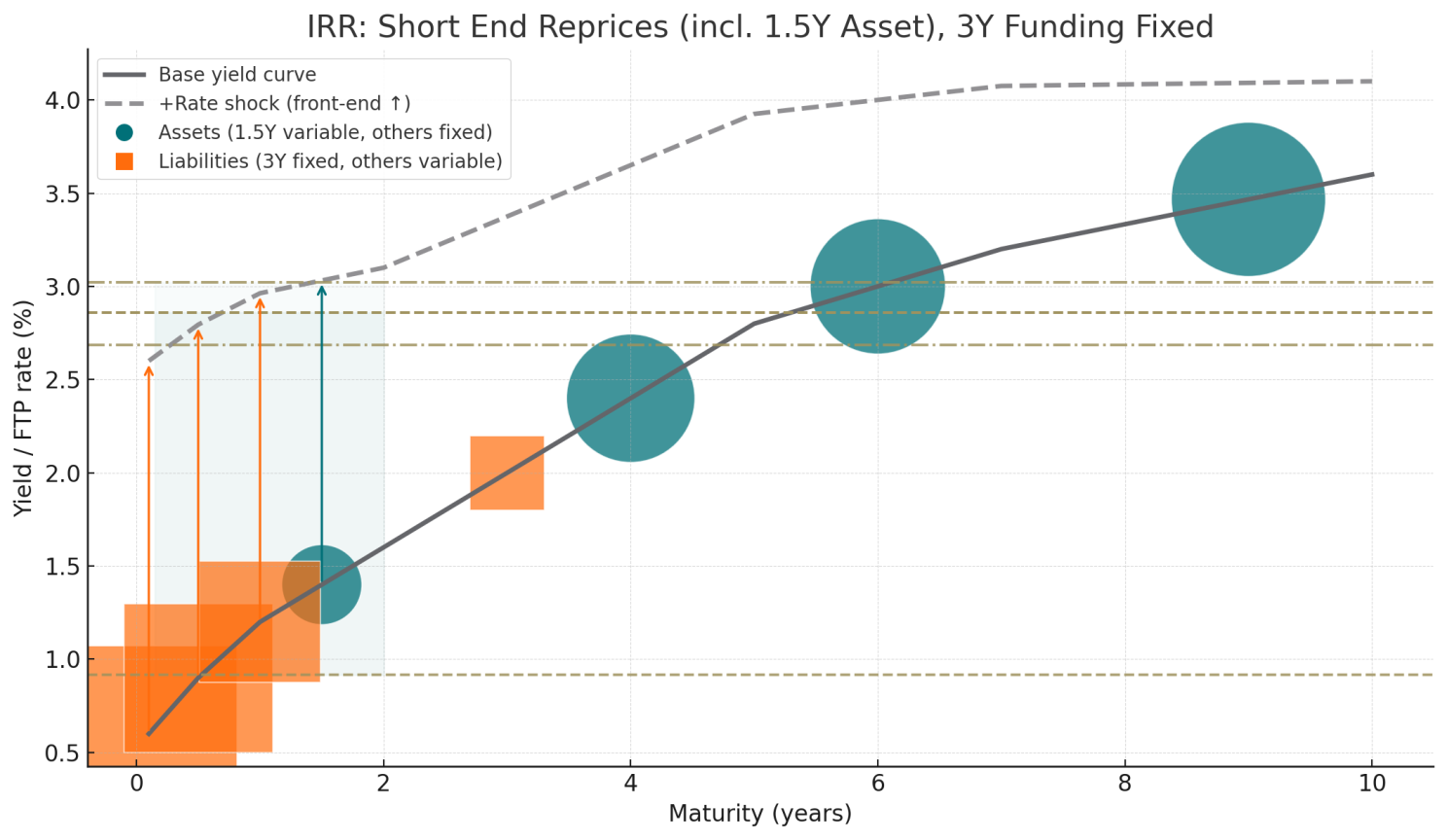
I recently wrote about the concept of structural profit and why proper Funds Transfer Pricing (FTP) is crucial for banks’ income stability and ALM. You can read my post about here. The topic has sparked strong interest, enough that we may develop a longer blog 📄 on it soon.
For those who want to explore the foundations, I can also recommend revisiting my earlier blog on FTP, which covers the basics of how internal pricing links treasury and business units: 👉 Read the FTP foundations blog
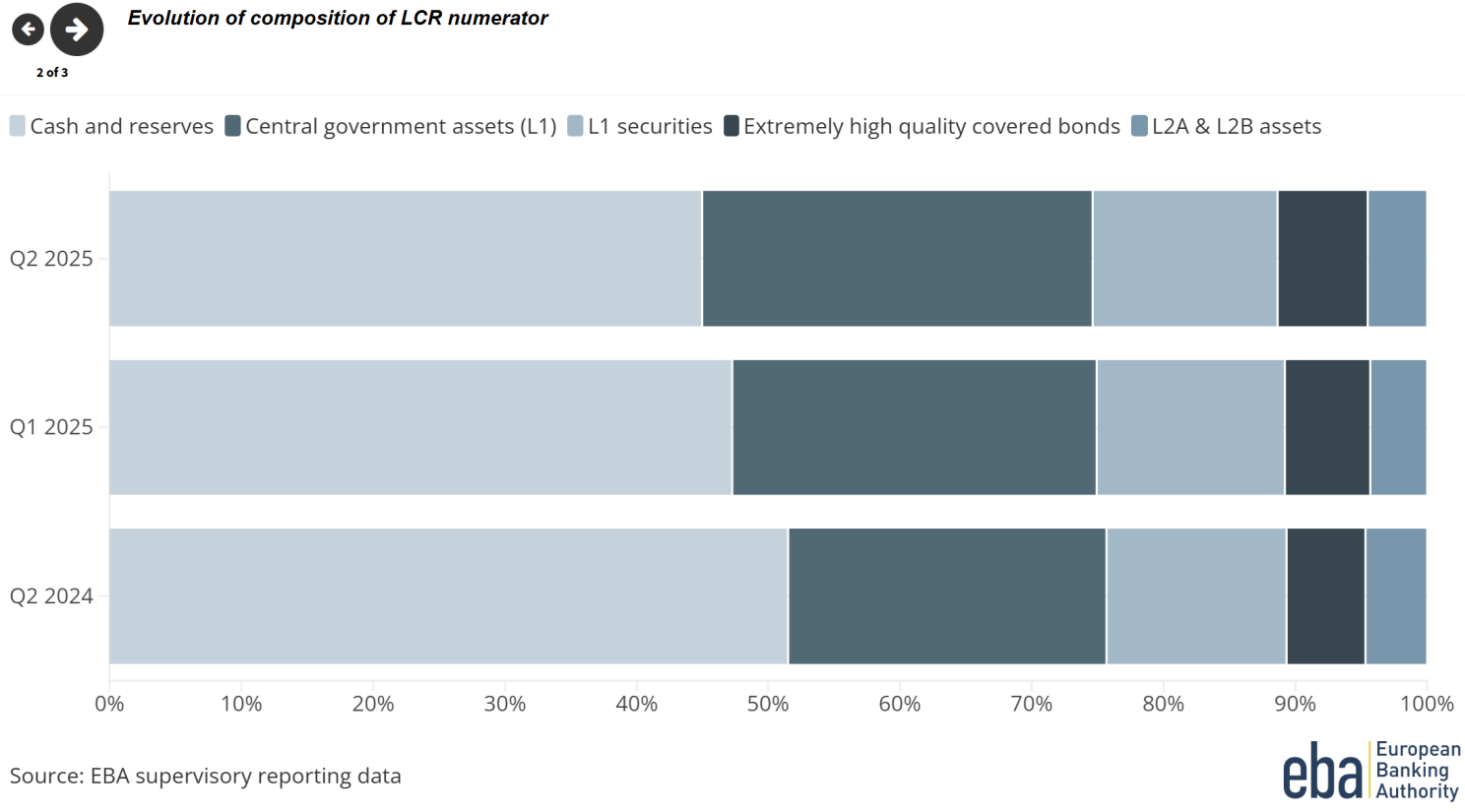
The latest EBA Risk Dashboard provides interactive data on: ▪️ Return on Equity (ROE) ▪️ Net Interest Income (NII) ▪️ Liquidity Coverage Ratio (LCR) & Net Stable Funding Ratio (NSFR) ▪️ Balance sheet structure across EU countries
This is a valuable tool to benchmark the financial position of EU banks and track evolving trends in profitability, liquidity, and asset composition. 👉 Check my LinkedIn commentary about here: EBA Dashboard post
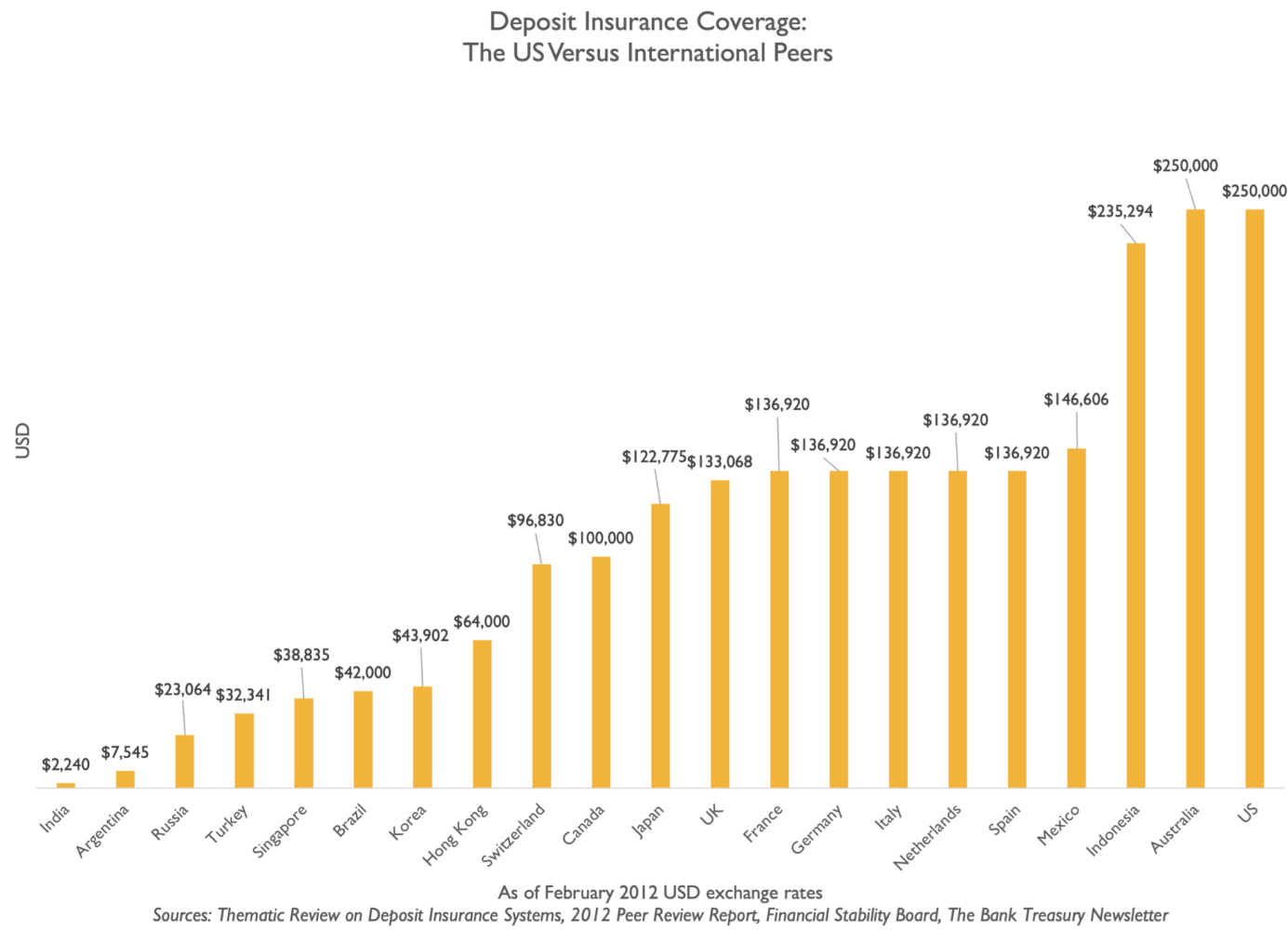
Deposit insurance frameworks shape depositor confidence - and influence how treasurers model balance sheets. A recent article by Ethan Heisler, “Bank Treasurers Need Better Deposit Insurance” explains the US deposit insurance system in detail. And I tried to trigger reflections on the differences between the US and EU systems:
For ALM, this means US banks can treat retail deposits as a more stable funding base, while EU treasurers must prepare for greater outflow volatility. 👉 Read my full post about here: Deposit Insurance post
🗓 October 9, 2025 | 🕒 15:00–16:00 CEST (Bratislava)
Funds Transfer Pricing (FTP) and quantitative planning remain at the core of modern Treasury and ALM practice. Together with QuantPlan, we will show how policy design can be translated into models and dashboards that support real decision-making. In this 60-minute live session, Martin Macko (Bearning) and Michal Lopusan, CFA (QuantPlan) will:
👉 Register for the FTP & Quantitative Planning Webinar
Bearning delivers in-depth live trainings - tailored in-house for banks or available as open sessions. In the coming months, we will open selected courses to the public, allowing individual professionals to join online.
Some of our flagship programs include:
These sessions combine practical tools, case studies, and simulations (including our SimBa – Simulated Bank Excel model), making them a highly effective way to strengthen banking teams. Participants of our live courses also receive full access to Bearning’s e-learning platform, including 1,000+ expert-level test questions with explanations and digital certificates for each completed course.
This creates an ideal form of banking education: professional explanation with a lecturer, networking and opportunity for discussions, practical simulations with our excel models, plus structured e-learning for hard skills and certificates to document your knowledge.
For those who prefer self-paced learning, our structured e-learning bundles cover the full skillset needed for Treasury and ALM professionals: strategy, FTP, risk management, market products, planning, and regulation.
Each bundle includes:
👉 Explore our Banking & Financial Management Bundle
Special offer: As our newsletter reader, get 40% off with code 2025EXTRA40. The discount applies to bundles and includes lifetime access plus certificates.
V septembri sme pre Inštitút bankového vzdelávania realizovali kurz o riadení úrokových rizík a regulácii IRRBB. Ide o jednu z kľúčových tém pre bankové riadenie – preto nechýbali živé diskusie s účastníkmi.
Kurz sa venoval mapovaniu a meraniu úrokových rizík (FTP, produkty bez definovanej splatnosti, opcionalita), vybraným metrikám (EaR, EVE, VaR, Expected Shortfall) a regulácii od Basel I po Basel III vrátane noriem BCBS IRRBB a usmernení EBA. Záver patril diskusii o riadení súvahy a praktických možnostiach hedgingu pomocou nástrojov finančného trhu.
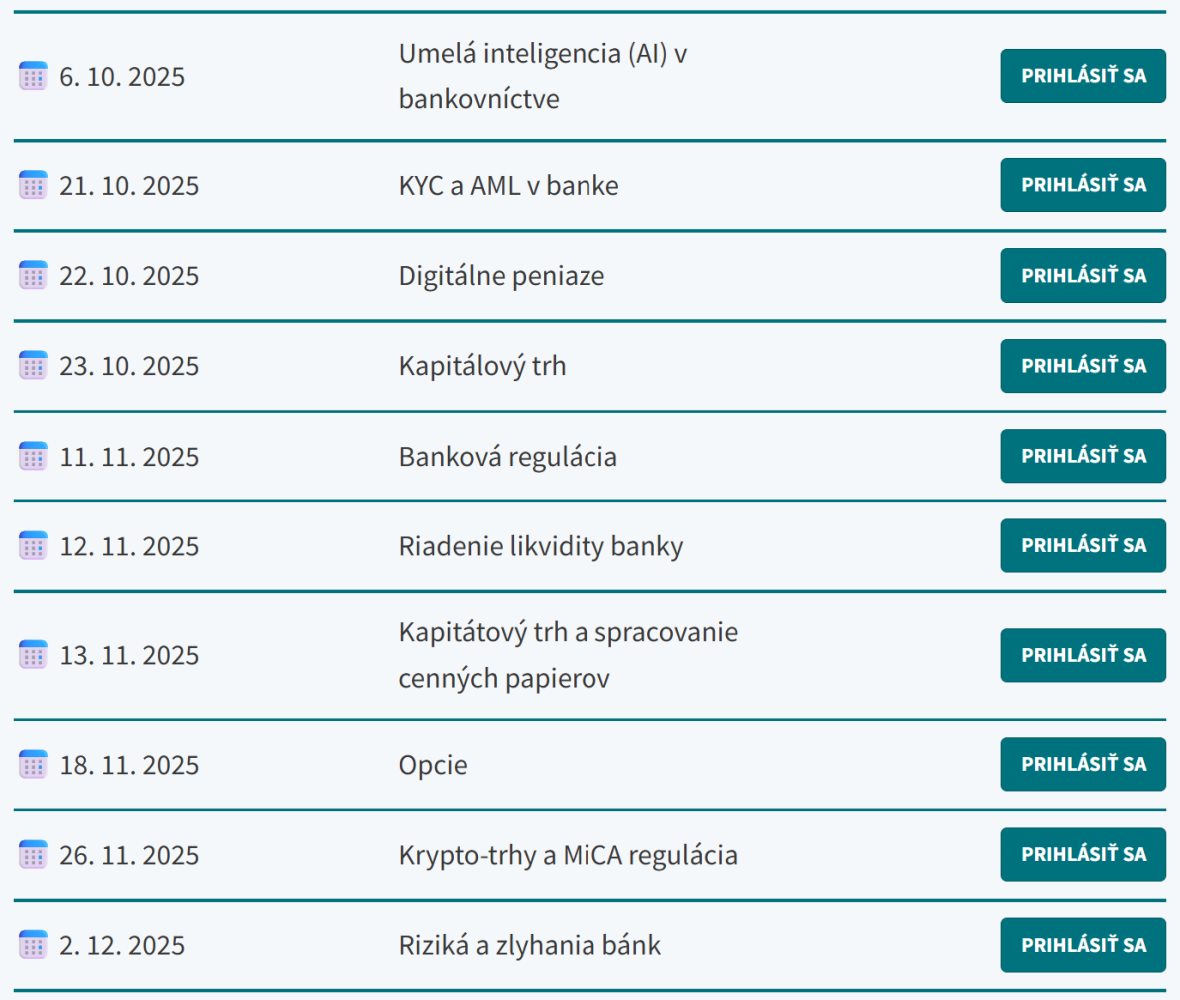
Digitálne peniaze – 22. 10. 2025 (online, základná úroveň). Tento kurz poskytne prehľad a porovnanie rôznych foriem "nových" peňazí – od kryptomien a stablecoinov po digitálne meny centrálnych bánk (CBDC) - so klasickými "fiat menami. Účastníci porozumejú technológiách blockchain/DLT a fungovaniu kryptomien a stablecoinov. ppozrieme sa na projekty centrálnych bánk pripravujpcich vlastné digitálne meny (napr. digitálne euro). Samostatná časť je venovaná regulácii MiCA a prípadovým štúdiám z praxe (napr. zlyhané projekty Terra/Luna alebo skrachovaná krypto-burza FTX).
Kapitálový trh – 23. 10. 2025 (online, pokročilá úroveň). Kurz vysvetlí fungovanie dlhopisových a akciových trhov, matematiku výnosov a oceňovania cenných papierov, ako aj využitie derivátov na kapitálovom trhu. Účastníci dobre porozumejú, ako banky pracujú s dlhopismi, ako riadia svoje pozície a aké stratégie možno použiť na akciových trhoch (vrátane ETF, hedgingu alebo pákových stratégií).
🎓 Bonus pre účastníkov: vybrané kurzy dopĺňame e-learningom v angličtine s certifikátom. ➡️ Kompletný kalendár, podrobnosti a registrácia na Bearning kurzy: https://bearning.sk/sk/public-workshops-calendar
This month’s quiz is dedicated to Funds Transfer Pricing (FTP) – a cornerstone of Asset & Liability Management. FTP maturity assignment is especially important for non-maturing deposits (NMDs), such as retail current accounts.
❓ Which FTP maturity do banks usually assign to retail current accounts?
👉 The correct answer and explanation will be published in our October newsletter.
In August, we asked:
❓ As of 30 June 2025, approximately what share of USDT (Tether) reserves were backed by U.S. Treasuries (counting direct T-bill holdings plus indirect exposure via repos and money-market funds)?
✅ Correct answer: D) 92%
Explanation: According to Tether’s Q2 2025 attestation, about 92% of its reserves were invested in U.S. Treasuries. This figure includes both direct T-bill holdings and indirect exposure via reverse repos and money-market funds.
Why does this matter?
This is a good example of why stablecoins and their reserve composition deserve attention from banking professionals.

ALM & Treasury, Riadenie rizík, Finančné riadenie banky, Banková regulácia, Fintech

Súbory cookie
Používame nevyhnutné cookie na chod webu a voliteľné analytické/marketingové na zlepšenie služieb. Viac v zásadách používania cookie.