
Newsletter
Newsletter 08-2026
Jun 2023

BIS Triennial Survey, bond markets, Basel III implementation gaps, IMF financial stability warnings, and FSB/BCBS crypto-asset and capital reviews.

This month’s insights bring a rich mix of market trends, data, and global regulatory updates — all highly relevant for banking professionals navigating today’s dynamic environment. From the BIS Triennial Survey to new Basel and FSB reports, the latest publications shed light on how global financial markets and regulatory standards continue to evolve.
In this issue, we highlight key takeaways from:
We also invite you to participate in our LinkedIn poll on how much of a bank’s interest income should stem from strategic ALM positioning (structural contribution to NII) — and share your professional view on this important topic.
As always, you’ll also find our course updates, the Slovak & Czech section, and a quiz to test your banking know-how. Let’s dive into this month’s highlights from the world of banking, markets, and regulation. 🏛️
Every three years, the BIS Triennial Survey provides a unique insight into the structure and liquidity of global financial markets. The 2025 edition shows that interest rate derivatives have grown rapidly in volume since the introduction of IRRBB regulation, reflecting banks’ need to manage duration and balance sheet exposures more actively.
The Overnight Index Swap (OIS) has become the dominant instrument, while previously common contracts such as FRAs have nearly disappeared. The statistics cover only OTC derivatives, meaning exchange-traded futures are excluded — yet the data remains an essential guide to understanding global market dynamics and counterparties.
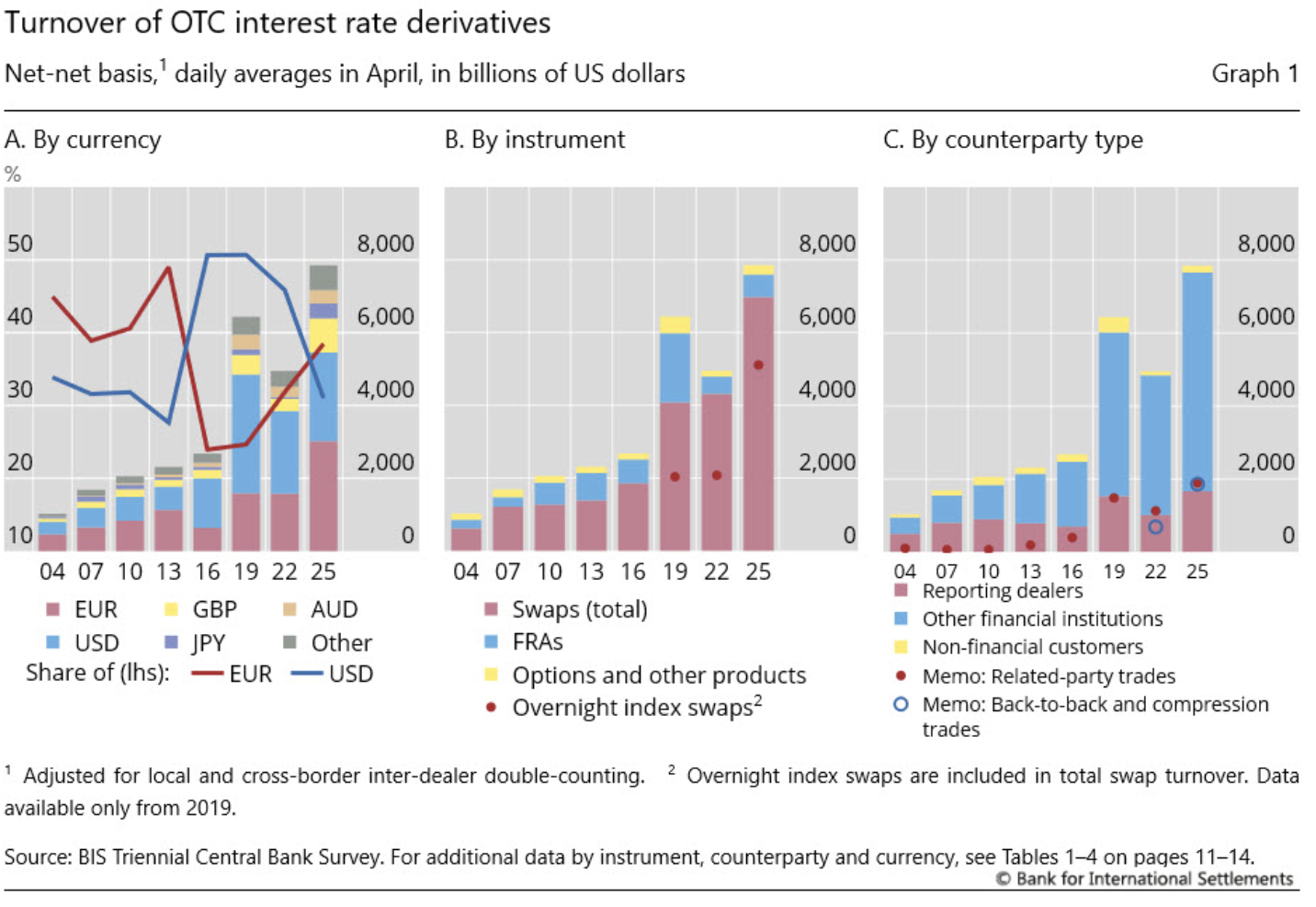
🔗 Read the full survey: OTC IR derivatives | OTC FX instruments 📍 See our LinkedIn post here
Bonds remain central to banking. On the asset side, they serve as high-quality liquid assets (HQLA) for meeting liquidity coverage requirements; on the liability side, banks use bond issuance to secure stable, long-term funding.
The latest BIS bond market statistics show that since 2020, governments have become the largest borrowers, while non-financial corporations increasingly rely on bond financing instead of loans. For ALM and liquidity managers, understanding these structural shifts is vital for steering balance sheet strategy and liquidity buffers.
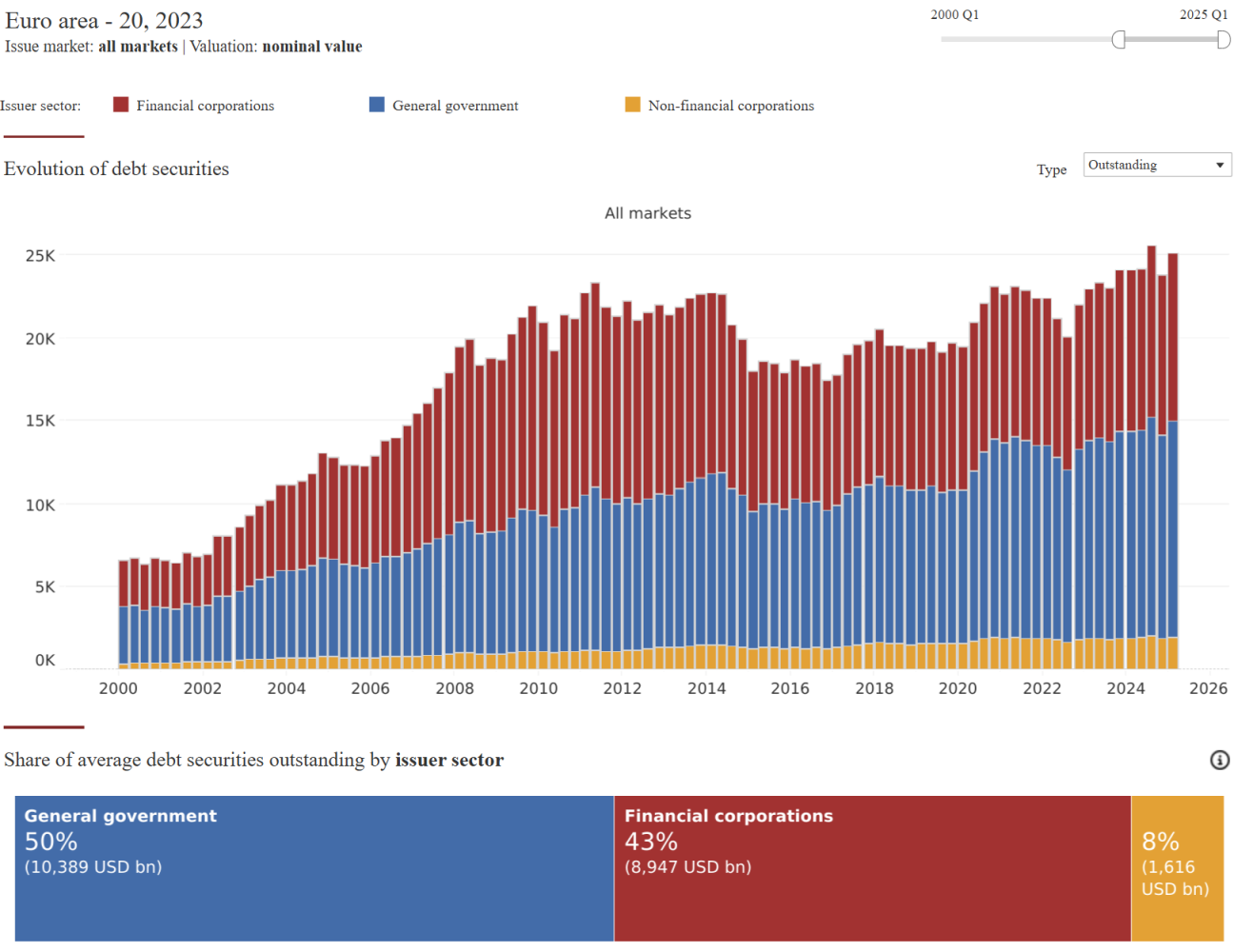
🔗 BIS Bond Market Statistics 📍 See our LinkedIn post here
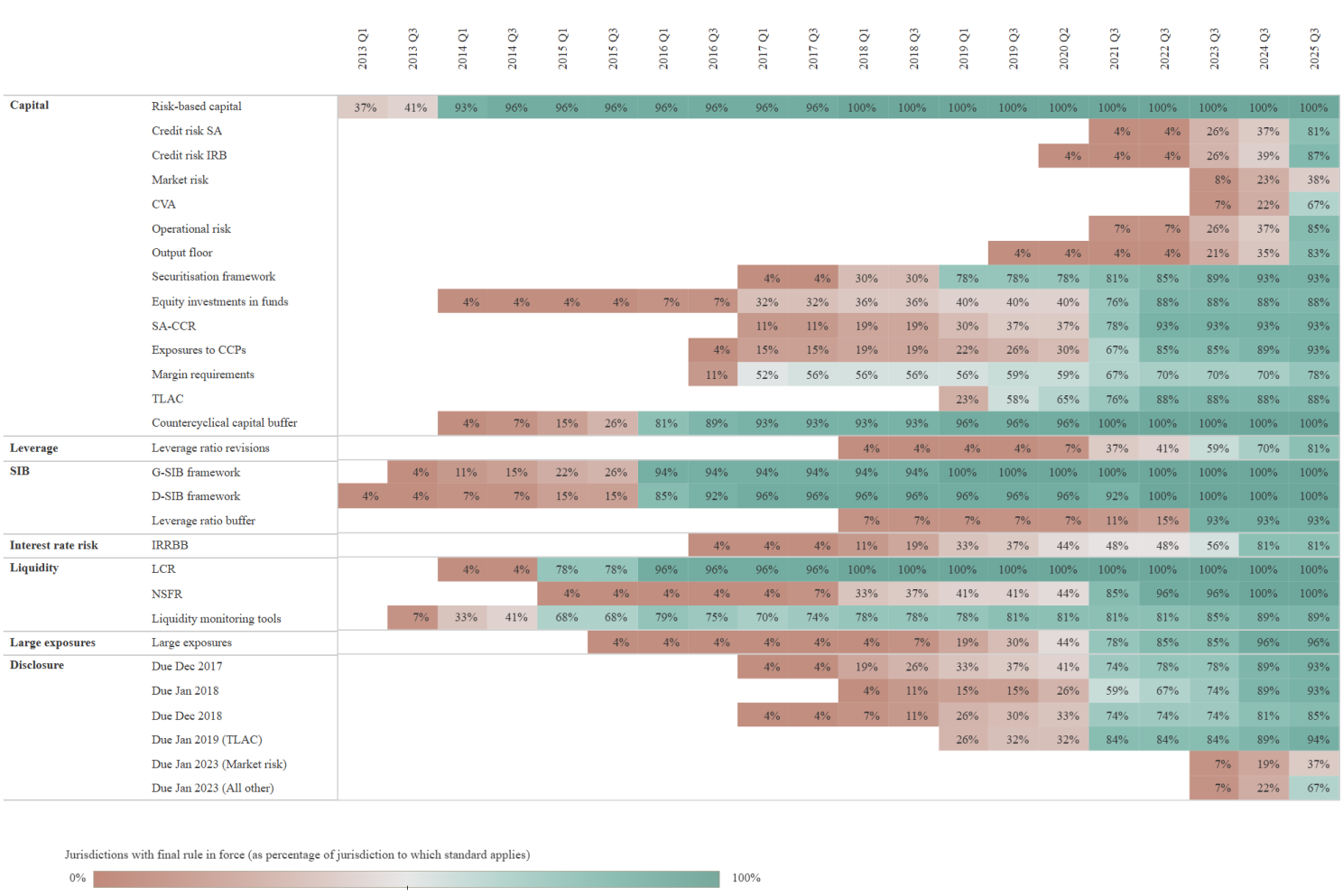
While the Basel III framework was designed as a global standard, its practical implementation varies significantly across countries. The BIS dashboard illustrates these differences — showing, for example, that while IRRBB and liquidity standards are fully implemented in most jurisdictions, the U.S. applies them only to its largest banks.
For multinational institutions, understanding such variations is key to comparing capital, liquidity, and risk management frameworks across regions. 🔗 Explore the BIS Basel Standards Dashboard 📍 See our LinkedIn post here
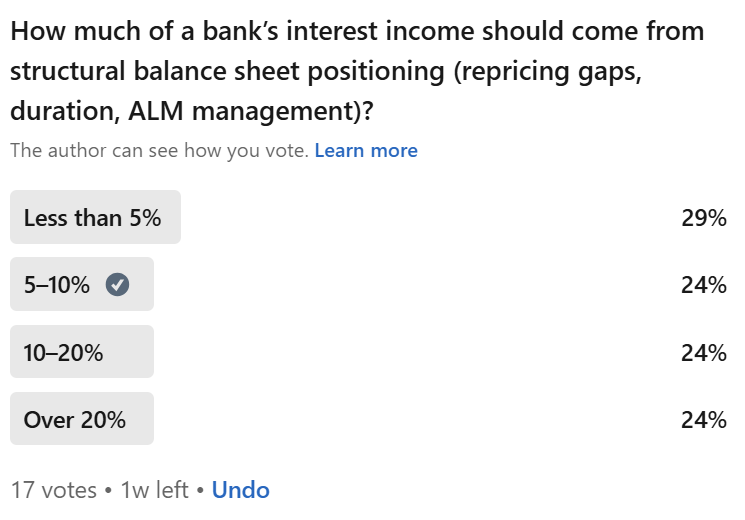
How much of a bank’s interest income should stem from structural balance sheet positioning — such as duration gaps and ALM management — rather than pure customer business?
We launched a LinkedIn poll to explore this question, and you can still share your view and see what other banking professionals think. 🗳️ Vote and view results here
The IMF’s latest Global Financial Stability Report warns that market calm may be deceiving. Elevated valuations, record sovereign debt, and tighter interconnections between banks and nonbank institutions could amplify shocks in the event of a downturn.
While the IMF does not foresee an imminent crisis, it highlights the growing risk of a sharper market correction if confidence shifts. For bank risk managers, these insights are a reminder that systemic risks can re-emerge even in seemingly stable conditions. 🔗 Read more in our post and the full IMF report
The Financial Stability Board (FSB) has released its October 2025 Thematic Review on the Global Regulatory Framework for Crypto-asset Activities, noting substantial progress since 2023 but also persistent gaps and inconsistencies across jurisdictions.
The report calls for stronger international coordination and consistent implementation of standards for crypto-asset markets and stablecoins — echoing similar conclusions from IOSCO on investor protection and market integrity.
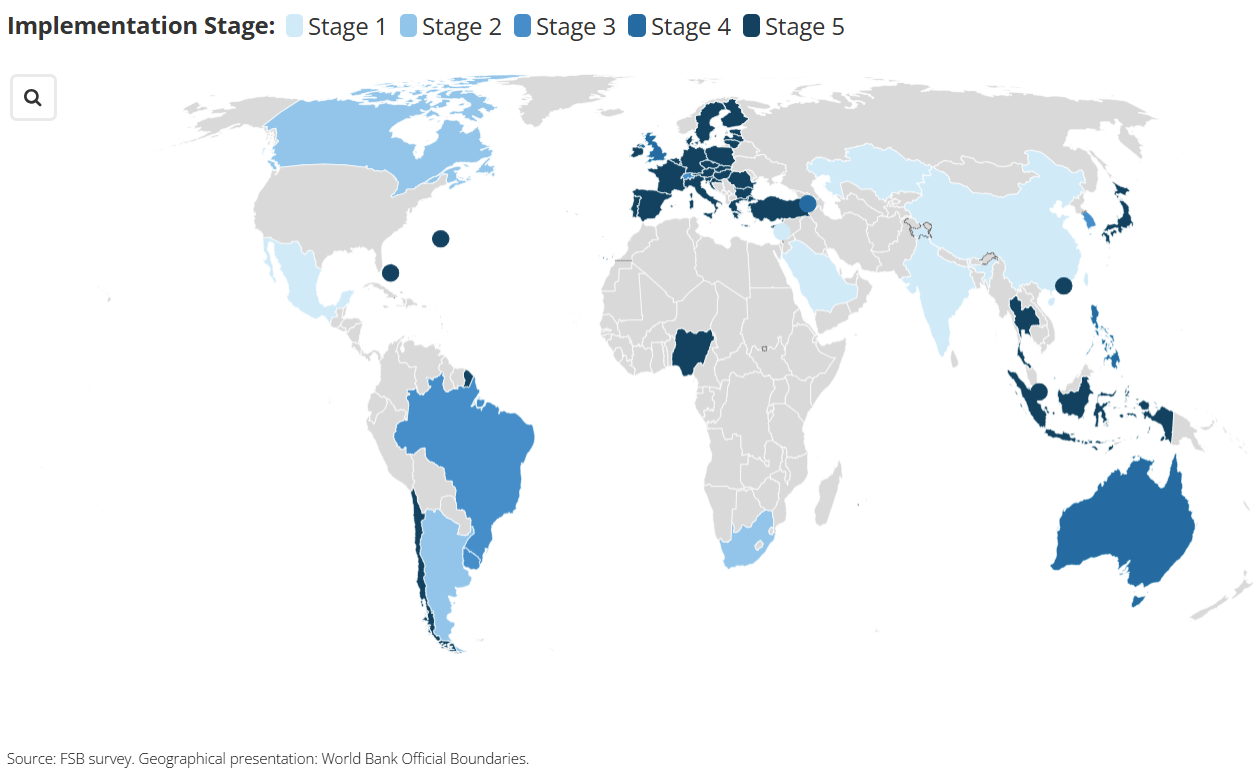
🔗 Read the full FSB publication 📍 See our LinkedIn post here
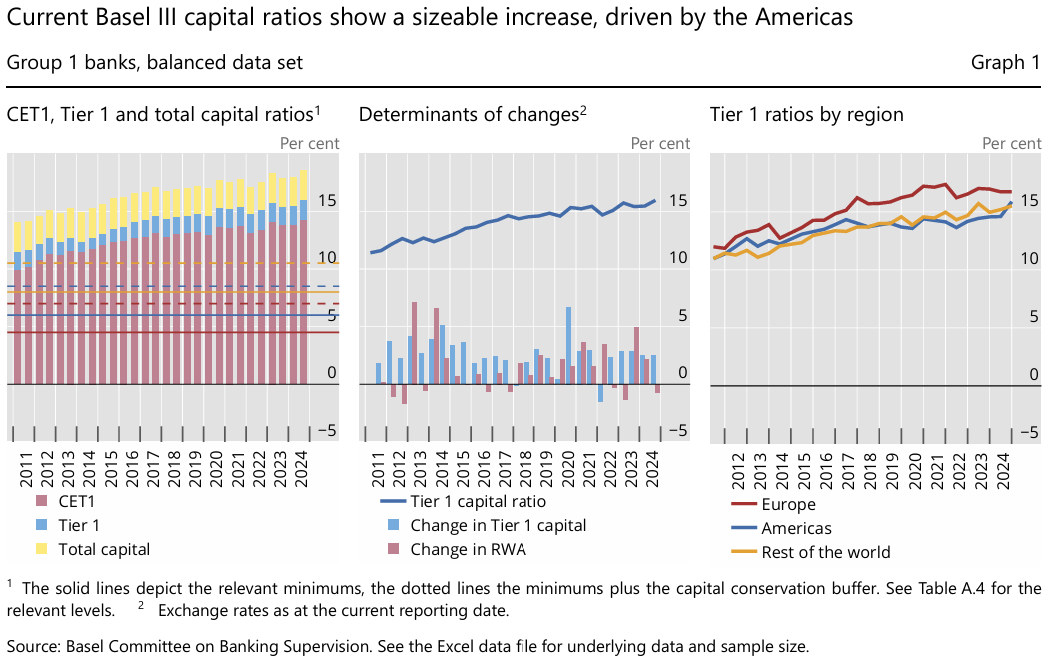
The Basel Committee on Banking Supervision (BCBS) has published its October 2025 Basel III Monitoring Report, based on data from 176 banks worldwide. Results show continued strengthening of capital positions, with the average CET1 ratio reaching 14.0% by end-2024 and strong liquidity buffers (NSFR 124%, LCR 135%).
However, once the final Basel III standards are fully phased in by 2028, total capital requirements are expected to rise by around 2.1%, mainly due to the Output Floor and Market Risk revisions. For ALM and regulatory planning, these shifts will continue to influence capital optimization and risk-weighted asset strategies in the years ahead.
🔗 Full BCBS Report 📍 See our LinkedIn post here
On October 9, Bearning hosted an international webinar titled “FTP & Quantitative Planning in Banking”, co-organized with our partner QuantPlan. The live event attracted over 80 participants from around the world, including professionals from ALM, Treasury, Controlling, and Risk Management functions.
The session explored how modern quantitative tools can support banks in Funds Transfer Pricing (FTP), profitability analysis, and scenario-based balance sheet planning. Using a model bank setup in QuantPlan, we demonstrated how performance and risk transfer mechanisms can be effectively integrated into strategic balance sheet management.
▪️ FTP as a tool for internal pricing, performance steering, and risk transfer ▪️ Model bank setup & live QuantPlan demo ▪️ Allocation of FTP rates, margin contribution, and profitability planning ▪️ Real-world examples and interactive polls with participants
If you missed the live event, you can watch the full recording for free on our website: ▶️ Watch the full webinar recording
To complement the webinar, we’ve also prepared dedicated e-learning options, allowing you to continue learning at your own pace:
The most efficient way to build and maintain your banking expertise is through our All-Inclusive E-learning Bundle, now available at a 40% discount with the code 2025EXTRA40. With this comprehensive package, you gain lifetime access to all Bearning e-learning courses, including:
The bundle also includes: 📊 SimBa – our Excel-based simulated bank model, 📚 Over 1,000 expert-level banking questions with detailed explanations, and 🎓 The Bearning Certificate of Banking Expertise, confirming your mastery of modern bank management.

👉 Use coupon code 2025EXTRA40 at checkout to unlock your discount here: All E-learning Courses, Tests & Certificates (Bundle)
At Bearning, we also continue to provide individual consulting sessions and executive coaching in areas such as ALM, liquidity management, risk, and regulation. In October, our inhouse activities included:
Our mission remains clear — to help banking professionals strengthen their technical expertise and leadership skills, ensuring they stay ready for the evolving challenges of modern banking: 🔗 Explore all training and consulting options at bearning.com
Aj v októbri sme sa v Bearning venovali vzdelávaniu a rozvoju bankových profesionálov prostredníctvom školení, workshopov, webinárov a individuálnych konzultácií. 💼
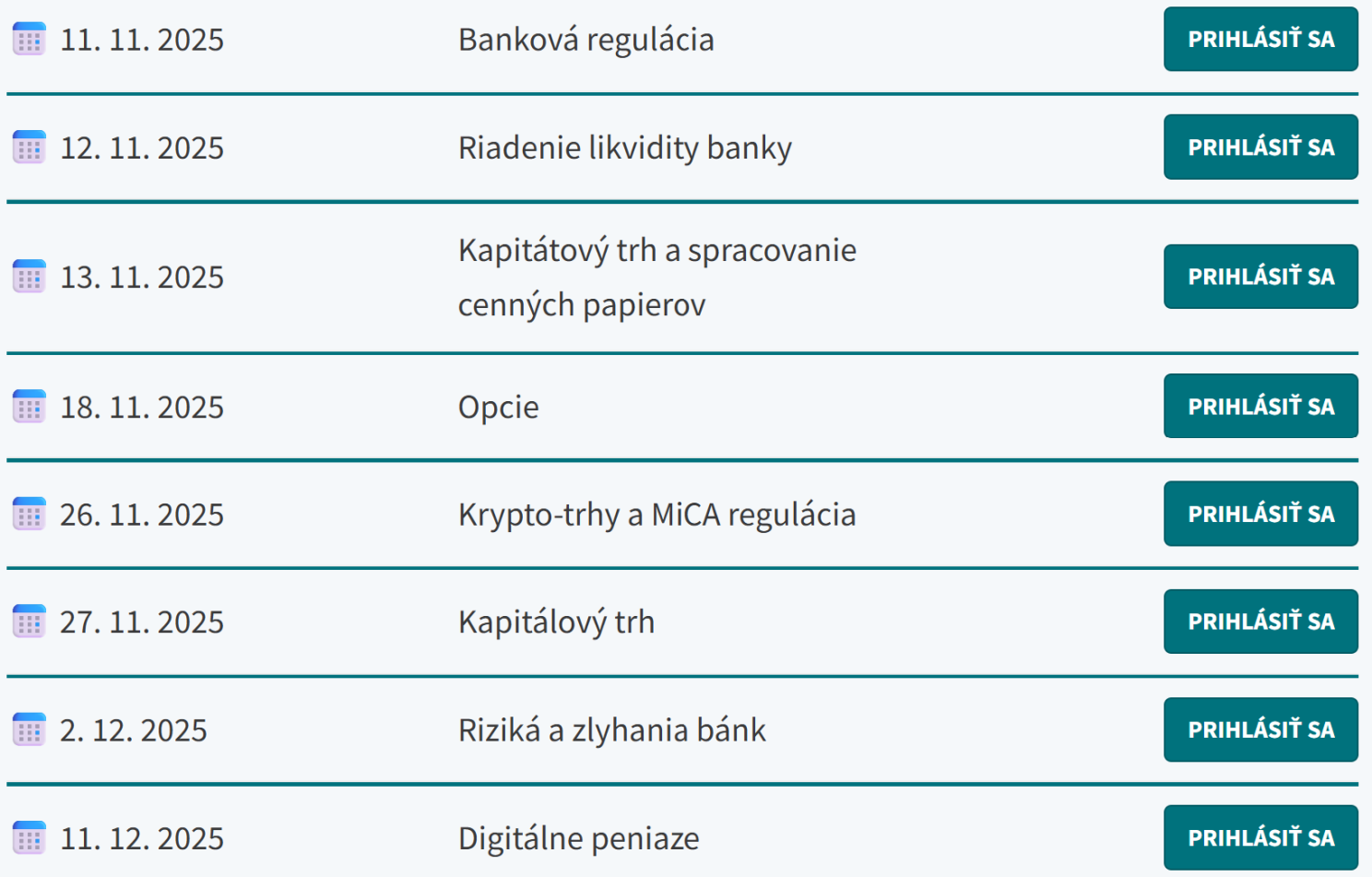
🔹 Digitálne peniaze a kryptoaktíva: zrealizovali sme in-house školenie na tému digitálnych peňazí a kryptoaktív, ktoré sa zameralo na technologické trendy a aktuálnu EU reguláciu MiCA. 🪙 Záujemcovia o túto oblasť sa môžu prihlásiť na naše verejné školenie 26. novembra, zamerané na reguláciu MiCA a kryptoaktíva, alebo na ďalší termín 11. decembra, ktorý sa venuje všeobecne téme digitálnych peňazí. 👉 Prihlásiť sa môžete na kurz o regulácii MiCA (26.11.2025) tu alebo na kurz "Digitálne peniaze" (11.12.2025) tu.
🔹 KYC & AML: Tento mesiac sme uskutočnili aj verejné školenie o KYC a AML v banke, ktoré prinieslo množstvo praktických diskusií a zdieľanie skúseností z praxe. 🏦 Ďalší termín tohto kurzu plánujeme na 13. februára 2026, rozšírený o nové témy vrátane využitia umelej inteligencie a moderných technológií. 👉 Prihláste sa už teraz tu.
🔹 Fit & Proper konzultácie pre bankových manažérov: V októbri sme zároveň realizovali viacero individuálnych Fit & Proper konzultácií pre top manažérov a členov dozorných rád bánk. Tieto individuálne stretnutia sa zameriavajú na Fit & Proper pripravenosť bankových manažérov v oblastiach ALM a riadenie súvahy, risk management, regulácia a AML/KYC. 👉 Viac o individuálnych Bearning konzultáciách nájdete tu.
🎯 Naším cieľom je pomáhať bankárom rozvíjať odborné znalosti a manažérske kompetencie, ktoré sú kľúčové pre úspech každej modernej banky. Vyberte si aj vy z našich verejných kurzov v nasledujúcich týždňoch.
Bankári a finanční profesionáli sa môžu tešiť aj na bohatý novembrový a decembrový program verejných kurzov v slovenskom jazyku:
In our recent courses and webinars, we discussed many topics, apart from others also digital money, crypto-assets, and the technologies that underpin them — from blockchain design to consensus mechanisms. Let’s see how well you know the timeline of these fintech milestones:
❓ Which of the following came first in history?
💭 Think carefully — the answer may surprise you! We’ll reveal the correct answer and explanation in our next Bearning newsletter.
❓ Which FTP maturity do banks usually assign to retail current accounts?
✅ Correct answer: D) Individually modelled in each bank
Retail current accounts are non-maturing deposits (NMDs) — meaning they have no contractual maturity date. Customers can withdraw their funds at any time, yet in practice, these deposits tend to be very stable. Because of this, banks do not treat them as purely “overnight” for FTP or ALM purposes.
Instead, each bank models the behavioral maturity of such deposits based on historical data, customer behavior, and interest rate sensitivity. This modelling determines the internal Funds Transfer Pricing (FTP) maturity, which can vary substantially between institutions.
Typical FTP maturities for retail current accounts may range from 2 to 5 years, but the exact value depends on:
In short: there is no fixed rule — the FTP maturity of retail current accounts is always individually modelled by each bank to reflect its balance sheet characteristics and risk management framework.

ALM & Treasury, Riadenie rizík, Finančné riadenie banky, Banková regulácia, Fintech

Súbory cookie
Používame nevyhnutné cookie na chod webu a voliteľné analytické/marketingové na zlepšenie služieb. Viac v zásadách používania cookie.