
Newsletter
Newsletter 08-2026
Jun 2023

The Four Pillars of professional ALM, an ECB working paper on NMD modelling, ECB SREP 2025 results, and ESMA's investor-protection priorities.

This month brings several noteworthy publications for banking professionals, particularly in ALM, supervision, and investor protection. We begin with a brief overview of our new blog Building Resilience: The Four Pillars of Professional ALM, which highlights why balance sheet stability requires more than regulatory reporting — especially after the lessons of 2023.
The topic aligns with the ECB’s recent working paper on behavioral maturities of non-maturing deposits, showing how differently banks model NMD stickiness and how slowly some models have been updated despite shifting market conditions.
Supervision remains in focus as well. The ECB’s SREP 2025 results confirm strong sector resilience but underline persistent vulnerabilities and the need for structural improvements, particularly as profitability tailwinds moderate.
And finally, we look at ESMA’s latest priorities, including digitalization risks, cost transparency, and expectations for responsible client communication — important topics for banks active in investment services.
As always, Bearning continues to follow these developments in our courses and consulting, helping banks strengthen ALM, risk frameworks, and governance — because Bearning is Bank Learning.
This month we shared a new Bearning blog on what defines a truly professional Asset–Liability Management (ALM) framework. ALM remains one of the most influential areas of modern bank management, yet many institutions still rely on fragmented modelling, outdated behavioral assumptions, or a narrow regulatory view.

Our article outlines four essential pillars: modelling of non-maturing deposits, Funds Transfer Pricing (FTP), scenario planning, and the link between ALM and strategic steering. The full text is available on LinkedIn for those who want to explore the details of each pillar and their practical impact on bank resilience. 📄 Read the full blog here
The ECB has released a valuable working paper analyzing behavioral maturities assigned to non-maturing deposits (NMDs) across 67 euro-area banks (2019Q2–2023Q3). Key observations include:
For ALM, IRRBB, and liquidity teams, the paper is a timely reminder that behavioral assumptions must be regularly revisited and properly documented.
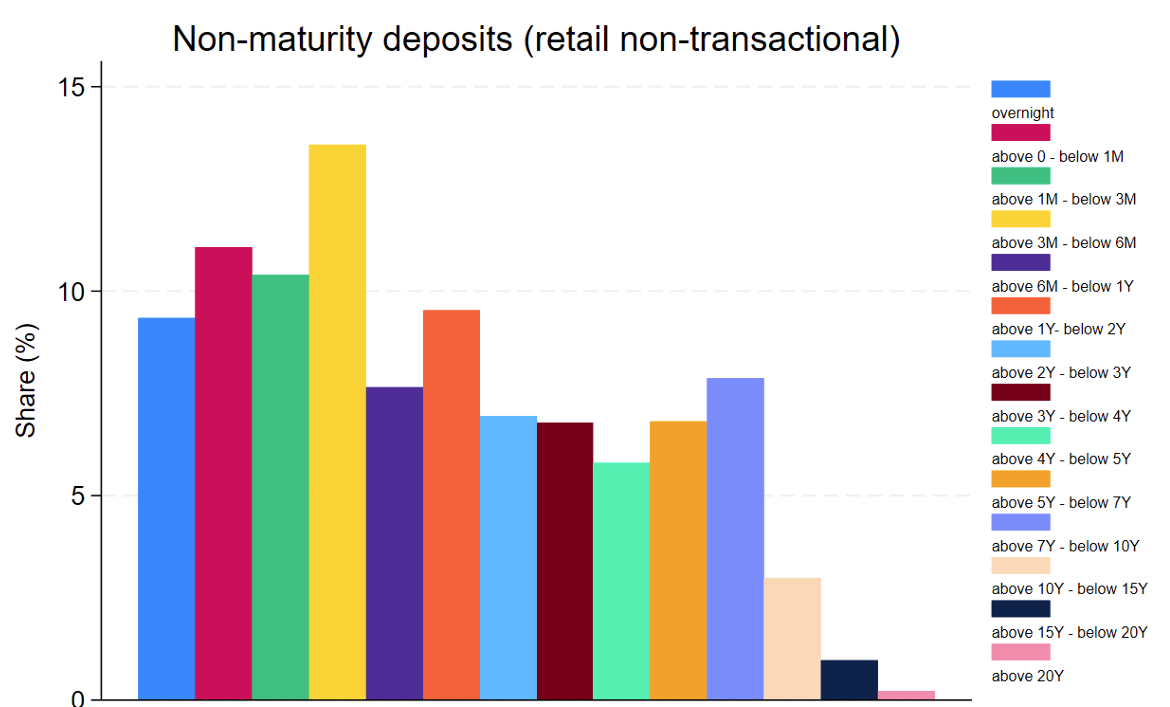
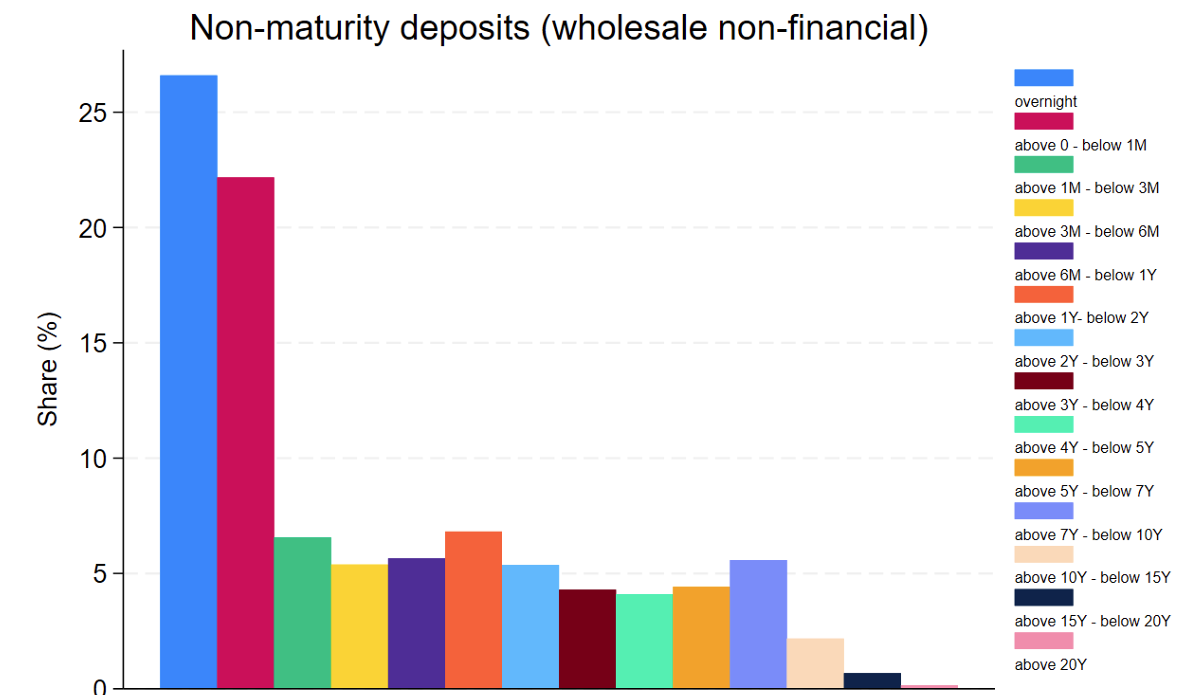
Notes: Each bar shows the average share of cash-flows reported in a specific maturity bucket for our sample of 67 banks across 2019Q2-2023Q3. Source(s): ECB Supervisory Statistics.
📄 Full ECB working paper is available here
🔗 You can also read my original LinkedIn commentary to this topic, which attracted over 11 thousand impressions, 130 likes and 9 reposts!
The ECB’s newly published Aggregated Results of the 2025 SREP confirm a broadly strong sector position:
Yet supervisors remain cautious, pointing to slowing NII tailwinds, continued cost pressure, geopolitical uncertainty, and structural weaknesses in a subset of banks. While the average SREP score improved to 2.5, around one-quarter of institutions still fall into categories needing intensified remediation.
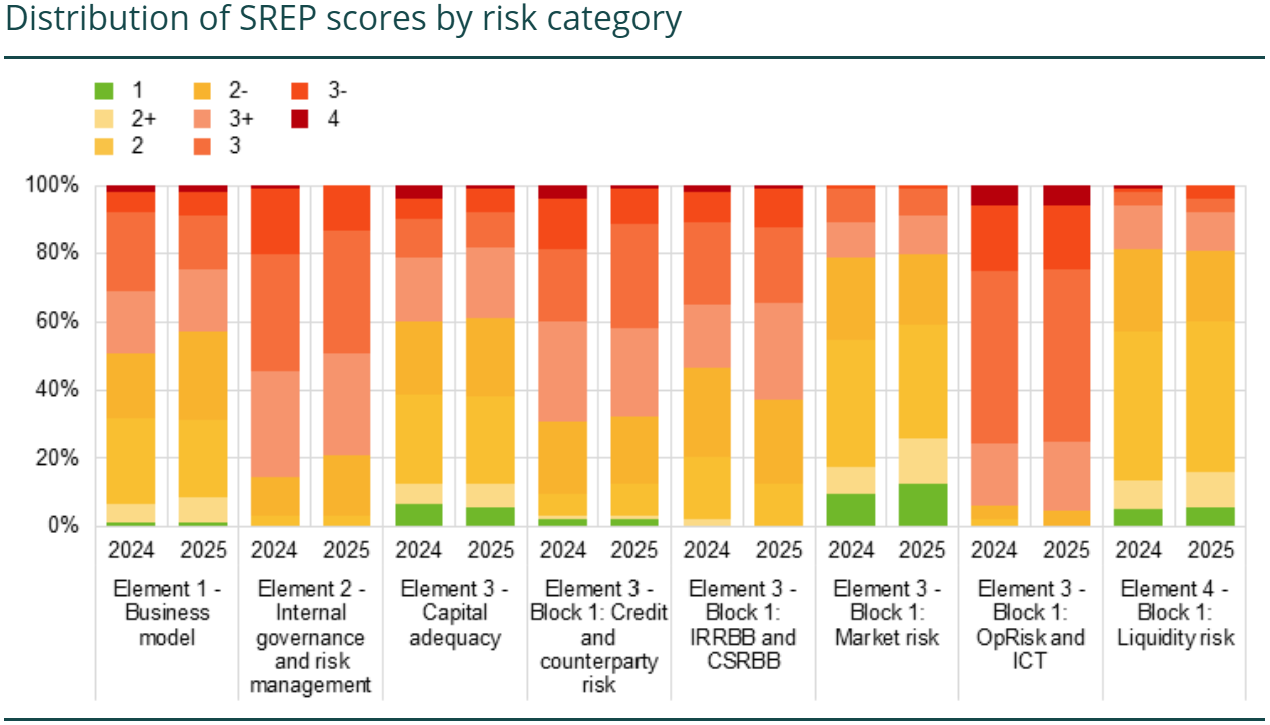
Notes: 2024 SREP values based on assessments of 103 banks; 2025 SREP values based on assessments of 105 banks.
📄 Read Full SREP 2025 report here
🔗 You can read also my original LinkedIn commentary to ECB SREP report here
In a recent keynote address, the ESMA Chair Verena Ross outlined several important supervisory priorities for the coming period. Key themes include:
These developments matter for banks involved in investment services, distribution, product design, and compliance.
📄 Full keynote speech is available here
November was exceptionally active at Bearning, with a high number of live courses, regulatory workshops, and specialized consulting sessions delivered to both international and regional clients. Below we highlight two areas that drew particular interest this month: Fit & Proper preparation for top bank management and regulatory training focused on MiFID II and MiCA.
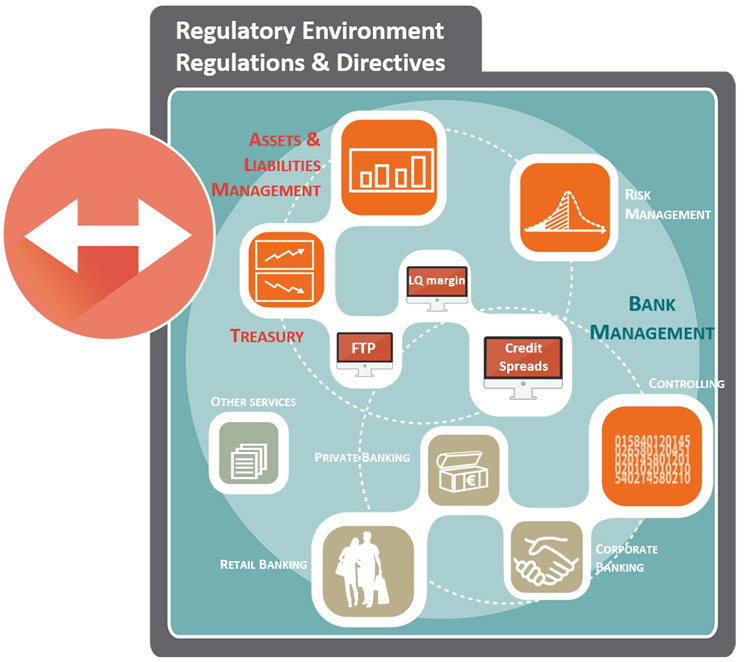
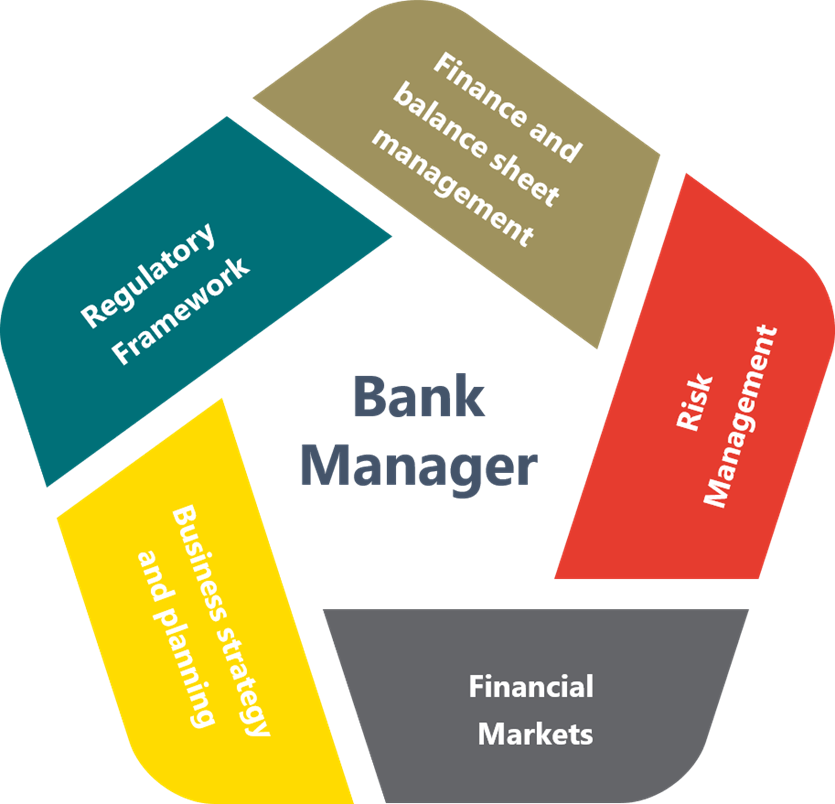
For international clients, one of our key activities was a series of individual Fit & Proper (F&P) preparation sessions tailored for supervisory board members and senior executives. These consultations are structured to fully align with current ECB expectations. We focused on three priority areas:
• Fintech, Digitalization, IT and Cybersecurity Risks: Strengthening understanding of technological developments, such as digital money, blockchain technology, AI in banking, and emerging digital banking models, cyber risk exposure, operational vulnerabilities and the oversight responsibilities of bank managers and the supervisory board.
• Prevention of Money Laundering (AML): Clarifying regulatory expectations, typical AML risk drivers, governance requirements, and the types of controls and management information that board members must actively evaluate.
• ALCO, ALM, Bank Risk Controlling, Financial Results & Risk Interpretation: Developing the ability to critically read financial and risk reports, identify weaknesses, understand structural balance-sheet risks, and support corrective action where needed.
This programme is explicitly structured to meet the expectations of ECB’s Fit & Proper assessments, ensuring that board members demonstrate the required competence and practical understanding.
🔗 More about individual consulting: https://study.bearning.com/pages/consulting
🔗 Expert ALM coaching sessions: https://study.bearning.com/products/live_events/optimize-bank-alm-strategy
Another Bearning focus in November was our MiFID II and MiCA regulatory update workshop, delivered in-house for the compliance team of an international banking group. The session covered a broad set of practical regulatory topics, including:
Participants appreciated the practical approach, with case studies and real examples illustrating how regulatory expectations translate into daily decision-making.

More info about Bearning MiFID II courses is on our web here: MiFID2 EU Bank Regulation
For those who prefer a self-paced approach, Bearning offers a comprehensive library of structured e-learning bundles covering the core skills required in Treasury, ALM, financial management and risk:
👉 Explore the Banking & Financial Management Bundle: https://study.bearning.com/bundles/banking-and-financial-management
Special offer: Newsletter readers can use code 2025EXTRA40 to receive a 40% discount on all bundles, including lifetime access and certificate options.
Most of our live courses are delivered in-house for banks, associations, and financial institutions. You can browse our full offering here:
🔗 All Bearning Live Courses: https://study.bearning.com/collections/live
For 2026, we plan to open selected courses also as public online live courses, including:
📌 FTP – Funds Transfer Pricing (Live Course) https://study.bearning.com/courses/ftp-live
📌 Liquidity Management (Live Course) https://study.bearning.com/courses/liquidity-live
📌 ALM Masterclass (Live Course) https://study.bearning.com/courses/ALM-live
Follow our website bearning.com and/or this newsletter to stay informed about upcoming dates and registration options.
V novembri sme v Bearning realizovali viacero verejných odborných kurzov v slovenskom jazyku. Témy boli zvolené podľa aktuálnych potrieb bánk a finančných inštitúcií – od kapitálového trhu až po kryptoreguláciu:
🔹 Spracovanie cenných papierov (Securities Processing) - Kurz poskytol komplexný prehľad procesov súvisiacich s kapitálovým trhom – od postupov emitovania, cez obchodovanie až po zúčtovanie, vyporiadanie a evidenciu cenných papierov. Účastníci získali praktický pohľad na celý „end-to-end“ cyklus, čo je dôležité pre risk manažment, back-office, compliance aj treasury.
🔹 Kapitálový trh (Capital Market) - V tomto kurze sme sa zamerali na fungovanie dlhopisového a akciového trhu z pohľadu obchodovania a investovania, oceňovanie finančných nástrojov, matematiku výnosov a využitie derivátov na kapitálových trhoch. Kurz pomohol účastníkom lepšie porozumieť tomu, ako banky pracujú s trhovými nástrojmi a aké stratégie môžu používať.
🔹 Kryptoaktíva a regulácia MiCA - Kurz venovaný novej regulácii MiCA (Markets in Crypto-Assets) vysvetlil, čo regulácia znamená pre banky, poskytovateľov služieb a finančné inštitúcie. Prešli sme definície kryptoaktív, požiadavky na poskytovateľov služieb, pravidlá pre EMT/ART tokeny aj technologické základy, ktoré je potrebné poznať pri hodnotení rizík.
V decembri máme naplánované ešte dva kurzy:
📌 Opcie – finančné deriváty a stratégie - Zameraný na oceňovanie opcií, základné aj pokročilé opčné stratégie, využitie opcií na hedging a riadenie rizík v bankovej praxi.
📌 Digitálne peniaze – kryptomeny, stablecoiny, CBDC a fiat peniaze - Kurz vysvetľuje a porovnáva rôzne formy digitálnych peňazí, fungovanie kryptomien a stablecoinov, princípy blockchainu aj pripravované projekty centrálnych bánk (napr. digitálne euro).
Kalendár verejných kurzov na rok 2026 postupne finalizujeme. Niektoré termíny sú už teraz otvorené na našom webe a môžete sa na ne prihlásiť, napr:
📌 Banková regulácia: https://bearning.sk/sk/training/Banking-Regulation
📌 AML, KYC & AI v bankovníctve: https://bearning.sk/sk/training/AML_KYC_AI
📌 Riziká a zlyhania bánk: https://bearning.sk/sk/training/Bank-risks-and-failures
V priebehu najbližších týždňov pribudnú ďalšie termíny a nové kurzy. Sledujte bearning.sk a tento LinkedIn Bearning newsletter, aby ste mali vždy aktuálne informácie o pripravovaných školeniach!
This month’s quiz is inspired by one of the topics covered in our November capital markets and MiFID II workshops. Although Exchange-Traded Funds (ETFs) and Exchange-Traded Notes (ETNs) often appear similar to investors, their structure — and therefore their risks — differ significantly. Understanding these differences is essential for MiFID II suitability assessments, product governance, and client communication.
💡 Think carefully — ETNs replicate performance synthetically and are unsecured debt instruments, while UCITS ETFs hold underlying assets. This difference leads to an additional risk dimension that is evaluated under MiFID II product suitability rules.
👉 The correct answer and explanation will appear in the next Bearning newsletter.
Last month’s quiz came from our digital money and crypto-assets sessions, where we discussed the evolution of blockchain concepts and how they relate to today’s regulatory frameworks (including MiCA).
✅ Correct answer: D) Introduction of the Proof-of-Work consensus model
Here is the correct historical timeline based on verified dates:
1️⃣ Proof-of-Work (PoW) consensus model (1992–1993): The earliest concept comes from Cynthia Dwork and Moni Naor (1992/1993), who proposed a computational-cost function to deter spam and denial-of-service attacks. Later, Adam Back refined this mechanism with Hashcash (1997), which Bitcoin eventually adopted.
2️⃣ Smart contract concept (1994) Introduced by Nick Szabo, smart contracts were described as self-executing digital agreements — a conceptual precursor to later programmable blockchains.
3️⃣ Bitcoin introduction (2008/2009) Satoshi Nakamoto published the Bitcoin whitepaper in October 2008, and the network launched in January 2009, combining PoW with a decentralized ledger.
4️⃣ Ethereum network (2015) Ethereum operationalized smart contracts at scale and introduced a programmable blockchain environment.
Understanding the historical order is useful for evaluating:

ALM & Treasury, Riadenie rizík, Finančné riadenie banky, Banková regulácia, Fintech

Súbory cookie
Používame nevyhnutné cookie na chod webu a voliteľné analytické/marketingové na zlepšenie služieb. Viac v zásadách používania cookie.