
Newsletter
Newsletter 08-2026
Jun 2023

The Steepening Yield Curve - Implications for Bank ALM
%201.png)
The past few weeks have brought extraordinary movements in EU financial markets. Long-term interest rates surged, while short-term rates declined, as the ECB and some other central banks lowered key policy rates.
This shift led to a steepening of yield curves, reversing the previous inverted or flat structure that dominated much of 2023 and early 2024. And also another important factor has emerged alongside this: Credit Spread Risk on some countries government bonds. The Credit Spread Risk in the Banking Book (CSRBB) is a key component of Interest Rate Risk in the Banking Book (IRRBB) regulatory frameworks.
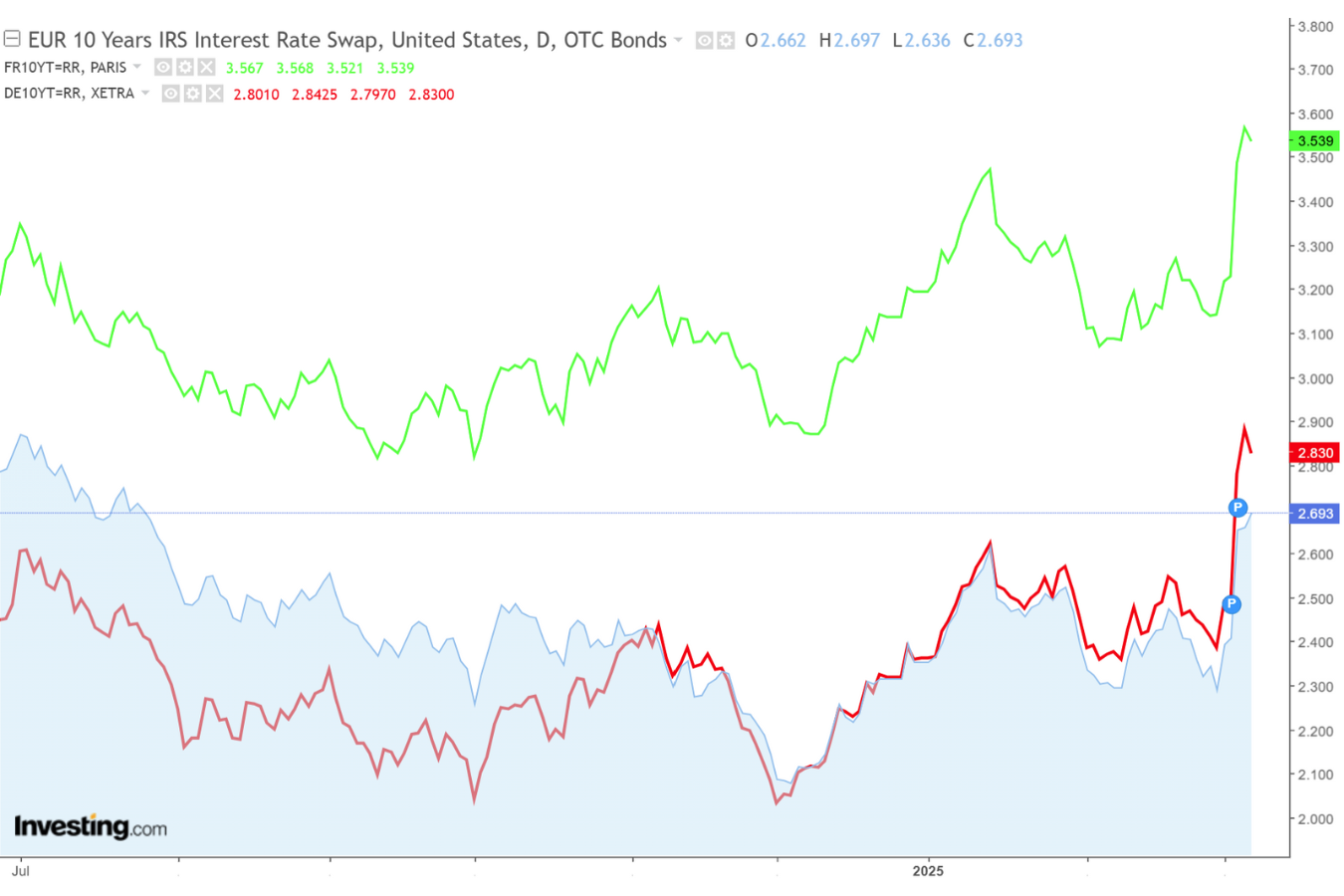
To illustrate, let’s analyze the development of EUR 10-year interest rate swaps (IRS), German 10-year bonds, and French 10-year bonds over the last year:
📉 German government bonds (DE 10Y) in the past usually traded at a negative spread to IRS, meaning they yielded less than swaps. It is a sign of extremely high demand and safe-haven status.
📊 However, since autumn 2024, the spread to IRS narrowed to +/- zero, and now, after the recent rate spike, German bonds trade at a positive spread of 10-20Bps. This marks a significant shift, indicating increasing credit spread risk even for traditionally safe assets.
🔴 French bonds (FR 10Y) followed a similar pattern but with higher credit spread (usually positive), reflecting additional credit risk premium fluctuations.
Banks face dual risk exposure in their long-term bond and loan portfolios:
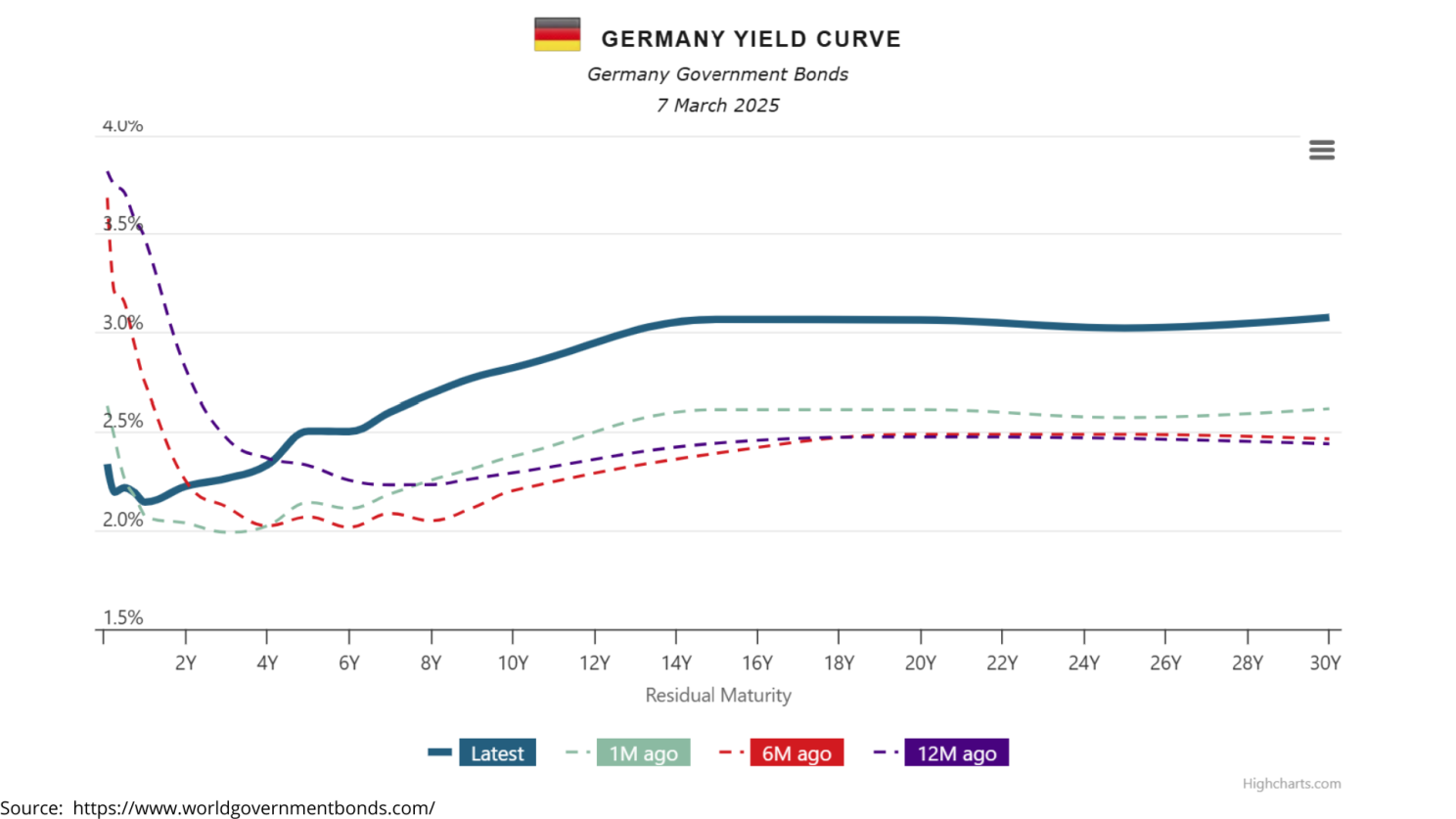
Here is how the yield curve of German bonds changed during last year:
✅ Winners:
❌ Losers:
📌 Reassess ALM strategies – Shift from floating or short-term lending toward longer-term fixed-rate assets to lock in a positive margin. By a steep yield curve, it is usually easier for bank to make some profit on the balance sheet structure, as from the IRR perspective, the longer-term assets funded by short-term liabilities create a structural profit. However, banks must not forget the liquidity risks!
📌 Rebalance bond portfolios – Consider shifting from government bonds with widening spreads toward higher-yielding, but stable assets.
📌 Adjust IRRBB & CSRBB stress testing – Update risk models to reflect the new steep yield curve environment and widening credit spreads.
📌 Consider hedging strategies – Use interest rate swaps or, if applicable, credit default swaps (CDS) to mitigate unexpected market shocks.
In a rapidly shifting market, it is crucial for bank decision-makers to have comprehensive, data-driven insights. Effective ALM strategies require scenario analysis that integrates interest rate risk, credit spread risk, and liquidity risk - all of which are interconnected.
As I discussed in my recent blog on quantitative ALM, we now see in real time how essential a robust ALM and planning tool is for banks. Such a system provides critical functionalities that enhance profitability, strategic decision-making, market risk management, and regulatory compliance. In uncertain times, having a quantitative approach to ALM is not just an advantage - it’s a must.
One of the possibilities is QuantPlan - a proven ALM & Planning tool that helps banks simulate future balance sheet developments, test different risk scenarios, and make data-driven decisions with confidence. You can explore the methodology and principles directly on Bearning's website Budgeting, forecasting, planning in QuantPlan.
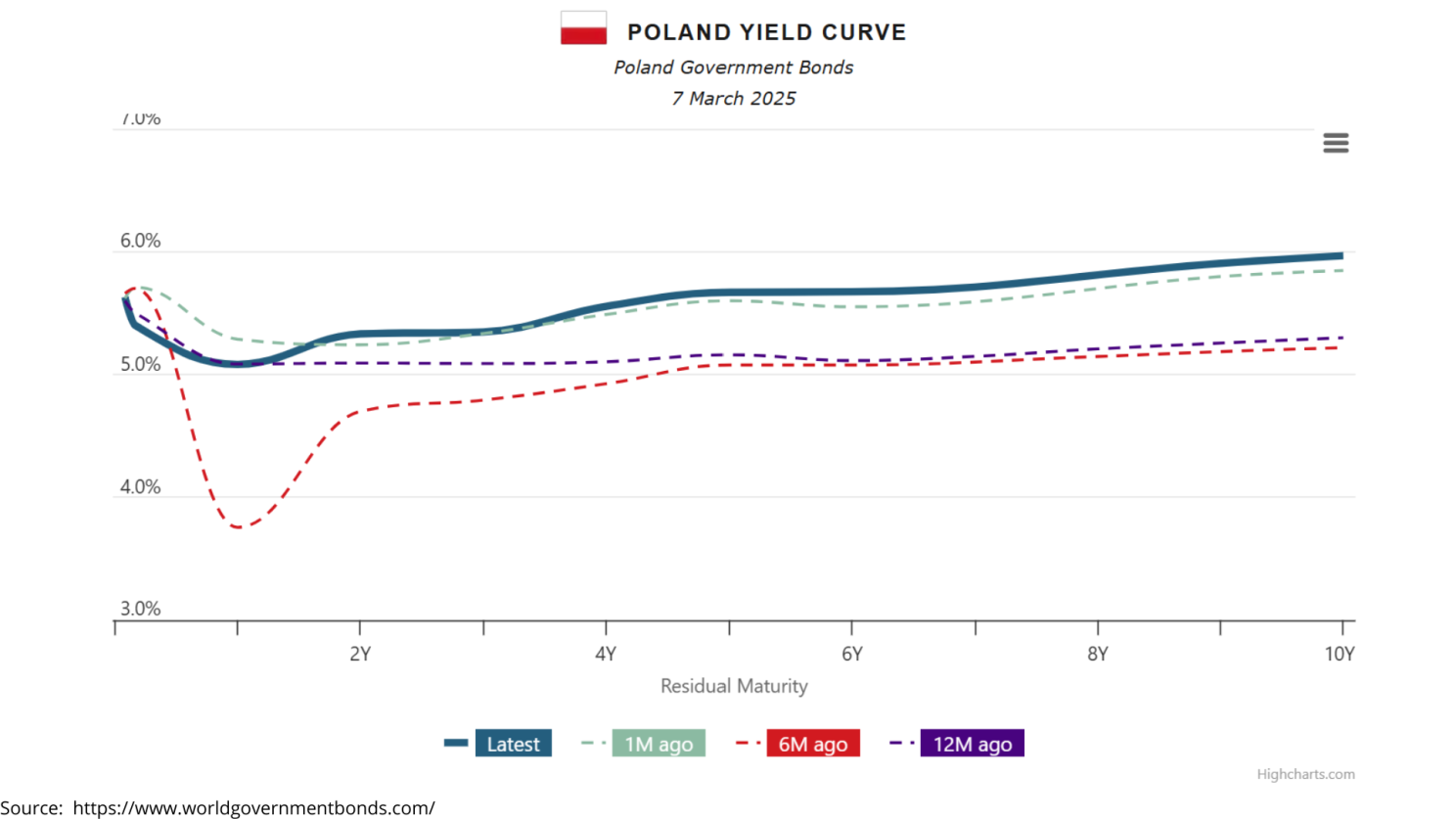
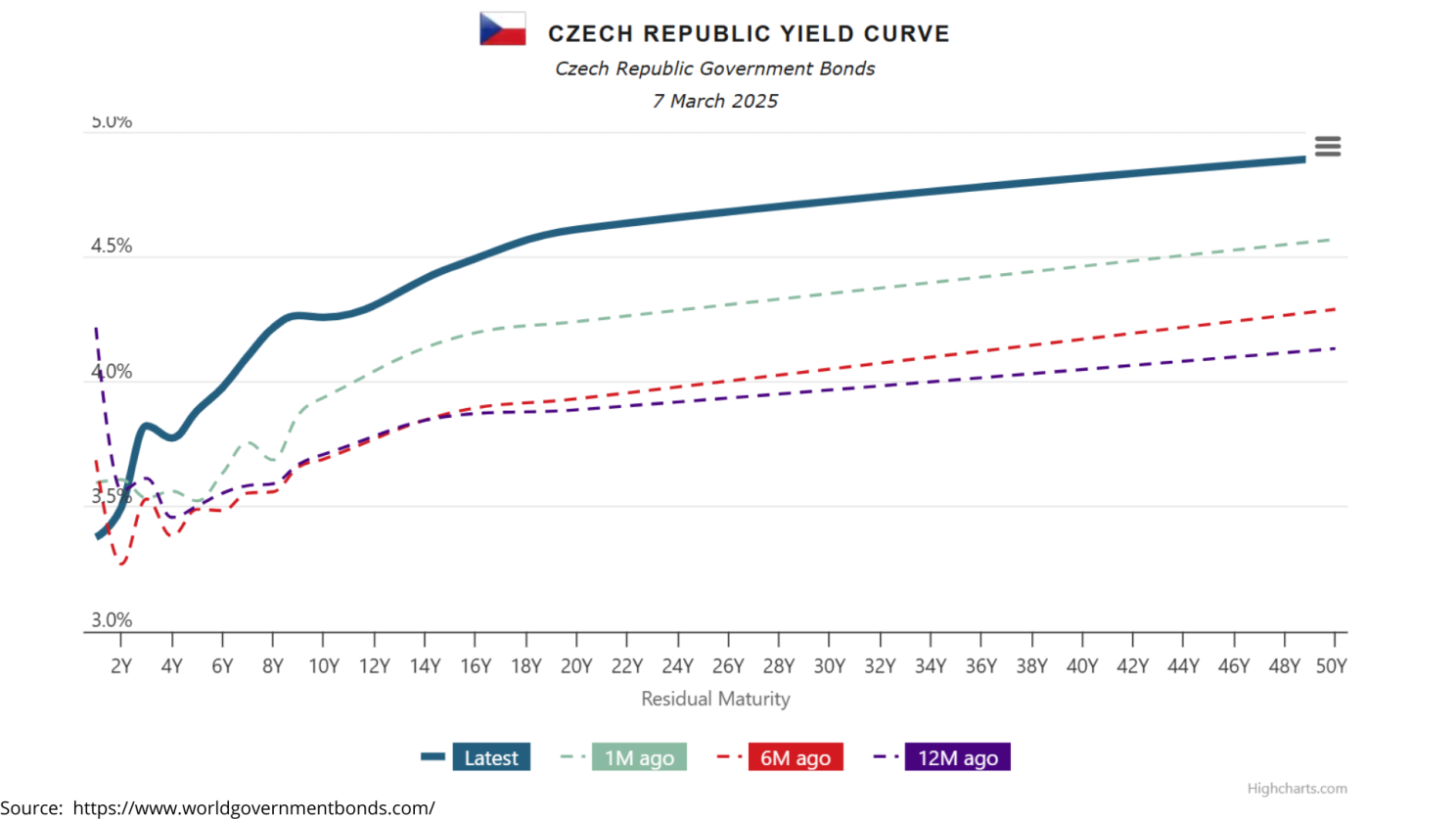
This yield curve and credit spread shift affects most Eurozone government bonds, as well as Czech and Hungarian bonds, while Poland remains an exception with still rather high key rates a flat curve. See CZK, HUF and PLN yield curves development:
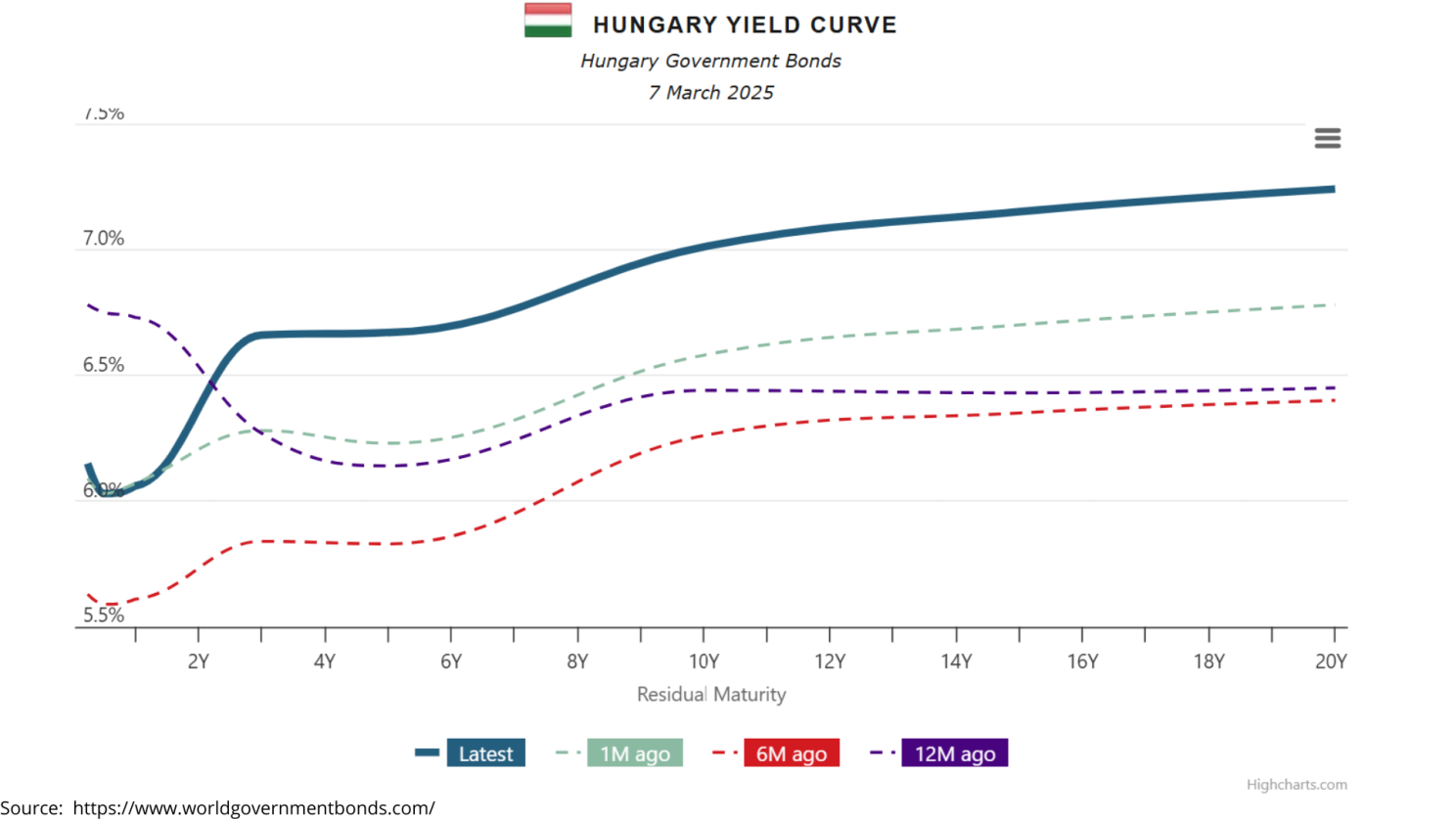
#Banking #RiskManagement #InterestRates #ALM #BSM #Markets #YieldCurve #InterestRateRisk #CSRBB #BankManagement

ALM & Treasury, Riadenie rizík, Finančné riadenie banky, Banková regulácia, Fintech

Súbory cookie
Používame nevyhnutné cookie na chod webu a voliteľné analytické/marketingové na zlepšenie služieb. Viac v zásadách používania cookie.